

More news on this day
Beira, long overshadowed by Maputo and Johannesburg in Southern Africa’s aviation map, is on the brink of a comeback as Solenta Aviation prepares to relaunch Fastjet-branded services from the central Mozambican port city in the second half of 2026, a shift that could redraw regional travel patterns for safari-goers, beach lovers and business travellers alike.
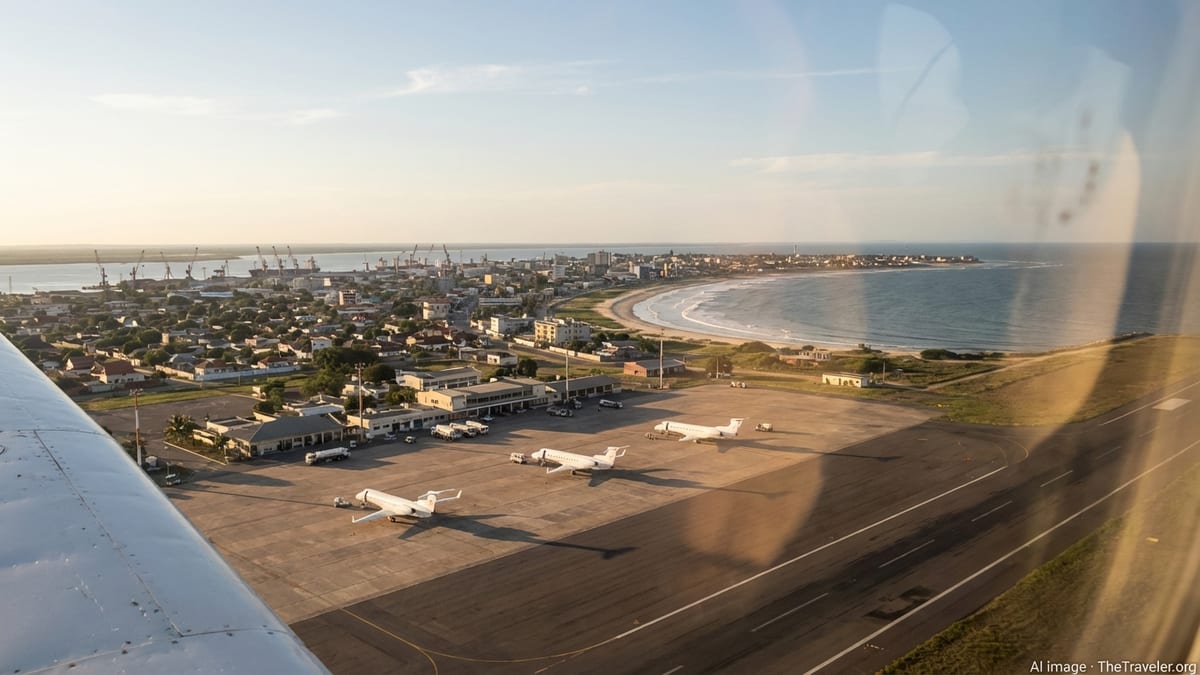
Fastjet Brand Returns to Mozambique With Beira at Its Core
Solenta Aviation Mozambique has confirmed plans to resume scheduled services under the Fastjet brand in the second half of 2026, after securing regulatory approvals from Mozambique’s civil aviation authority and completing preparations for a fleet of three 50-seat Embraer ERJ145 jets. The move revives a low-cost brand that previously flew domestic routes in the country between 2017 and 2019 and signals a more ambitious strategy centered on Beira International Airport rather than Maputo alone.
Regional aviation analysts say the decision to base operations at Beira reflects a structural shift in how Mozambique wants to connect its coastal cities, interior mining hubs and tourism landscapes. Instead of funnelling almost all traffic through the congested capital, the new Fastjet operation aims to use Beira’s more central geography to shorten flying times and open up point-to-point links that have either been poorly served or not served at all in recent years.
For travellers, the most immediate impact will be felt in fares and flexibility. With Fastjet positioning itself once again as a low-cost carrier in a market where state-owned and full-service airlines have traditionally dominated, industry watchers expect more competitive pricing on domestic and short regional routes, as well as more frequent schedules on corridors that currently see just a handful of flights a week.
While detailed route maps have yet to be released, company statements and local government briefings in Sofala province indicate that Beira will function as an operational base from which aircraft can be rotated to multiple domestic destinations. That is a marked contrast with the previous Fastjet Mozambique model, which largely replicated existing Maputo-centric networks rather than trying to rebalance air connectivity around a secondary hub.
Beira’s Strategic Position Between Bush, Beach and Business
Beira occupies a unique position on the Southern African map. Geographically, the city sits near the midpoint of Mozambique’s long Indian Ocean coastline, roughly between the beach enclaves of Vilanculos and the far-northern Quirimbas region, and within relatively short flying distance of inland conservation areas such as Gorongosa National Park. It is also the seaward terminus of major transport corridors serving Zimbabwe, Zambia and Malawi, making it an important logistics gateway for landlocked neighbours.
As a result, the planned Fastjet network radiating from Beira has the potential to serve three very different but complementary travel markets: international tourists stitching together multi-stop itineraries, domestic business travellers moving between provincial capitals, and regional executives commuting between resource projects, ports and capital cities. Few Southern African airports outside Johannesburg and Cape Town are as well positioned to touch all three segments as effectively.
In tourism terms, the timing could prove especially significant. Over the past two years, operators have invested heavily in rebuilding Gorongosa’s reputation as one of Africa’s most compelling conservation success stories, while new air links between Beira and Vilanculos have already begun to connect the park with the Bazaruto Archipelago’s high-end beach lodges. By turning Beira into a low-cost hub, Fastjet can insert itself directly into these emerging bush-and-beach circuits.
For corporate travel planners, Beira’s strengthening role as a port for coal, agricultural exports and aid shipments means more demand for reliable links to Maputo, Tete, Nampula and regional capitals further afield. A hub structure based in Beira allows Fastjet to schedule early-morning and late-afternoon departures that align with business hours at both ends, something that has historically been difficult when all traffic was channelled through Maputo or Johannesburg.
New Routes from Beira Could Transform Safari and Beach Itineraries
Even before Fastjet’s formal relaunch, Beira has been edging back onto the radar of safari planners and tour operators, thanks to seasonal flights already connecting the city with Vilanculos and onward beach destinations. These existing services, operated by specialist safari carriers, have demonstrated strong demand for a simple air bridge between Gorongosa and the Indian Ocean, reducing what used to be a multi-day overland journey to a short hop.
Fastjet’s entry into this space is likely to accelerate that trend by bringing scheduled, year-round capacity and, crucially, more aggressive pricing. While boutique charter flights remain the preserve of high-end guests, a low-cost airline flying similar corridors opens up bush-and-beach combinations to a far broader slice of the market, including independent travellers and families who previously wrote Mozambique off as too complicated or expensive to navigate by air.
Industry sources expect the first wave of routes from Beira to focus on domestic links, potentially including services to Maputo, Nampula and Tete, all of which were part of Fastjet Mozambique’s previous network. But there is growing speculation that once operations bed in, the airline could look at short regional sectors connecting Beira with Harare, Lilongwe or Blantyre, effectively shortening access from Zimbabwe and Malawi to Mozambique’s coastline and national parks.
For Southern Africa itineraries built around a combination of Kruger, Victoria Falls and the Cape, this matters because it presents a new way to plug Mozambique into multi-country journeys without forcing travellers back through Johannesburg each time they change environments. A routing that moves from South Africa’s Lowveld to Zimbabwe and then directly to Beira and on to Vilanculos would reframe Mozambique from an add-on to a central pillar of the trip.
What Fastjet’s Fare Model Means for Regional Travellers
Fastjet’s brand has always been associated with a simplified, low-cost model: single-class cabins, buy-on-board catering and tight aircraft utilisation designed to keep base fares as low as possible. In the context of Mozambique’s domestic market, which has long been characterised by relatively high ticket prices and limited competition, that model could be a catalyst for structural change.
Travel agents in Maputo and Beira say they anticipate a twofold effect once Fastjet schedules go on sale. First, headline fares on key city pairs are likely to trend downward as incumbents respond to new competition. Second, the availability of more frequencies and cheaper off-peak tickets could prompt travellers who currently use overland buses or shared taxis to consider flying instead, particularly on routes where road travel is slow or subject to seasonal disruptions.
For international visitors, the implications are equally significant. A consistent low-cost presence on domestic sectors allows long-haul carriers and tour operators to package Mozambique combinations more competitively. Rather than relying on expensive or irregular feeder flights, they can build connecting itineraries using published Fastjet schedules, giving clients transparent pricing from the outset and reducing the risk of last-minute routing changes.
Regional travellers based in Johannesburg, Harare or Lusaka also stand to benefit if Fastjet’s Beira hub eventually supports short cross-border links. Affordable, short-haul flights crossing the Mozambique frontier would undercut the need for circuitous routings and position Beira as a convenient transfer point between inland Southern Africa and the Indian Ocean, a role that has so far been played almost exclusively by South Africa’s main airports.
Beira’s Upgrade Plans and Airport Capabilities
The viability of Beira as a hub depends not only on airline ambition but also on airport infrastructure. Local authorities in Sofala province have highlighted ongoing upgrades at Beira International Airport, including improvements to terminal facilities, passenger handling capacity and airside operations designed to accommodate more frequent regional traffic and additional based aircraft.
Officials familiar with the process say the airport is working through a detailed implementation plan that covers everything from ground handling contracts and security screening to maintenance facilities for the Embraer fleet that Fastjet will operate. The goal is to have a fully functional operations base in place by the time the airline’s scheduled services begin in the latter part of 2026.
Beira has long handled a mix of domestic, regional and limited long-haul flights, particularly those aligned with cargo and humanitarian operations. However, the reintroduction of a low-cost carrier with multiple aircraft based on site requires more robust turnaround procedures and gate management than the airport has previously needed. Aviation officials say investment in these areas is already under way, supported by both provincial authorities and private-sector partners.
For passengers, the most visible changes are expected to include streamlined check-in, clearer wayfinding, enhanced security lanes and a modest expansion of retail and food outlets in the terminal. While Beira is unlikely to reinvent itself as a large hub in the style of Johannesburg, the focus on efficiency and reliability should make transits more seamless for travellers connecting between bush, beach and business destinations.
Competitive Pressure Across Southern Africa’s Skies
Fastjet’s Beira-centred strategy does not exist in a vacuum. Over the past year, several regional carriers have been recalibrating their own networks across Mozambique and its neighbours, adding capacity to coastal and northern cities and experimenting with new secondary routes. The result is a more contested marketplace in which Beira’s emerging hub status will sit alongside growing networks from other players.
South African and Mozambican airlines have recently increased services to destinations such as Vilanculos, Pemba and Nacala, tapping into renewed tourism demand and offshore gas activity. Some have signalled interest in further expansion along the Mozambican coastline and inland corridors, moves that will inevitably intersect with whatever network Fastjet eventually publishes from Beira.
For travellers, this competition could be good news, provided it is accompanied by stable operations and clear communication on schedules. Multiple carriers vying for passengers on key routes often leads to better fares and more flexible timings, though it can also create complexity when itineraries involve interline connections that are not formally coordinated.
Industry consultants note that Fastjet’s success will hinge on how well it differentiates itself in this environment. A clear focus on punctuality, transparent ancillary fees and simple digital booking tools could help the brand stand out among both local passengers who remember its earlier incarnation and new customers discovering it for the first time via Beira.
How to Rethink Your Southern Africa Trip Around Beira
For travellers planning journeys in 2027 and beyond, the prospect of a functioning Fastjet hub in Beira invites a fresh look at how to sequence destinations across Mozambique and its neighbours. Rather than defaulting to a Johannesburg in-and-out pattern, it may soon be possible to treat Beira as a central node, arriving once and then fanning out to beaches, safari parks and regional capitals without repeatedly backtracking.
A typical holiday itinerary might start with a long-haul arrival into Beira via a major African or Middle Eastern carrier, followed by a Fastjet hop to Vilanculos for several days on the Bazaruto coast, then a return to Beira and onward flight to Gorongosa for a safari, before finishing with a business stop in Maputo or a side trip into Zimbabwe. With carefully timed schedules, that sequence could be executed in little more than ten days, with minimal time lost to airport transfers.
Independent travellers might take an even more adventurous approach, using Beira as a flexible jumping-off point for overland segments by road or rail combined with targeted flights. For example, a route could link Malawian lakeshore towns with Beira by bus, then use a Fastjet sector to reach coastal islands, and end with a cross-border journey into South Africa’s Kruger region. Such combinations have existed in theory for years but have often proven impractical because of limited or inconsistent air links.
Business travellers, meanwhile, can begin to factor Beira into their planning for multi-country project work. Companies operating in mining, agriculture or logistics across Mozambique, Zimbabwe and Zambia may find that a Beira-based carrier offering regular frequencies on short sectors significantly reduces the time and cost involved in moving staff between sites, especially when compared with current routings that rely heavily on indirect connections.
While full schedules and launch dates are still to be finalised, the trajectory is clear: as Fastjet’s Beira base takes shape, Southern Africa’s travel map is set for a quiet but profound redraw, one that places a once-overlooked port city firmly back at the centre of the region’s air routes.