

More news on this day
In Rio de Janeiro, favela tourism is evolving from controversial “slum safaris” into a growing network of community-led experiences that foreground street art, music and grassroots cultural initiatives, offering visitors a closer look at the city’s creative heart while raising complex questions about safety, respect and who really benefits.
Get the latest news straight to your inbox!
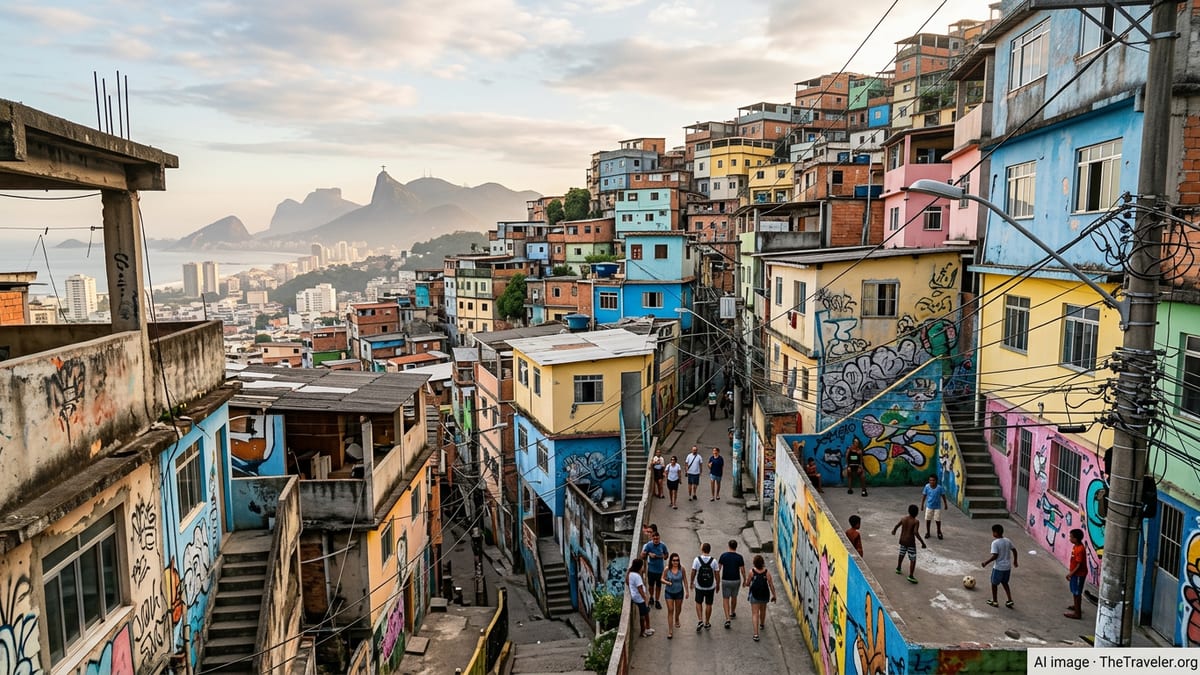
From “safari” tours to community-led experiences
Favela tourism in Rio de Janeiro emerged in the 1990s as outside tour companies began offering quick drives through hillside neighborhoods, a model widely criticized for treating residents like exhibits. Over time, local entrepreneurs and cultural organizers in communities such as Rocinha and Maré have developed alternatives that focus on walking tours, workshops and social projects, with itineraries designed and led by residents themselves.
Recent coverage of Rio’s tourism sector indicates that demand for favela visits remains strong in 2025 and 2026, particularly among travelers seeking what is described as “authentic” or “off the beaten path” experiences. Community-based operators emphasize smaller groups, longer visits and opportunities for dialogue as a way to distinguish themselves from older drive-through formats and to redirect some of the economic benefits into local initiatives.
Researchers and NGO reports highlight that this shift has not resolved all concerns. Some operators are still based outside the favelas, and there is ongoing debate over how much of the revenue stays in the neighborhood versus flowing to external agencies. However, the growth of resident-run projects has introduced more models in which guides, artists and musicians from the community set the terms of engagement and showcase local creativity alongside candid discussions of inequality and urban change.
Travel advisories and responsible tourism guides stress that conditions in favelas can change quickly and that safety remains a significant consideration. Visitors are repeatedly urged to avoid independent exploration and to choose established, well-reviewed operators that work transparently with community groups, limit group sizes and are willing to cancel or reroute tours when local dynamics shift.
Street art, music and the favela cultural scene
Rio’s favelas have long been hubs of cultural production, and many community-led tours now foreground art and music as their central theme. In Rocinha and Santa Marta, visitors are commonly introduced to large-scale murals, painted stairways and graffiti projects created in partnership with residents, sometimes linked to broader urban art campaigns that have brought color to hillside homes and public spaces.
In Santa Marta, the favela where a well-known pop music video was filmed in the 1990s, murals and painted facades have become visual landmarks that many itineraries include alongside viewpoints over Botafogo and the bay. Cultural centers in other communities, such as museums dedicated to favela history and everyday life, host exhibitions, photography, and installations that challenge stereotypes and present local narratives of housing rights, migration and resilience.
Music remains another anchor of favela tourism. Samba schools and percussion groups linked to carnival rehearsals, funk parties, and informal rodas de samba all attract visitors interested in Rio’s soundscape beyond the beachfront kiosks. Some tours coordinate visits to rehearsals or small community events, while others offer short workshops in drumming, dance or capoeira, framed as introductions to living cultural traditions rather than staged performances for tourists.
Travel reporting also notes a wider network of cultural venues in and around favela areas, including library parks and multi-use arts spaces that offer concerts, film screenings and classes to residents. When these institutions open selected programs to visitors, tour operators sometimes include them as stops to illustrate how public investment and community organizing intersect with tourism in shaping local cultural life.
Ethical questions and evolving best practices
Alongside increased interest, favela tourism continues to generate contentious debate among academics, activists and residents. Critics argue that poorly designed tours risk turning poverty into spectacle, especially when visitors are driven through on buses, take photos without consent or focus primarily on hardship rather than on people’s agency and achievements. Online discussions and commentary from favela residents frequently raise concerns about feeling observed or commodified.
On the other hand, studies of community-based tourism point to potential benefits when initiatives are led by local organizations, transparent about money flows and linked to social projects, arts education or neighborhood improvements. In these cases, tourism can provide income for guides, artisans, guesthouse owners and food vendors, while creating opportunities for dialogue about structural issues such as housing, policing and public services.
Current responsible tourism guidelines converge around several principles for visitors. Travelers are encouraged to prioritize projects that are clearly rooted in the community, publish information on how revenue is reinvested locally, and avoid operators that advertise “slum safaris” or promise voyeuristic encounters. Respectful behavior, including asking before taking photos, dressing modestly and avoiding displays of expensive items, is widely recommended.
Analyses of volunteer and “social impact” travel warn that short-term volunteer schemes in favelas can have unintended consequences when not coordinated with local organizations. Prospective visitors are advised to scrutinize any package that combines tourism with unpaid work, seeking evidence that projects are community requested, long term and supervised by established local partners instead of being designed solely around visitor expectations.
Safety, regulation and on-the-ground realities
Security is a recurring theme in discussions of favela tourism. Publicly available information from travel advisories and local commentators indicates that many violent incidents in Rio are concentrated in specific areas and often involve conflicts between armed groups and police. Because these dynamics are highly localized and can shift quickly, residents and experts consistently recommend that tourists avoid entering favela areas on their own or following navigation apps through unfamiliar neighborhoods.
Community-based tour operators typically work with local networks to monitor day-to-day conditions and may adjust routes, times or group size in response to changes. Some guides emphasize that tours should not proceed if there are signs of tension, and that responsible operators communicate cancellations clearly even when it means lost income. Travelers are encouraged to see last-minute changes as part of safe practice rather than as an inconvenience.
In recent years, city-level regulations have focused more heavily on Rio’s waterfront and formal tourist zones, including new rules for music, vending and kiosk operations on popular beaches. While these measures do not directly regulate favela tours, tourism observers note that they form part of a broader effort to balance resident quality of life with visitor demand, a tension that also plays out in hillside communities where increased tourism can strain infrastructure or alter local economies.
For individual visitors, standard urban safety measures still apply: booking through reputable organizations, checking recent updates on neighborhood conditions, moving in small guided groups, and keeping valuables out of sight. Travel forums frequently highlight that perception of risk in favelas varies widely, and that listening to up-to-date local advice remains essential.
How travelers can support community-led initiatives
As favela tourism matures, more projects explicitly frame visits as cultural exchanges that support neighborhood initiatives. Some tours partner with local associations, youth groups or cultural centers, channelling part of their revenue into arts education, sports programs or heritage projects. Museums of the favela in communities such as Maré and Rocinha showcase oral histories, photographs and artifacts, and often rely on visitor income and donations to sustain programming.
Travel features focusing on Rio’s community tourism scene describe a growing number of homestays, guesthouses, cooking classes and craft workshops run by residents. By extending visits beyond a few hours, these initiatives aim to move away from spectacle and toward shared everyday experiences, such as family meals, visits to neighborhood markets, and participation in cultural events already happening for locals.
Observers of the sector suggest that travelers can contribute positively by asking operators detailed questions before booking. Key topics include who owns the company, how guides are selected and trained, what proportion of fees stay in the community, and whether the itinerary includes support for local businesses. Operators that are willing to discuss these issues openly are often cited as more aligned with community interests.
Advocates of responsible travel also emphasize that visitors can engage with favela culture outside organized tours, by supporting musicians, filmmakers, writers and visual artists whose work reaches global audiences. Purchasing music, films, books and artwork produced by favela residents, whether in Rio or at home, is frequently mentioned as another way to connect with the city’s cultural heartbeat while recognizing that not every form of appreciation requires physically entering a neighborhood.