

A ferocious mid-February blizzard has smothered the Dakotas and Minnesota in whiteout conditions, grinding road, air and rail travel to a halt and leaving even winter-hardened communities scrambling to cope with drifting snow, hurricane-force gusts and life-threatening wind chills.
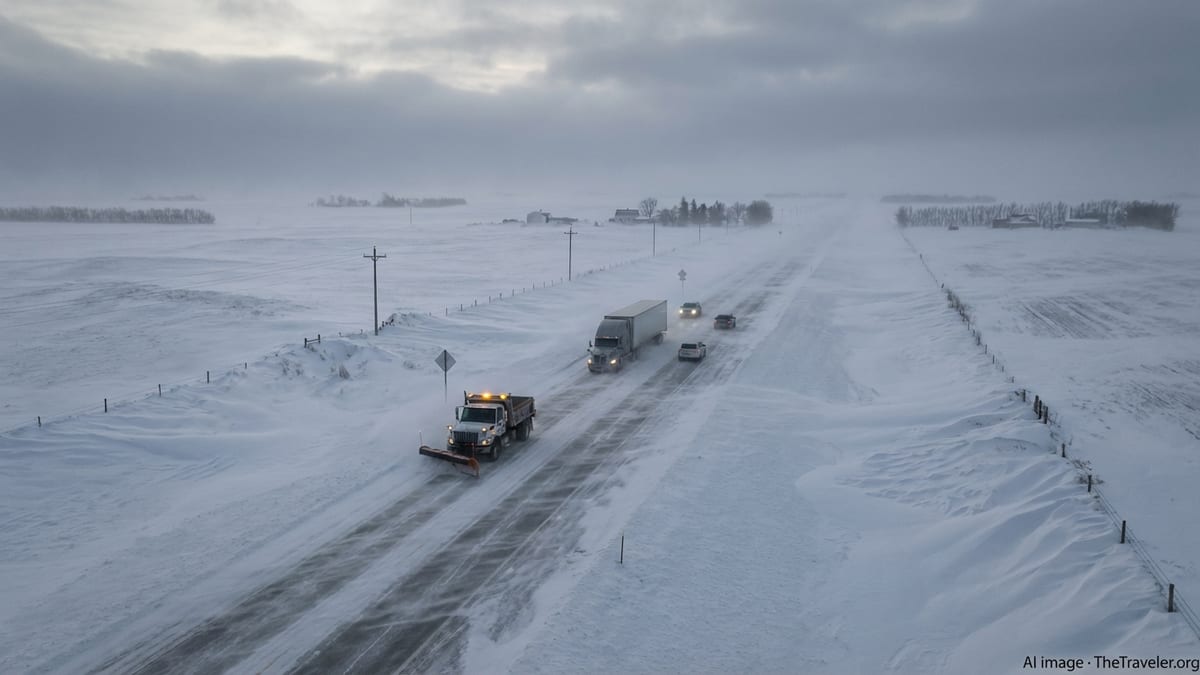
A Storm Explodes Over the Northern Plains
The February 2026 blizzard arrived with little subtlety. A deep, fast-moving low-pressure system barreled out of the Rockies and intensified over the northern Plains, tapping into Arctic air from Canada and moisture sweeping up from the central United States. By February 17, forecast models were unanimous: the Dakotas and northern Minnesota were directly in the crosshairs of a high-impact winter storm.
Snow began falling across western South Dakota and central North Dakota late on February 17, with winds rapidly increasing overnight. By the morning of February 18, bands of heavy, fine snow were sweeping eastward toward the Red River Valley and northern Minnesota. Meteorologists described the storm’s structure as “textbook,” with a tight pressure gradient driving winds that easily exceeded 45 miles per hour in open country, ensuring that even modest snowfall totals would translate into crippling whiteout conditions.
Along the North Shore of Lake Superior in Minnesota, the storm found extra energy. Moisture off the relatively warmer lake fed narrow but intense snow bands, turning communities such as Two Harbors, Castle Danger and Finland into ground zero for some of the region’s highest totals. By late Wednesday morning, official measurements already topped a foot of snow in several locations, with forecasters warning that additional accumulation and blowing snow would keep conditions dangerous into February 19.
Across the Dakotas, the signature of the blizzard was less about how much snow fell than how violently it moved. Open prairie, minimal tree cover and long, straight stretches of highway created perfect conditions for ground blizzards, where existing snowpack was lofted into the air and visibility collapsed to near zero, even in areas receiving only light new snowfall.
Highways Vanish: No-Travel Advisories and Interstate Closures
For travelers, the first sign that this storm would be different came in the form of stark, early warnings from state transportation departments. As visibility deteriorated and winds intensified, authorities moved from simple winter driving cautions to sweeping no-travel advisories. County and state officials in North Dakota and South Dakota stressed that the issue was not just slippery pavement, but the real possibility of becoming stranded in life-threatening wind chills if a vehicle slid into a drift or stalled.
On the open north–south spine of the region, key sections of Interstate 29 in North Dakota were closed as blowing snow created complete whiteouts and rendered snowplow efforts nearly futile. From stretches near the Canadian border down toward Grand Forks and points south, motorists encountered lowered gates and illuminated warning signs blocking access. Travel on closed roads, highway patrol officers reminded the public, is prohibited not only for safety but to prevent rescue teams from having to risk their own lives in disorienting conditions.
In South Dakota, conditions along Interstates 90 and 29 deteriorated rapidly, especially in exposed rural segments where crosswinds drove loose snow across lanes in thick, blinding sheets. Law enforcement agencies fielded multiple calls about jackknifed semitrailers, vehicles sliding into ditches and motorists losing sight of the roadway entirely. Many counties implemented formal no-travel advisories, urging residents to stay home and warning that emergency responders might be unable to reach stranded drivers quickly.
Across western and central Minnesota, including stretches of Interstate 94 and a sprawling network of state and U.S. highways, travel advisories escalated in step with the storm. Road cameras in west-central and northern Minnesota captured scenes of near-total whiteout, where headlights were swallowed by swirling snow just a few car lengths ahead. Officials repeatedly emphasized that in rural areas, drifting snow could hide deep ditches and abandoned vehicles, turning any attempt to “just push through” into a dangerous gamble.
Airports Silent and Rail Slow as the System Stalls
Even as plows and troopers battled conditions on the highways, the storm’s reach was felt far above the snowbound interstates. At Minneapolis–St. Paul International Airport, one of the Upper Midwest’s key hubs, waves of cancellations and delays rippled through the schedule as wind gusts and low visibility made safe operations increasingly difficult. Airlines leaned on their winter playbook, issuing weather waivers that allowed passengers to rebook without penalty, and repositioning aircraft when possible to avoid trapping planes and crews overnight.
Regional airports in Fargo, Grand Forks, Bismarck, Sioux Falls and Duluth faced similar disruptions. Many early-morning flights on February 18 simply never left the gate, as airport operations teams struggled to keep runways clear of snow and ice between bursts of heavy showers and ground blizzard conditions. For travelers trying to connect to other parts of the country, especially through northern hubs, itineraries unraveled quickly as one cancellation cascaded into another.
Rail service, usually more resilient to winter weather, also slowed. Freight operators in the Dakotas reduced speeds through the worst of the whiteouts, wary of drifting snow building up along tracks and high winds affecting lighter rolling stock. Passenger services across Minnesota reported delays as trains waited for confirmation that tracks ahead were clear or crawled through areas of particularly poor visibility. For communities that rely on rail shipments of fuel, grain and essential goods, the knock-on effects of even short disruptions were closely watched.
Inside terminal buildings, the human side of the storm played out in long lines at customer service desks and crowded seating areas. Families returning from midwinter holidays, business travelers caught between connections and college students trying to get back to campuses in the region all scrolled through airline apps and weather radar, searching for any sign of improvement before rebooking decisions had to be made.
Communities Dig Out Amid Power Cuts and Dangerous Cold
As the storm raged outside, communities across the Dakotas and Minnesota turned inward. In rural stretches where high winds toppled lines or ice accumulated on equipment, power outages punctuated the blizzard, forcing residents to rely on backup generators, wood stoves and improvised heating strategies. Utility crews worked in shifts, but often had to stand down during the worst gusts, when visibility dropped and bucket truck operations became too dangerous.
In town centers from Bismarck to Bemidji, local governments activated emergency operations centers, coordinating with state agencies, hospitals and volunteer groups. Warming shelters opened in churches, community centers and school gyms, providing a lifeline for residents whose homes were without heat or who found themselves stranded away from home when travel advisories snapped into place. Volunteers with four-wheel-drive vehicles and experience in winter rescue assisted transporting essential workers, from nurses and doctors to power company technicians.
The region’s deep familiarity with harsh winters was evident. Residents shifted routines almost reflexively, checking on elderly neighbors, moving vehicles off streets to make way for plows, and stocking up on basic supplies before the worst of the storm hit. At the same time, officials warned against complacency, noting that the combination of prolonged whiteouts and severe wind chills made this event especially dangerous compared with more routine snowfalls.
Across northern Minnesota, where snow totals were highest, images emerging from communities along the North Shore described cars buried up to their windows, front doors barricaded by chest-high drifts and snow blowing horizontally off the roofs of lakeside homes. In smaller towns scattered across the Dakotas, similar scenes played out, with drifts swallowing fences and transforming once-familiar streets into narrow tunnels carved by plows and shovels.
Travelers Stranded, Tourism Plans Shattered
The timing of the February 2026 blizzard could hardly have been worse for winter tourism and essential travel across the north. Mid-February often brings a flurry of activity in the region’s resort communities, with travelers drawn to cross-country ski trails, snowmobile routes and ice fishing destinations that rely on reliable winter conditions. This storm delivered snow in abundance, but at a steep cost: road closures made it nearly impossible for many visitors to reach their destinations safely.
Along popular corridors leading to lakes country in Minnesota and the Black Hills region of South Dakota, hotels and lodges reported a spike in last-minute cancellations. Families who had planned long weekends on the snow were forced instead to remain at home or in roadside motels, watching the storm unfold on local news. Some operators tried to salvage business by offering vouchers and flexible rebooking policies, but the reality for many small tourism businesses was a sudden, unexpected gap at a time of year when every booking matters.
For those already on the road when conditions deteriorated, the experience was unnerving. Rest areas and truck stops along Interstates 29 and 94 filled with semitrailers and passenger vehicles waiting out the whiteouts. Parking lots turned into impromptu encampments where travelers compared forecasts, shared chargers and snacks, and checked in with worried family members hundreds of miles away. When law enforcement urged people to stay put rather than risk getting stranded between exits, many heeded the advice, choosing a long, uncomfortable night in a vehicle over a potentially life-threatening drive.
International travelers connecting through Minneapolis–St. Paul faced an added layer of complexity as missed connections rippled outward to Europe and beyond. Travel advisers and consular officials urged patience and flexible planning, reminding visitors that in the northern United States, winter weather can reshape even the best-organized itineraries with little warning.
Emergency Logistics and Freight Corridors Under Strain
While stranded motorists and vacationers drew much of the public attention, the blizzard also put intense pressure on the freight networks that keep the Upper Midwest supplied. Long-haul truckers hauling food, fuel and medical supplies found key corridors temporarily impassable, particularly where interstate closures and no-travel advisories were most stringent. Dispatch centers juggled reroutes, navigating between safety considerations and the urgent need to keep critical goods moving.
In response to the broader pattern of severe winter weather this season, federal regulators had already issued a regional emergency declaration relaxing certain hours-of-service rules for commercial drivers engaged in relief and recovery work. The February 2026 blizzard added fresh urgency, as trucks carrying everything from road salt to propane and emergency generators needed flexibility to reach hard-hit communities once conditions allowed.
Railroads stepped in where practical, adjusting schedules to prioritize shipments considered essential for storm response and recovery, such as equipment for utility repairs and bulk fuel for power plants. In some areas, coordinated efforts between rail operators and state agencies helped pre-position critical materials ahead of the storm, softening the blow when highways became impassable and air freight slowed.
Local businesses, especially in smaller towns and rural counties, watched supply chains nervously. Grocers monitored inventories of essentials, from bread and milk to baby formula, while hardware stores reported brisk sales of shovels, snowblowers and ice melt in the days leading up to the storm. As the blizzard peaked, many owners chose to close entirely, posting signs that simply read “Closed for weather” and trusting regular customers to understand.
Resilience, Adaptation and the Future of Northern Winter Travel
As skies gradually clear and attention shifts from immediate survival to cleanup and recovery, the February 2026 blizzard is already prompting broader questions about how the Dakotas and Minnesota manage winter travel in an era of increasingly erratic weather. Local officials and transportation planners note that while heavy snowstorms are nothing new here, the combination of extreme winds, rapid intensification and volatile temperature swings has become more common in recent years.
For travelers, that reality underscores the importance of flexibility and preparation. Experts advise approaching winter journeys in the northern Plains with robust contingency plans: extra food and water, cold-weather gear, a full tank of fuel and a willingness to postpone or reroute when forecasts deteriorate. In many cases during this storm, those who heeded early warnings avoided the most perilous situations, while those who tried to “beat the storm” were more likely to encounter closed gates and blinding whiteouts.
Communities, too, are adapting. State departments of transportation across the region continue to refine real-time road condition maps and traveler information services, while local tourism boards emphasize clear communication about risks and alternatives when severe weather looms. Investments in resilient infrastructure, from buried power lines in vulnerable corridors to expanded snow fence networks along exposed roads, are part of a growing toolbox aimed at keeping essential travel possible even as storms intensify.
For now, residents of the Dakotas and Minnesota are focused on the immediate work of digging out: clearing drifts from driveways and sidewalks, freeing vehicles from snowbanks and helping neighbors whose doors have been barricaded shut by windblown snow. The February 2026 blizzard will enter the long regional memory of legendary winter storms, a reminder that in the far north, the power of a whiteout still has the ability to paralyze modern travel and test the resilience of those who call this landscape home.