

More news on this day
Campers across the United States have become unlikely collateral damage in a string of federal decisions that reach from Washington budget talks to wildfire policy and new national park fee rules.
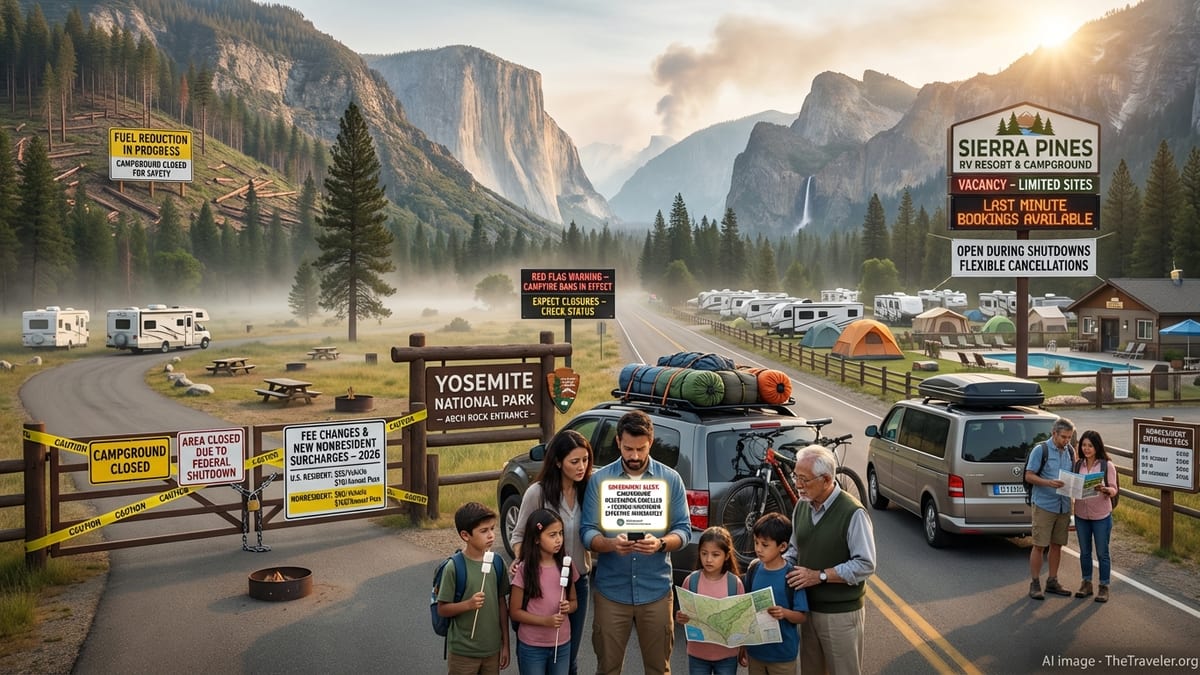
From shuttered national park campgrounds during funding showdowns to shifting reservation systems and controversial pricing for foreign visitors, both public and private operators are scrambling to adapt while travelers face confusion, cancellations and higher costs.
More News
- TSA Rolls Out $45 ConfirmID Fee for Travelers Without REAL ID at Security
- Flying Blue Launches February 25% Promo Rewards on Transatlantic and Regional Routes
- United Fast-Tracks Starlink Wi‑Fi Across Fleet, Free for MileagePlus Members
Shutdown Drama Turns Campgrounds Into Ghost Towns
Each time Congress approaches a funding lapse, America’s campgrounds find themselves on the front line. Under the Interior Department’s current contingency guidance, a full federal shutdown would close most National Park Service campgrounds outright, lock entrance gates and furlough thousands of rangers, severing the backbone of the country’s public camping network almost overnight.
During the last prolonged shutdown in 2018 and 2019, parts of the park system stayed technically open but lacked staff to collect trash, maintain restrooms or supervise campground use. The result was widely reported chaos: overflowing toilets, illegal campsites and off road driving in sensitive desert terrain, and scattered incidents of vandalism and damage to iconic resources such as Joshua trees.
After that experience, the Park Service’s more recent contingency planning has swung toward closing most facilities, including campgrounds, entirely when funding runs out. That protects fragile landscapes but delivers a financial shock to gateway communities and private campground operators that depend on a steady stream of national park visitors.
Advocates say this cycle of brinkmanship has turned what should be a predictable outdoor pastime into a high stakes gamble whenever federal budget negotiations stall. Travelers who booked national park campsites months in advance can find plans upended with days of notice, while businesses that outfit, transport and host campers watch revenue evaporate with each closure notice.
Economic Whiplash For Gateway Towns And Private Parks
The economic fallout spreads quickly beyond federal boundaries. National park visitors spend tens of millions of dollars a day in nearby communities on lodging, groceries, fuel and tours. When campgrounds and visitor centers close, much of that money disappears, leaving restaurants half empty and local workers facing shortened hours at the height of travel seasons.
Private campgrounds in gateway towns often see a short term bump as displaced campers hunt for last minute alternatives outside federal land. Some commercial parks near Yosemite, Zion and Great Smoky Mountains report selling out within hours when a shutdown looms, while independent operators along popular corridors say phones ring non stop with pleas for any available site.
Yet owners caution that the windfall is rarely enough to offset broader losses across their communities. Many travelers simply cancel trips entirely rather than re plan routes, particularly international visitors or families who have saved for a once in a decade national park vacation. Outfitters who rely on permitted backcountry camping or river trips inside federal lands find that their core product vanishes with each closure.
Private campground operators also absorb extra costs during shutdowns, from hiring more staff to handle surging demand to expanding restroom and dumping capacity. Several industry groups have urged Congress to insulate park operations from political standoffs, warning that repeated disruptions erode traveler confidence and long term visitation to public lands.
Reservations, Refunds And Confusion On Recreation.gov
Even when the government stays open, federal policy shifts around the Recreation.gov booking platform and park staffing levels have had ripple effects on the camping public. National park and federal land campgrounds managed through the portal use detailed rules for cut off windows, change fees and late cancellations that can leave travelers out of pocket when circumstances beyond their control intervene.
In the event of a shutdown, some park operated campgrounds automatically cancel reservations and issue refunds, while others freeze bookings but leave systems slow to update. During recently averted funding crises, travelers reported difficulty reaching call centers for clarification and inconsistent information about whether fees would be returned if campgrounds closed after their arrival date.
Staffing shortages at high demand parks have added another layer of uncertainty. Last year, Yosemite National Park abruptly paused new reservations at several popular campgrounds citing limited operational capacity. Sales later resumed for some loops and dates, but other sites remained off the books, forcing summer visitors to scramble for alternatives or stalk the site for last minute openings.
Outdoor groups say these disruptions highlight how dependent modern camping has become on a centralized federal reservation system. While the platform has made it easier to secure a site months ahead at marquee destinations, it has also concentrated risk. When federal hiring freezes, budget fights or technology changes hit Recreation.gov, millions of planned nights under the stars can suddenly be in play.
Fee Hikes And America First Pricing Hit International Campers
Beyond shutdowns and staffing woes, a new wave of fee policies is poised to reshape who can afford to camp in some of the country’s most famous landscapes. The Interior Department has announced steep increases in park entrance costs for nonresident visitors beginning in 2026, including a proposed one hundred dollar surcharge at a select group of heavily visited parks and more than tripled prices for annual access passes for foreign travelers.
Supporters inside the administration argue that international tourists should shoulder a greater share of maintenance costs on overstressed trails, campgrounds and roads. They frame the changes as a way to keep basic entrance fees and passes stable for American families even as aging infrastructure and wildfire damage strain park budgets.
Travel industry leaders and gateway business owners counter that the policy could depress overseas visitation to rural regions that have spent years marketing themselves abroad. In counties bordering parks such as Yosemite, where a large slice of visitors comes from overseas, hotel and campground owners warn that fewer foreign tourists will ripple through their bottom lines, thinning shoulder season occupancy and hitting tour operators that specialize in international groups.
For campers, the impact will differ sharply by nationality. U.S. residents will still face rising costs through separate campground fees, reservation charges and potential seasonal surcharges in popular parks, but their overall entrance fee burden will remain relatively stable. Foreign visitors, especially budget travelers relying on rental cars and tents, may find that a week of camping in U.S. national parks suddenly rivals the cost of guided trips in other countries.
Wildfire Policy, Forest Management And Safety Closures
Another set of federal actions is reshaping the camping map through wildfire and forest management policy. With hotter, drier summers fueling longer fire seasons, national parks, national forests and Bureau of Land Management districts have increasingly relied on preemptive campground closures and fire restrictions to safeguard visitors.
A controversial move by the current administration to consolidate wildland firefighting forces into a single federal service has raised questions about how quickly and effectively crews will be able to protect recreation infrastructure. Former fire officials and conservation groups warn that a tumultuous transition could strain seasonal staffing and delay prescribed burns and thinning projects near campgrounds, potentially forcing land managers to err on the side of longer, broader closures during high risk periods.
At the same time, bipartisan legislation in Congress aimed at expediting forest treatment projects could make it easier for agencies to clear overgrown campgrounds, harden access roads and remove dead trees near popular sites. Critics caution that streamlined environmental reviews could sideline local input on where new fire breaks and access improvements are built, while supporters stress the need to act quickly to protect both remote communities and visitors.
For campers, the practical effect is an increasingly dynamic landscape of closures, restrictions and smoke related advisories. A site booked months earlier in a shady ponderosa grove may be unavailable by midsummer if thinning crews move in or nearby fires force evacuations. Families that once built annual traditions around specific national forest campgrounds now hedge bets with flexible routes and backup private parks farther from ignition prone canyons.
Private Campgrounds Pivot To Fill The Gaps
Faced with unpredictable federal operations, private campground and RV park operators have moved aggressively to position themselves as reliable alternatives. Chains and independent parks bordering major national parks now market contingency guarantees, offering flexible cancellation policies or hold over discounts for guests displaced by federal closures.
Some resort style campgrounds have expanded offerings beyond tent pads and utility hookups, adding rental cabins, glamping tents and year round infrastructure that can attract visitors even when nearby public lands are off limits. Others have invested in shuttle services and guided tours that reach trailheads and scenic overlooks just outside park boundaries, creating a parallel recreation network that is less vulnerable to shutdown related roadblocks.
Industry groups say federal upheaval has, paradoxically, accelerated modernization in the private campground sector. Operators are adopting online booking platforms that mirror the convenience of Recreation.gov but allow for real time communication and rapid policy changes when crises hit. They are also lobbying state and local governments to streamline permitting for new sites, arguing that private capacity is now a critical buffer for communities tied to outdoor tourism.
Yet the divide between rustic public campsites and amenity rich private parks also raises equity questions. Travelers on tight budgets, especially those relying on lower cost national forest or Bureau of Land Management campgrounds, may find that their realistic alternatives are significantly more expensive commercial operations. Advocates for outdoor access warn that if federal policy continues to destabilize public camping while market forces push private nightly rates higher, the classic affordable national park road trip may move further out of reach for many families.
Traveler Strategies In An Era Of Federal Volatility
For would be campers, navigating this shifting environment demands more planning and flexibility than in years past. Outdoor clubs and travel advisers now routinely encourage travelers to build backup itineraries that include both public and private campground options, avoid putting all reservations inside a single national park and stay attuned to federal budget deadlines that could trigger sudden shutdowns.
Insurance and refund policies warrant closer scrutiny as well. While some federal reservations are refunded automatically if campgrounds close due to a government shutdown or wildfire, others may only return base fees while retaining service charges. Private parks increasingly offer protection plans or lenient change windows, but details vary widely from one operator to the next.
Experienced road trippers also highlight the value of shoulder season travel and lesser known public lands that may be less exposed to the sharpest impacts of federal policy. Smaller national monuments, state parks and county run campgrounds can sometimes provide more stable operations, although they too can be indirectly affected by federal staffing crises and fire conditions.
In this environment, clear communication from federal agencies becomes as important as the policies themselves. Camper groups are pressing the National Park Service, Forest Service and Bureau of Land Management to issue earlier, more detailed guidance whenever shutdown threats, fee changes or large scale management shifts loom, arguing that timely, transparent information is the only way travelers and businesses can adapt without suffering unnecessary losses.
FAQ
Q1. How do federal government shutdowns directly affect national park campgrounds?
During a shutdown, most national park campgrounds close or are left without staff, which means locked gates, no reservations, reduced maintenance and limited emergency response. Even in parks that remain physically accessible, services such as restrooms, trash collection and ranger programs are typically suspended.
Q2. Are private campgrounds open when national parks close?
Yes. Privately owned campgrounds, including those in gateway towns just outside national park boundaries, generally remain open during federal shutdowns or park specific closures. Many see a surge in last minute bookings from displaced campers, though availability can disappear quickly.
Q3. Will I get a refund if my federal campsite is canceled because of a shutdown?
Policies differ by location, but federal agencies commonly refund at least the base camping fee when a site is closed due to a government shutdown. Service or transaction fees processed through the reservation platform may not always be returned, so travelers should review terms at the time of booking.
Q4. How are international campers affected by the new America first fee policies?
Starting in 2026, nonresident visitors to a group of heavily visited national parks will face significantly higher entrance costs and more expensive annual passes than U.S. residents. For international travelers planning extended camping trips across multiple parks, these higher fees could add hundreds of dollars to overall trip budgets.
Q5. Do wildfire policies really change where I can camp?
Yes. As fire seasons lengthen, land managers use temporary closures, fire bans and fuel reduction projects to reduce risk. Campgrounds in high hazard areas can close with little notice, and smoke or access restrictions may affect entire regions. Checking current fire information is now an essential step before any camping trip in the West.
Q6. Are national forests and Bureau of Land Management campgrounds less affected than national parks?
Not necessarily. These agencies are also federal and subject to shutdowns, staffing shortages and wildfire constraints. In some cases their campgrounds stay open longer or reopen sooner than national park sites, but they can face the same financial and operational pressures from federal actions.
Q7. How can I reduce the risk of my camping trip being disrupted by federal decisions?
Travel experts recommend booking a mix of public and private campgrounds, avoiding trips that rely entirely on one major park, staying flexible with dates and monitoring federal budget deadlines and agency announcements in the weeks before departure.
Q8. What should campground owners near national parks do to prepare for shutdowns?
Private operators often update cancellation policies, adjust staffing to handle surges, and communicate proactively with guests about contingency plans. Many also coordinate with local tourism offices and chambers of commerce to share real time updates on what remains open in the area.
Q9. Are there affordable alternatives if national park campgrounds are full or closed?
Travelers can look to state parks, county and municipal campgrounds, national forest sites outside core closures and smaller private parks farther from the main gateway towns. These options may offer fewer amenities but often provide similar access to hiking, fishing and scenic drives.
Q10. Will these federal policy shifts have long term effects on camping in the United States?
Many analysts believe they will. Repeated shutdown threats, new fee structures and evolving wildfire strategies are encouraging investment in private campgrounds, increasing costs for some visitors and reshaping when and where Americans choose to camp, with potential lasting impacts on rural economies built around public lands tourism.