

More news on this day
Felixstowe, long known as Britain’s busiest container port, is sharpening its profile as a coastal getaway, combining a revitalised seafront, rich maritime heritage and new investment aimed at lifting its visitor economy.
Get the latest news straight to your inbox!
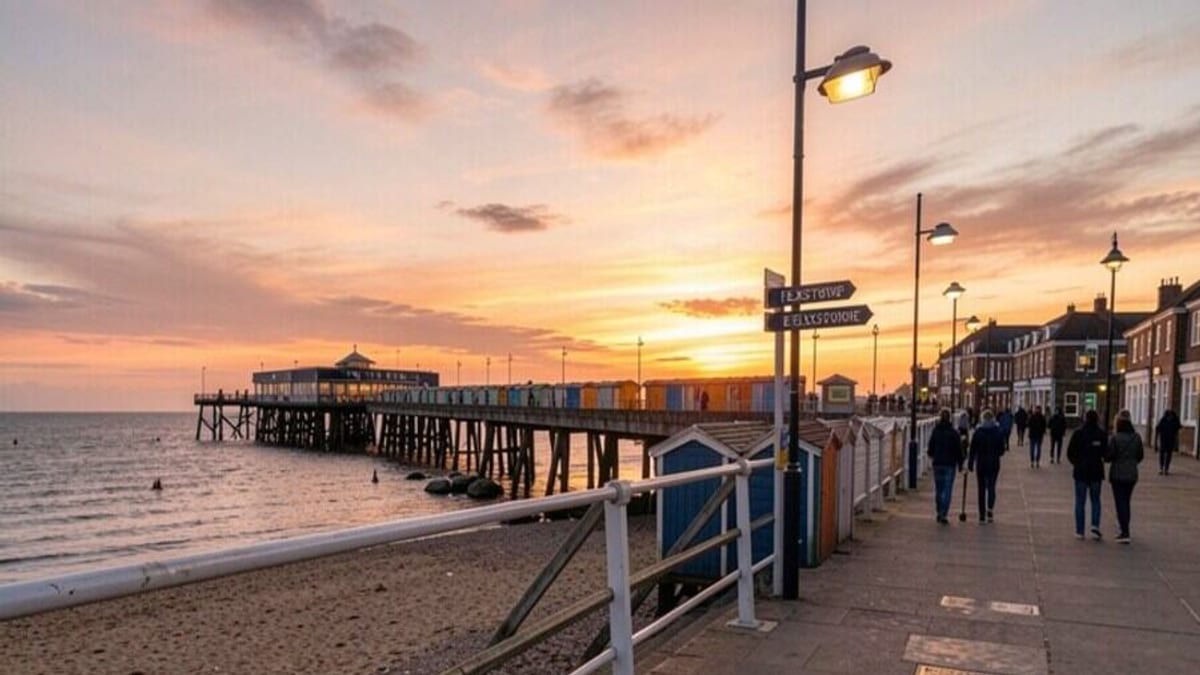
Image by Latest International / Global Travel News, Breaking World Travel News
Seafront strategy positions Felixstowe for tourism growth
Recent planning documents and council strategies indicate that Felixstowe is entering a new phase as a visitor destination, with a formal Seafront Development Strategy adopted in October 2025 to guide future investment along the South Seafront between the pier and Landguard Point. The vision focuses on creating a more attractive year-round public realm for residents and visitors, with improved lighting, wayfinding and connections from the promenade into surrounding streets.
The strategy follows several years of incremental upgrades, from new cafes and family attractions at Martello Park to enhanced toilet and changing facilities. Public consultation in 2025 drew hundreds of responses, with published summaries showing strong local support for proposals that protect Felixstowe’s traditional character while adding more things to see and do. Short-term priorities now being developed include better links from the end of the promenade to Manor Terrace and a programme of public realm improvements intended to encourage longer stays.
Separate master-planning work for Felixstowe’s town centre and seafront has also been promoted as a marketing tool for tourism, framing the resort as a compact coastal town where the beach, gardens and shopping streets are within walking distance. Local business plans highlight tourism as a central strand of economic development, with ambitions to improve transport between the town centre and the seafront and to strengthen Felixstowe’s brand as a Suffolk resort.
Historic port town leans into maritime heritage
Felixstowe’s efforts to raise its profile build on a deep maritime story that differentiates it from many English seaside towns. The modern container port, often cited as the country’s largest, grows from a waterfront that once hosted paddle steamers, pleasure boats and a railway station serving a Victorian pier. Archival histories describe the original pier and associated railway as pivotal in the town’s growth as a resort from the late nineteenth century onwards.
Nearby Landguard Fort, a scheduled ancient monument, anchors this maritime identity with a narrative stretching back to the seventeenth century, when the site played a role in coastal defence. Today, the fort and the adjoining nature reserve form a key heritage cluster at the southern tip of the seafront, regularly promoted in tourism material alongside Felixstowe Museum and the historic Spa Gardens. Together, these landmarks give the town a layered story that connects modern port operations with centuries of naval, military and trading history.
Felixstowe’s town fabric also reflects the era when coastal holidays first surged in popularity. Promenades, gardens and Edwardian-era buildings line much of the waterfront, while civic buildings such as the town hall underscore its development as a purpose-built resort. Current tourism positioning emphasises this continuity, presenting Felixstowe as a place where industrial scale shipping and traditional seaside architecture coexist along the same shore.
Revamped pier, award-winning beaches and new family spaces
The reopening of Felixstowe Pier in 2018 after extensive rebuilding has become a focal point in the town’s tourism push. The modern structure, which replaced a much-altered early twentieth-century pier, now houses amusements, family entertainment, food outlets and covered spaces that extend the visitor season beyond high summer. Local guides describe the pier as both a nostalgic reminder of Felixstowe’s heyday and a contemporary anchor for new attractions.
Along the shore, Felixstowe’s beaches have strengthened their credentials through repeated recognition under national quality schemes. Public announcements for 2024 confirmed that the resort secured Blue Flag and Seaside Awards for a fifth consecutive year, indicating that bathing water quality, cleanliness and environmental management meet some of the highest benchmarks for English beaches. Tourism promotion frequently links these awards with a wider offer that includes the Spa Gardens, Landguard Nature Reserve and a growing mix of places to eat and drink.
Investment has also reshaped the promenade experience itself. The Seashore Village project, completed with support from East Suffolk Council, has delivered a landscaped cluster of new beach huts, accessible facilities, ramps and play features, framed as a family-friendly space that improves access to the waterfront. Coupled with activity parks and informal play areas at Martello Park, these additions aim to strengthen Felixstowe’s reputation as an accessible, multi-generational seaside town.
Greener access and coastal resilience support future appeal
As Felixstowe looks to draw more visitors, transport and environmental resilience are emerging as critical themes. The Felixstowe Area Transport Plan highlights measures to improve walking and cycling links between the railway station, town centre and seafront, including changes to key approach roads and better integration with existing promenades. The opening of the England Coast Path section between Felixstowe and Shotley, with interpretation points and signage, has added a long-distance walking route that connects the resort to wider Suffolk landscapes.
At the same time, projects associated with the Port of Felixstowe are playing a role in coastal management. Recent Environment Agency-backed works have used dredged material from routine harbour maintenance to bolster sea defences and create new intertidal habitat along parts of the wider estuarine coast. Publicly available information frames the scheme as part of a shift towards nature-based solutions in response to sea level rise, with the port’s operations contributing to broader regional resilience.
Felixstowe’s tourism messaging is increasingly intertwined with these environmental narratives. Local authorities and partners emphasise biodiversity, beach management and climate adaptation in planning documents for the South Seafront, reflecting a view that long-term visitor appeal depends on both attractive amenities and a safeguarded shoreline. For travellers, this positions Felixstowe as a destination where classic seaside experiences sit alongside visible efforts to care for the coastal environment.
New neighbourhoods and cultural projects broaden the offer
Beyond the immediate beachfront, development plans suggest that Felixstowe could evolve into a more rounded coastal hub with expanded leisure and cultural infrastructure. The proposed North Felixstowe Garden Neighbourhood, now moving through a master-planning process, envisages a substantial housing-led extension with green spaces, community facilities and a new leisure centre intended to replace ageing seafront venues. Planning material describes the scheme as a “leisure led” neighbourhood designed to work with the wider town rather than compete with existing centres.
Consultation documents and business plans for 2024 to 2028 further indicate ambitions to tie these new areas into Felixstowe’s tourism economy, highlighting better links between residential zones, the town centre and the waterfront. The approach reflects a belief that a larger year-round population, paired with modern leisure facilities, can support more diverse hospitality and cultural offerings that will also appeal to visitors.
Smaller-scale cultural initiatives are beginning to add to this mix. In 2024, arts organisation Furtherfield piloted a “coastal town reimagined” project in Felixstowe, inviting residents and visitors to explore how the town might evolve over the next 200 years. Organisers have signalled an intention to relocate their activities from London to Felixstowe, pointing to the town’s blend of maritime landscapes, community networks and relatively affordable coastal living as a platform for creative experimentation.
Together, these strands of physical regeneration, environmental work and cultural programming are helping to reposition Felixstowe as more than a working port or a traditional day-trip resort. For domestic and international travellers weighing UK coastal options, the town is increasingly presented as a place where cranes and container ships share the skyline with restored piers, Blue Flag beaches and a seafront now central to a long-term vision for growth.