

More news on this day
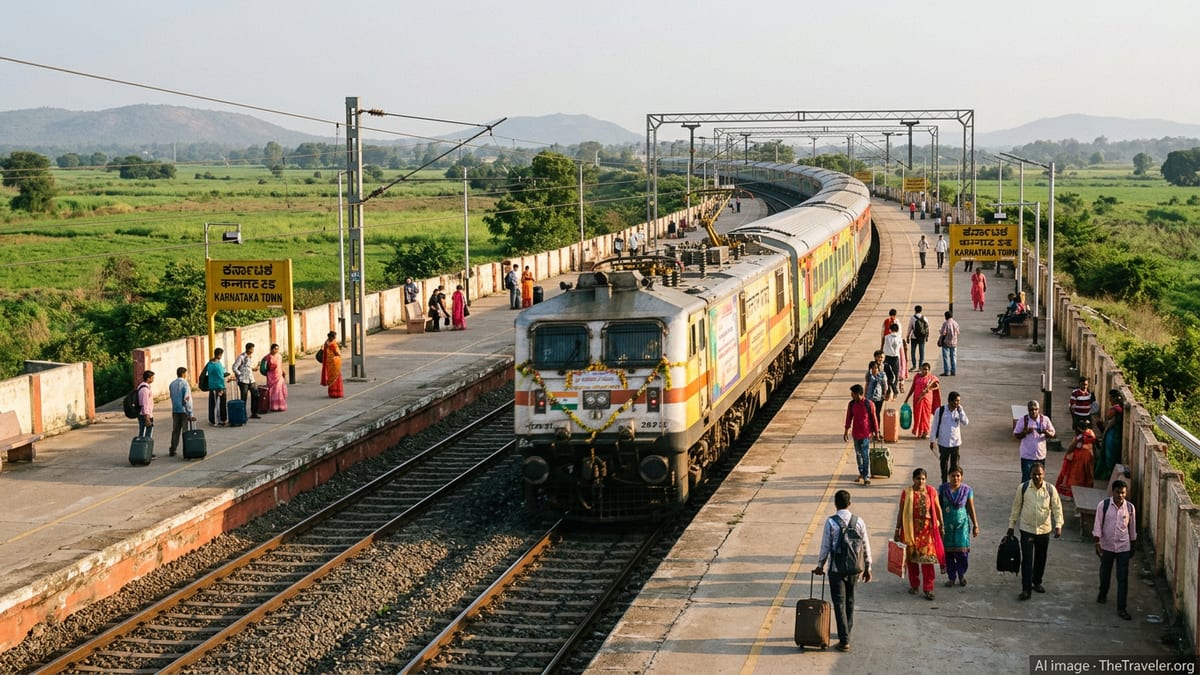
Festival-special trains criss-crossing Karnataka are rapidly transforming the state’s busiest rail corridors, easing peak-season pressure while channeling new tourist flows to pilgrim towns, coastal hubs and emerging heritage circuits.
Get the latest news straight to your inbox!
Network-wide Festival Push Across Karnataka
South Western Railway has stepped up the scale and frequency of festival-special services across Karnataka over the last two seasons, turning what were once ad hoc holiday extras into a semi-structured layer of seasonal connectivity. Recent Holi, Deepavali, Dasara, Ugadi and Ramzan periods have each seen dozens of additional trains, temporary stoppages and extra coaches, particularly on routes radiating from Bengaluru, Mysuru, Hubballi and Belagavi.
Published coverage indicates that by Deepavali 2025, Bengaluru Division alone was running close to 100 special services during the festive window, more than doubling the number operated the previous year and adding around 540 extra coaches to absorb demand. Similar patterns are now visible ahead of other festival clusters, with advance timetables released earlier and a clearer emphasis on dispersing crowds across multiple destinations inside Karnataka rather than funnelling everyone toward a few metro termini.
Reports on operations for Holi 2026 point to a network that has learned from recent seasons, with South Western Railway already fielding several dozen specials and proposing more as waitlist data tightens. While many of these trains are still branded as seasonal or holiday services, their systematic deployment along key axes is beginning to resemble a flexible overlay on top of the regular timetable, particularly during long-weekend and festival peaks.
Connecting Pilgrimage, Coast and Heritage Hubs
The new wave of festival specials is closely aligned with Karnataka’s tourism hotspots, strengthening what state agencies often describe as the rail tourism corridor. Services linking Mysuru with Vijayapura, Hubballi, Karwar and coastal stretches are timed to coincide with cultural and religious calendars, giving pilgrims and leisure travellers direct rail access to temples, heritage sites and beach towns at precisely the moment demand spikes.
One prominent example is the festival-season express connecting Mysuru and Vijayapura, cleared by the Railway Board as a one-time special to cater to Ugadi and Ramzan traffic across central and northern Karnataka. By directly joining a major tourist centre in the south with a heritage-rich district in the north, the service effectively stitches together distinct visitor circuits that would otherwise require multiple connections.
During Dasara and Deepavali, special trains toward Karwar, Belagavi, Bidar and Mangaluru complement existing long-distance expresses and premium tourist offerings such as the Golden Chariot luxury train. The combined effect is a more continuous tourism arc, linking palace tourism in Mysuru, coastal leisure in Karwar and Mangaluru, religious travel to key shrines and emerging interest in forts and monuments in North Karnataka through rail-based itineraries.
Spillover Benefits for Local Economies and Smaller Stations
Festival-special operations are also reshaping the fortunes of smaller stations on Karnataka’s trunk routes. Temporary stoppages and additional festival trains bring short, intense bursts of visitor inflows to towns that rarely see such volumes outside the holiday calendar. Publicly available information on recent festival timetables highlights added halts at intermediate stations, particularly along lines to Karwar, Vijayapura, Hubballi and the state border junctions that feed Konkan and southern coastal routes.
Local tourism and hospitality businesses have started to respond with pop-up accommodation, food stalls and short guided experiences tailored to festival travellers arriving by train. In places where overnight stays remain limited, the rail timetable itself is shaping day-trip behaviour, with early-morning arrivals and late-evening departures allowing visitors to make the most of a single day before rejoining festival specials heading back toward Bengaluru or Mysuru.
For districts that are still building up tourism infrastructure, the periodic arrival of festival trains functions as a test bed. Authorities can gauge demand for future regular services, while local entrepreneurs use these high-traffic windows to assess which offerings resonate with travellers. Over time, repeated seasonal specials on the same route can strengthen the case for permanent connectivity or more frequent expresses.
Tourist Experience: Relief From Waitlists, New Routing Options
For travellers, the most immediate impact of Karnataka’s festival-special rollout is visible in shorter waitlists and a wider choice of origins and destinations at peak times. Long-distance passengers from northern and coastal districts gain more options to reach Bengaluru and Mysuru without complex routings, while urban residents find it easier to plan short festival getaways to heritage towns and beaches without relying solely on road transport.
Rail enthusiasts and regular passengers note that the seasonal trains often mirror or slightly tweak the timings of existing popular services, adding departures at convenient evening or overnight slots. This duplication during festivals helps redistribute crowds, especially on heavily booked corridors such as Bengaluru to coastal Karnataka and the northward line through Hubballi toward Maharashtra and beyond.
At the same time, the very nature of special trains means that journeys can still be unpredictable, with occasional delays as they are slotted into busy mainline schedules. Travellers booking festival specials are learning to treat them as a trade-off: greater certainty of a seat and more direct routing in exchange for potential timetable variability compared with established superfast or premium services.
Strategic Role in Karnataka’s Rail Tourism Future
Beyond managing crowds, the expanded roster of festival specials is emerging as a strategic tool in Karnataka’s broader rail tourism positioning. In tandem with curated tourist products such as the Golden Chariot and Bharat Gaurav pilgrim circuits starting or passing through the state, the seasonal trains create a continuum from high-end packages to affordable mass travel, all built around rail-based exploration.
Planning patterns reported for the 2025 and 2026 festival cycles suggest closer coordination between demand forecasting, tourism calendars and rolling stock allocation. Routes that show consistently strong festival-season patronage are being watched as candidates for future regular services or for integration with tourism-focused offerings, particularly where they connect clusters of heritage and religious sites.
As Karnataka continues to market itself as a gateway to both the Deccan hinterland and the Konkan coast, festival-special trains are likely to remain a central feature of the state’s rail tourism corridor. Each new timetable update for Dasara, Deepavali, Sankranti or Ugadi not only promises extra capacity for holidaymakers but also quietly redraws the map of how and where travellers choose to explore the region by train.