

Timing a trip to Greece around its festivals can completely change the way you experience the country. Beyond the ruins and beaches, Greece’s calendar is filled with exuberant celebrations where ancient ritual, Orthodox tradition and contemporary culture come together in unforgettable ways. From winter carnivals to midsummer arts festivals and all-night island feasts, these are the events worth planning your journey around.
Patras Carnival: Greece’s Wildest Winter Party
If you think Greece only comes alive in summer, Patras Carnival will change your mind. The country’s biggest and most famous carnival transforms this port city in the Peloponnese into a weeks-long street party that culminates in late February, just before the Orthodox Lent period. Recent editions have drawn tens of thousands of costumed revellers and spectators for grand parades, a night parade, live music and elaborate floats that rival many of Europe’s better known carnivals.
The modern carnival season in Patras generally begins in mid January with an official opening ceremony and a symbolic handing over of the carnival flag. From that point on, weekends build in intensity with treasure hunts, masquerade balls and a dedicated children’s carnival. The atmosphere in the streets is informal and welcoming, and it is common for visitors to be swept into impromptu dance circles or invited to share a drink with locals celebrating in colourful crews.
The climax typically comes across the final carnival weekend, with a huge night parade on Saturday followed by the grand day parade on Sunday. Floats created at the municipal carnival workshop roll through the streets, accompanied by crews in coordinated costumes, cheerleaders, bands and the Carnival King and Queen. The festivities usually close at the seafront pier with the ritual burning of the Carnival King, fireworks and a large open-air concert. If you intend to attend, book accommodation well ahead and expect late nights, loud music and a proudly chaotic energy.
Travel wise, Patras is connected by bus to Athens and other major cities and serves as a ferry gateway to Italy. The weather in February can be cool and occasionally wet, so pack layers and a waterproof jacket. What you gain in atmosphere, though, more than compensates for the lack of beach weather, and you will experience Greece at its most uninhibited and theatrical.
Greek Orthodox Easter: A Countrywide Celebration of Light
Greek Orthodox Easter is widely considered the most important holiday of the year, outshining even Christmas in emotional intensity and local participation. Dates vary annually because they follow the Orthodox religious calendar, but Easter Sunday generally falls in April or occasionally early May. Planning a trip around Holy Week and Easter gives you access to moving rituals, processions lit by candles and family feasts that reveal how central faith and tradition remain in Greek life.
Celebrations begin on Palm Sunday and intensify from Holy Thursday onward. On Good Friday, somber processions honouring the bier of Christ wind through villages and city neighbourhoods, often accompanied by chanted hymns and flower strewn wooden biers carried on the shoulders of local men. In many places, visitors can respectfully join the procession, following local custom by dressing modestly and carrying a candle.
The emotional peak is the midnight Resurrection service on Holy Saturday. As church bells ring and the priest proclaims that Christ is risen, a sacred flame brought from Jerusalem is shared candle to candle among the gathered crowd. In cities, this can happen in cathedral squares; in villages, it unfolds in intimate courtyards where nearly everyone knows one another. Fireworks or firecrackers often explode overhead as the dark is pierced by hundreds of flickering candles. It is a powerful moment even for non believers, and many travellers describe it as the highlight of their time in Greece.
After the midnight service, families return home for a late meal featuring traditional dishes such as magiritsa soup and, on Easter Sunday, slow roasted lamb and red dyed eggs used in a friendly tapping game. Islands like Corfu are known for distinctive customs, including the dramatic throwing of clay pots from balconies on Holy Saturday morning, while destinations such as Hydra, Chios and smaller Aegean islands offer more intimate experiences. If you visit at Easter, arrange transport early, as ferries and buses can sell out, and be prepared for some closures on key religious days.
Summer on Stage: Athens Epidaurus Festival and Open Air Culture
From roughly June to August, Greece’s cultural life moves outdoors. The long, warm evenings and clear skies provide a natural backdrop for the Athens Epidaurus Festival and a host of smaller regional events that bring theater, music and dance to ancient and modern venues. The Athens Epidaurus Festival program is typically announced in late winter or early spring, and while individual lineups change each year, the broad focus on classical drama, contemporary theater, opera and music remains consistent.
In Athens, performances have long been staged at the Odeon of Herodes Atticus, an atmospheric Roman era theater at the foot of the Acropolis. Recent seasons have combined Greek National Opera productions with visiting orchestras and international artists. The site is undergoing a multi year restoration, so parts of the program are being redistributed to alternate venues around the city, but the festival continues to define the capital’s summer cultural calendar. For visitors, it is an opportunity to see world class performances in historic surroundings, often under a full moon.
The other pillar of the festival is ancient Epidaurus in the Peloponnese, home to one of the best preserved ancient theaters in the world. Here, audiences sit on stone tiers surrounded by cypress and pine as actors perform works by Aeschylus, Sophocles, Euripides and contemporary playwrights. The legendary acoustics allow even quiet lines to carry to the back rows. Combining a performance with a stay in the nearby resort town of Nafplio or along the Argolic Gulf is an easy way to blend culture with seaside relaxation.
Beyond the flagship festival, summer nights across Greece are filled with outdoor concerts, film screenings in open air cinemas and village squares turned into temporary stages. Check local listings closer to your travel dates, but as a rule, July and August are rich with options whether you are in Athens, Thessaloniki or on the islands. Booking tickets in advance is wise for major productions, while smaller events often allow you to simply show up, buy a seat at the door and join the locals.
Islands in Celebration: Panigyria and Village Feasts
One of the most authentic ways to experience Greek culture is by seeking out a panigyri, the traditional village festival usually tied to a saint’s feast day. These celebrations are especially common on the islands and in rural areas from late spring through early autumn. They may not be as heavily publicized as big city festivals, but they reveal the communal heart of Greek life through food, music and dancing that often continues into the early morning hours.
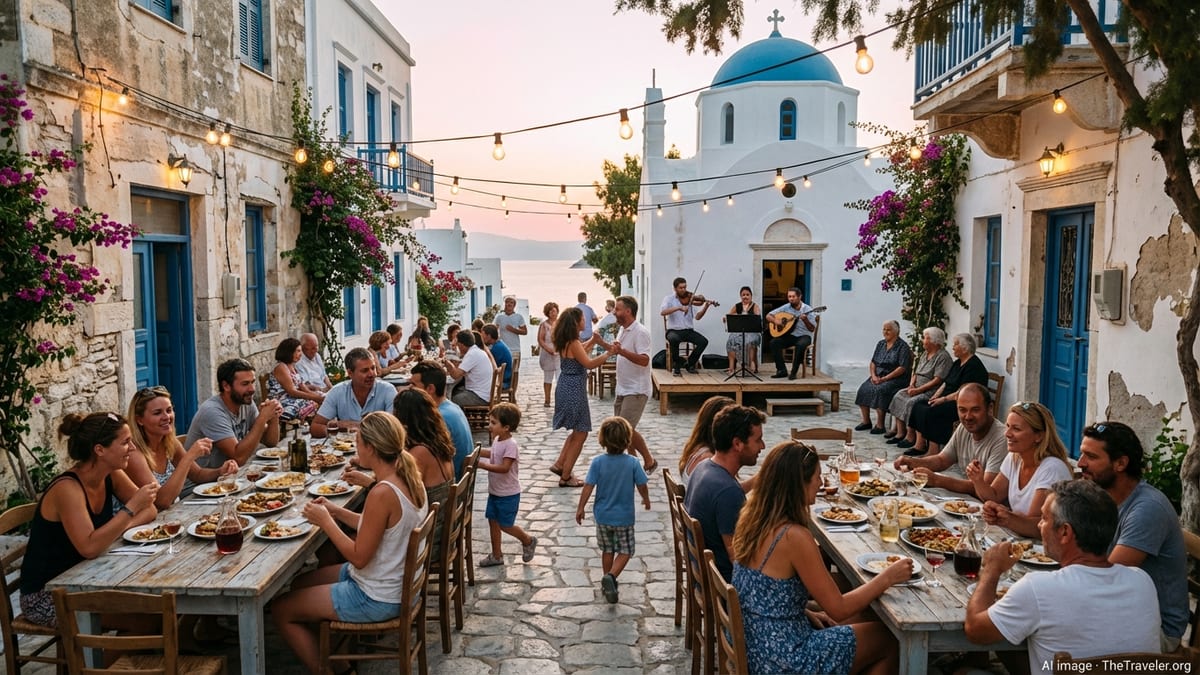
On islands like Naxos, Ikaria, Tinos and Paros, panigyria are fixtures of the summer calendar. A typical festival might begin with a church service honoring the local patron saint, followed by a communal meal in the courtyard or village square. Long tables appear seemingly out of nowhere, piled with dishes such as slow cooked goat, chickpea stews, salads, bread and local wine. A live band plays traditional island music, led by violin or clarinet, and before long the entire square becomes a swirling line dance.
August is particularly rich in panigyria due to the Feast of the Dormition of the Virgin Mary on 15 August, a major religious and social event across Greece. Many islands treat that entire week as a peak festive period, with extra ferries scheduled to accommodate returning Greeks and visitors. Iconic celebrations take place in destinations such as Tinos, where pilgrims arrive from across the country, and on smaller islands that host multiple nights of food, music and devotion. For travellers, this is an unmatched chance to mingle with locals and see villages at their busiest and most joyful.
Because panigyria are community driven, practical information is often spread by word of mouth or posted locally rather than promoted internationally. When you arrive on an island, ask at your accommodation, a café or the local tourism office about upcoming saint day festivals. Dress modestly for the religious portion, bring cash for food and support local associations if there is a small entry fee. Most importantly, be ready to participate. You will rarely be left sitting on the sidelines for long before someone takes your hand and guides you into the dancing circle.
Thessaloniki on Screen: Film and Documentary Festivals
Greece’s second city, Thessaloniki, has emerged as a major regional hub for cinema, hosting two significant film events each year. The Thessaloniki Documentary Festival typically takes place in March, while the Thessaloniki International Film Festival usually unfolds in late October and early November. Both festivals center on screenings in atmospheric historic cinemas near the waterfront and in converted port warehouses, giving visitors a chance to combine film going with seaside walks and excellent local dining.
The Thessaloniki Documentary Festival focuses on non fiction cinema from Greece and around the world, featuring premieres, thematic sections and discussions that attract filmmakers and industry professionals. English subtitles are common for non English language films, making it accessible to international travellers. If you visit during the festival, expect the city center to buzz with pop up events, outdoor screenings when the weather allows and informal conversations spilling out of cafés late into the night.
Later in the year, the Thessaloniki International Film Festival shifts the spotlight to feature films, with international competition sections, tributes to major directors and a strong presence of Greek cinema. It has become a key fixture for regional and international premieres, and tickets for high profile screenings can sell out quickly. Outside the cinemas, the city leans into the festival mood with exhibitions, music and industry meetings that give an extra creative charge to Thessaloniki’s already lively urban character.
For travellers, planning a trip around either festival is an appealing way to see a different side of Greece, particularly if you have already experienced the islands and classical sites. March and early November are shoulder seasons, so you will often find moderate accommodation prices and a more local rhythm, with fewer tourist crowds in the streets and at nearby sites such as the city’s Byzantine walls and archaeological museum.
Music, Sea and Sun: Summer Festivals Across the Country
While Athens and Thessaloniki host some of the biggest names in culture, summer in Greece is studded with regional music and arts festivals that take advantage of the country’s varied landscapes. From seaside stages to mountain amphitheaters, these events combine natural beauty with performances that run late into the warm nights. Programs change each year, but the basic pattern of concerts, dance and local food repeats across the mainland and islands.
In coastal destinations, it is common to find music festivals staged in small harbors or on waterfront promenades, with stages facing the sea and the audience seated on temporary stands or café chairs. You might listen to contemporary Greek rock one night and traditional folk music the next. Inland, towns in regions such as Epirus, Thessaly and Macedonia make use of historic castles or open air theaters for classical music and jazz. These festivals often highlight local traditions, pairing performances with regional products like wines, cheeses and cured meats available at stalls near the venue.
Smaller festivals are generally more relaxed than the major city events, with tickets sometimes available on the day and plenty of opportunities to chat with artists or organizers. Because schedules and lineups are published closer to the season, it is wise to research nearer your travel date or ask locally once you arrive. If you are road tripping, staying flexible allows you to incorporate an unexpected concert or village performance into your route, which can become one of the most memorable moments of your trip.
To make the most of these events, build in time for late nights and slow mornings. Concerts often start later than in northern Europe, especially in July and August when the evening heat lingers. Bring a light jacket for higher altitude venues, insect repellent for rural locations and cash for food stalls that may not accept cards. And be prepared for programs to shift slightly, as weather or local logistics can lead to last minute changes.
The Takeaway
Planning a trip to Greece around its festivals means trading a purely sightseeing focused itinerary for one that is deeply rooted in living culture. Whether you are swept up in the chaos of Patras Carnival, standing in a candlelit square at Easter, listening to ancient tragedy under the stars or dancing in a village square at a panigyri, these experiences provide a powerful connection to the country and its people.
Because dates and details can shift from year to year, especially for events tied to religious calendars, it is wise to confirm specific schedules once they are announced and to book transport and accommodation early for major festivals. At the same time, leave room in your plans for spontaneity. Some of the most memorable celebrations in Greece are the ones you discover through a casual conversation in a café or a handwritten notice pinned to a village noticeboard.
Above all, approach Greek festivals with curiosity and respect. Dress appropriately for religious events, follow local guidance, support community initiatives where you can and be open to invitations. Do that, and you will find that timing your visit with these celebrations enriches not only your understanding of Greece but the emotional texture of your journey.
FAQ
Q1. When is the best time of year to visit Greece for festivals?
The liveliest festival periods are late winter for carnival, spring for Orthodox Easter and June to August for summer arts and village celebrations.
Q2. How far in advance should I book for Patras Carnival or Easter?
For major events such as Patras Carnival and Orthodox Easter, aim to book your accommodation and main transport at least three to six months ahead.
Q3. Are Greek festivals suitable for families with children?
Yes, many festivals, including Patras Carnival’s children’s events and village panigyria, are family friendly, though late nights and crowds may require extra planning.
Q4. Do I need to speak Greek to enjoy local festivals?
No, you can enjoy most events without Greek, but learning a few basic phrases can help you connect with locals and understand announcements more easily.
Q5. What should I wear to religious festivals like Easter or a panigyri?
Dress modestly for church services, covering shoulders and avoiding very short shorts or skirts; for the dancing that follows, comfortable shoes are essential.
Q6. How can I find out about smaller village festivals when I arrive?
Ask at your accommodation, local cafés or the nearest tourism office and look for printed notices in village squares and on community boards.
Q7. Are tickets required for most festival events in Greece?
Major performances and film screenings usually require paid tickets, while many outdoor concerts, processions and village panigyria are free or ask a modest contribution.
Q8. Is it safe to attend large crowded events such as carnivals?
Large festivals are generally well organized, but as with any crowd, keep valuables secure, agree on meeting points with companions and follow local safety advice.
Q9. Can I take photos during religious ceremonies and performances?
Photography is often allowed outdoors, but avoid using flash in churches or during solemn moments and follow any instructions from organizers or clergy.
Q10. How flexible should I be with my itinerary during festival season?
Allow extra time for busy transport, potential schedule changes and late nights, and keep some days open so you can join unexpected local celebrations.