

More news on this day
With just months to go before the 2026 FIFA World Cup, thousands of hotel rooms in Philadelphia once held back for tournament use have reportedly been released, abruptly reshaping the lodging market in one of the event’s key U.S. host cities and signaling that fans who have not yet booked may be running out of time to secure reasonably priced stays.
Get the latest news straight to your inbox!
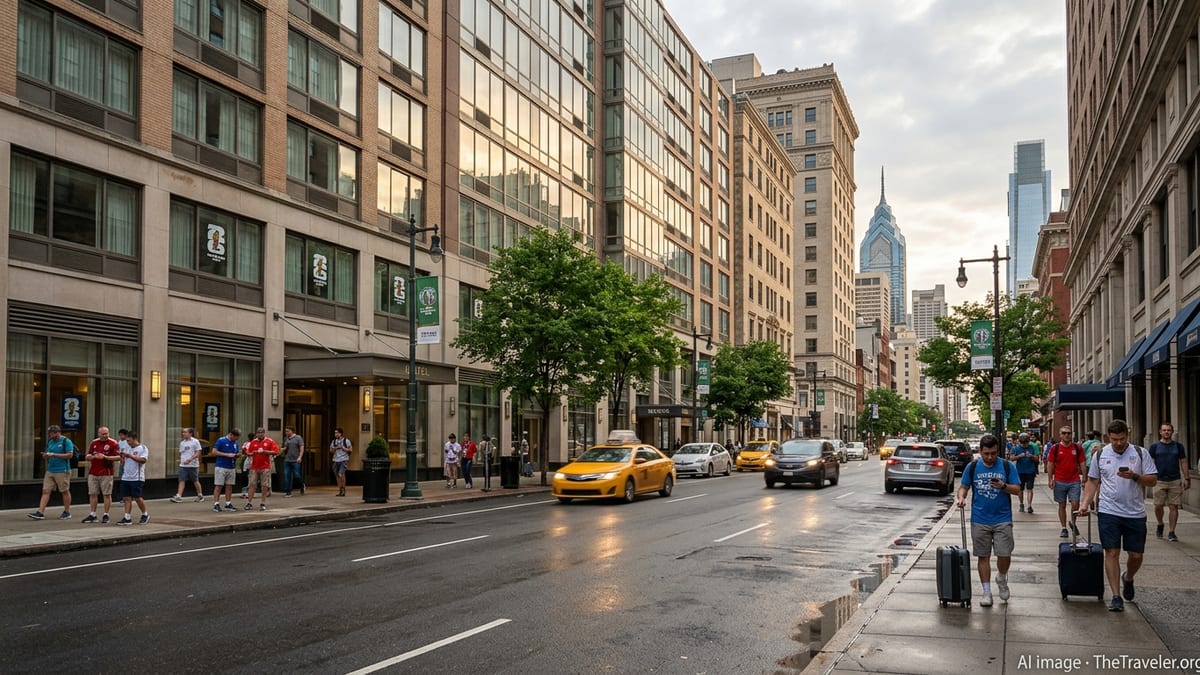
Reports Indicate FIFA Has Reduced Its Philadelphia Hotel Block
Recent coverage and online discussions indicate that FIFA and its hospitality partners have scaled back previously secured room blocks in several World Cup host cities, including Philadelphia. Posts circulating among travelers and soccer fans describe thousands of rooms being dropped just a few months before the first matches, freeing up inventory that had long been off limits to the general public.
One widely shared summary of the situation suggests that in Philadelphia alone, roughly 2,000 rooms that were part of a larger allocation tied to World Cup operations have been released back to hotels. While the exact contract details are not public, the move appears to stem from clauses that allowed organizers to adjust their commitments closer to the tournament if projections for internal demand, staffing, and official delegations shifted.
The development is arriving late in the planning cycle for many visitors. Some fans had already assumed that central Philadelphia hotels were effectively off the table for the main match days, while others had started to look as far away as South Jersey or the northern suburbs. The sudden reappearance of city-center inventory is altering those calculations, but analysts note that the window for comparatively accessible prices could be brief.
Publicly available information on hotel performance in the city shows that Philadelphia’s room supply has been expanding in recent years, yet major events can still strain capacity. World Cup-related studies and tourism reports have consistently framed the tournament as a peak-demand moment, meaning that any rooms newly returning to the open market are likely to be absorbed quickly by a mix of international fans, domestic visitors, and existing group bookings shifting back into the core.
How the Room Release Changes the 2026 World Cup Booking Picture
The release of a substantial block of reserved rooms has immediate implications for travelers who were on the fence about attending matches in Philadelphia. Instead of a rigid market dominated by long-held allocations, the city is briefly experiencing a more fluid environment where new inventory is coming online at the same time that global demand is accelerating ahead of kickoff in June and July 2026.
Hotel analysts tracking large events in the region point out that prices tend to spike when fixtures and dates are confirmed, then fluctuate as organizers finalize their operational needs and travelers firm up plans. For the 2026 World Cup, much of that early surge came after the match schedule was announced, with many hotels loading in premium rates and tightening minimum-stay requirements across Philadelphia and neighboring areas.
Now, with a tranche of FIFA-related bookings reportedly canceled, some properties have fresh rooms to sell and limited time in which to do so. Industry observers say many hotels will attempt to maintain high average daily rates, banking on late-buying soccer fans and event-driven visitors to fill what remains. Others may quietly adjust pricing or loosen restrictions if new bookings fail to materialize at the levels they anticipated when the tournament was first awarded.
The net result is a compressed decision period for travelers. Those who move quickly may find a broader range of options, from upscale Center City properties to more modest chain hotels near transit lines. Those who wait for a potential last-minute discount risk facing sold-out dates or sharply higher prices, especially on nights surrounding Philadelphia’s six scheduled World Cup matches.
Airbnb, Short-Term Rentals, and Pressure on Neighborhoods
The hotel reshuffle is unfolding alongside a substantial short-term rental market that is expected to play a major role in accommodating World Cup visitors. A recent analysis commissioned by Airbnb and conducted by Deloitte estimated that about 149,000 travelers requiring accommodations will visit the Philadelphia metro area during the tournament period, with roughly 17,000 of those guests staying in properties booked through the platform.
The same research projected that Airbnb guests alone could contribute tens of millions of dollars in spending to the local economy during June and July 2026, highlighting how alternative lodging has become a structural part of major sports tourism in the city. Average nightly prices and guest spending levels outlined in the report suggest that short-term rentals are likely to compete directly with hotels for price-sensitive fans and larger groups seeking multi-bedroom homes.
At the same time, publicly available city data indicates that the number of licensed short-term rentals in Philadelphia has declined compared with recent years, reflecting tighter regulation and enforcement. That means the most desirable apartments and rowhouse units near transit, stadiums, and nightlife districts were already limited before the latest hotel developments, and many of the best-located properties are reported to have been snapped up by early planners in late 2025.
The result is a layered market: hotels adjusting to new inventory realities after FIFA’s release of rooms, and a short-term rental sector operating with constrained supply but intense interest. Neighborhoods from Center City and South Philadelphia to Fishtown and University City are expected to feel the effects, both in terms of visitor presence and in the competition between fans, business travelers, and locals scheduling weddings, festivals, and conventions during the same weeks.
What Travelers Should Know Before Booking Philadelphia
For prospective visitors, the timing of FIFA’s room release creates both opportunity and risk. On one hand, more traditional hotel rooms are apparently available in central locations than many fans had assumed only a few weeks earlier. On the other, demand indicators from tourism agencies and travel platforms point to a fast-closing window as global attention shifts from tickets to travel logistics.
World Cup travel forums and ticketing communities are already reflecting that shift. Discussions that once focused almost exclusively on seat categories and match allocations have pivoted toward lodging, with contributors trading notes on which Philadelphia dates still appear bookable at sub-luxury prices and which nights around the city’s marquee fixtures are beginning to sell out completely.
Travel planners note that visitors should look beyond headline nightly rates and pay close attention to cancellation policies, minimum stays, and additional fees. Some hotels are using advance-purchase or nonrefundable conditions tied to World Cup dates, while short-term rentals may advertise attractive base prices that are significantly inflated by cleaning charges, service fees, or event surcharges.
Travelers who are flexible about location and willing to use regional rail or other transit options may find better value by expanding their search beyond downtown, including into New Jersey and suburban Pennsylvania. However, the consensus emerging from public commentary and recent reporting is that the period of relative calm in Philadelphia’s lodging market is ending, and that the combination of renewed hotel availability and a newly urgent fan base is likely to push booking activity sharply higher in the weeks ahead.
A Narrowing Window Before World Cup Kickoff
As the countdown to the 2026 FIFA World Cup continues, Philadelphia’s hotel and rental landscape is in motion. The reported decision by FIFA and its partners to release thousands of reserved rooms has provided a rare second chance for travelers who had been priced out or shut out of the city’s core accommodations.
Yet that reprieve may prove short-lived. Economic studies, tourism forecasts, and the experience of other mega-events suggest that final demand often arrives in a wave shortly before kickoff, when ticket holders lock in itineraries and casual fans decide to travel after all. Once that surge overlaps with the newly available inventory in Philadelphia, remaining rooms are expected to be claimed quickly.
For now, the message for prospective visitors is clear: the market is temporarily more accessible than many expected at this stage, but the combination of released hotel blocks, constrained short-term rental supply, and a global audience eyeing one of the world’s largest sporting events means that those who intend to be in Philadelphia during its World Cup matches are facing a rapidly closing booking window.