

More news on this day
Fiji is reporting a dangerous rise in tuberculosis and HIV co-infections, with recent data indicating that about 41 percent of people treated for tuberculosis are now also living with HIV, a convergence of epidemics that is reshaping the country’s public health landscape and unsettling travel confidence in the South Pacific destination.
Get the latest news straight to your inbox!
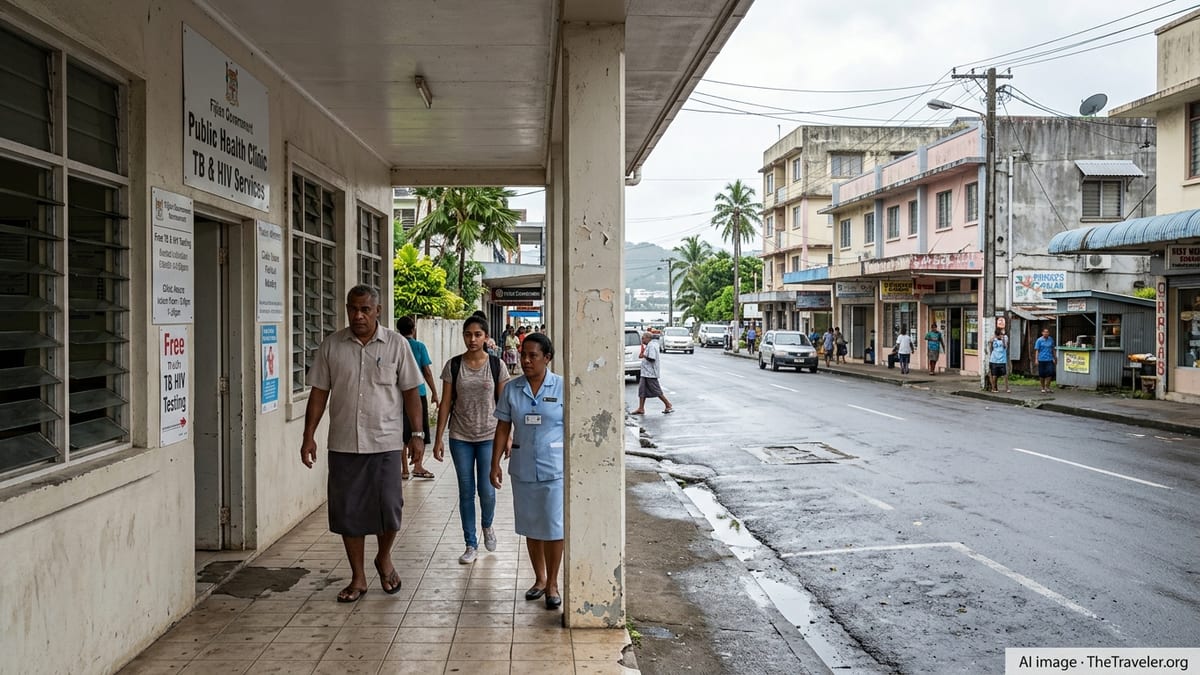
New Data Reveal Scale of Fiji’s Dual Epidemic
Publicly available information from Fiji’s health authorities and regional partners indicates that TB HIV co-infections have climbed sharply over the past two years. Local media coverage of tuberculosis services in 2024 and 2025 points to more than a fourfold jump in the number of TB patients who also have HIV, rising from dozens of co-infected cases in 2023 to around 160 in 2024. When compared against total notified TB cases, analysts following these figures estimate that co-infections now account for roughly 41 percent of the country’s TB caseload.
This level of overlap between the two diseases is unusually high for a small island nation and underscores how Fiji’s rapidly expanding HIV outbreak is driving a parallel increase in severe opportunistic infections. International TB profiles had previously categorized Fiji as a moderate-burden country for tuberculosis, but the growing proportion of HIV-positive TB patients is shifting the risk profile, especially for people with compromised immune systems and those spending extended periods in close-contact environments.
Reports compiled by global health agencies describe Fiji as one of the fastest-growing HIV hotspots in the world, with new diagnoses increasing more than tenfold over the last decade. A rapid assessment on injecting drug use and HIV in Suva, highlighted by The Fiji Times and other regional outlets, documented a surge in new HIV notifications from just over 100 cases in 2018 to more than 1,500 cases by 2024, setting the stage for the spike in TB co-infections now being reported.
HIV Drivers: Drug Use, Sexual Transmission, and Emerging Practices
Coverage by the BBC, The Fiji Times and other international media has drawn attention to the role of a risky injecting practice known locally as “bluetoothing,” in which several people share a syringe of methamphetamine-laced blood. By combining needle-sharing with direct blood exchange, this behavior dramatically increases the chance of HIV transmission, accelerating the spread of the virus among young people and communities already facing social and economic challenges.
At the same time, Fiji’s Ministry of Health and Medical Services has identified unprotected sexual contact as the main route of HIV transmission, with notable clusters among heterosexual couples, men who have sex with men and sex workers. UNAIDS modeling published in 2024 and 2025 suggests that the number of people living with HIV in Fiji has risen from around 2,000 earlier in the decade to more than 6,000 in recent estimates, while only a minority are on sustained antiretroviral therapy.
Regional reporting indicates that just over one-third of Fijians living with HIV are aware of their status, and fewer than a quarter are receiving treatment. This treatment gap increases the likelihood that people with undiagnosed or uncontrolled HIV will progress to advanced disease, including tuberculosis, which remains the single most common serious infection among people with HIV worldwide.
Health-focused outlets in the Pacific region note that co-infection complicates both diagnosis and care. TB can be harder to detect in people with HIV, while HIV-positive TB patients face higher risks of severe illness and death. As more Fijians present with both conditions, clinicians and program managers are under pressure to integrate HIV testing into TB services and to ensure TB screening for those newly diagnosed with HIV.
Implications for Public Health Capacity and Community Safety
The rise in TB HIV co-infections is unfolding against a backdrop of already strained health resources. A national HIV outbreak declaration in early 2025, followed by a multi-year HIV Surge Strategy, signaled recognition that existing systems were not keeping pace with the speed of new infections. Data shared through UNAIDS and the World Health Organization show that Fiji’s ART coverage lags behind regional targets, while deaths among people with HIV have risen sharply since 2021.
Co-infection further complicates this picture. Global TB monitoring reports note that HIV-positive TB mortality is significantly higher than TB mortality among HIV-negative patients, particularly where treatment is delayed or interrupted. In Fiji, media accounts have described patients presenting late with advanced disease, sometimes only after severe respiratory symptoms appear, which reduces the chances of successful outcomes even when therapy is available.
Socioeconomic factors are also at play. Travel costs to reach TB clinics, lost income during lengthy treatment, and stigma associated with both TB and HIV can discourage people from seeking care or completing their medication courses. A draft TB patient cost survey for Fiji, prepared for regional financing partners, highlights how direct and indirect expenses can be prohibitive for low-income households, intensifying the risk that infectious individuals remain undiagnosed or drop out of care.
Public health advocates in the Pacific warn that, without a rapid expansion of community-based testing, harm-reduction services and integrated TB HIV programs, the 41 percent co-infection estimate could climb further. This would not only increase preventable deaths but also entrench TB HIV syndemics in specific neighborhoods, prisons, informal settlements and among people who inject drugs.
Travel Confidence and Risk Calculus for Visitors
For travelers, the rising TB HIV co-infection rate presents a complex but generally manageable risk environment. Tuberculosis is an airborne infection spread primarily through prolonged close contact in enclosed spaces, such as households, crowded public transport or health care settings, rather than brief encounters in open-air tourist locations. HIV, by contrast, is transmitted through blood, sexual contact, and from mother to child during pregnancy, birth or breastfeeding, and is not spread through casual contact, food or water.
International travel medicine guidance has not introduced broad restrictions on visiting Fiji in response to the HIV or TB situation. However, Pacific regional disease surveillance bulletins and WHO updates encourage travelers, especially those planning extended stays, to remain informed about local health developments and to adopt standard preventive measures. These include ensuring routine vaccinations and any recommended TB screening are up to date, avoiding unprotected sex, and not sharing needles, syringes or other injecting equipment under any circumstances.
Travelers with weakened immune systems, including those on chemotherapy, high-dose steroids, or with chronic health conditions, may wish to seek pre-travel medical advice regarding TB testing before and after travel, particularly if they expect to spend significant time in close-contact community settings. Long-term visitors working in health care, social services or detention facilities may face higher occupational exposure and are often advised to follow their employer’s TB and HIV prevention protocols.
For the wider tourism market, the main concern is reputational: major outlets such as the BBC and regional Pacific media have framed Fiji’s HIV emergency as one of the world’s fastest-growing outbreaks, a narrative that can influence perceptions of safety even though the day-to-day risk for typical holidaymakers remains low when basic precautions are followed.
Policy Responses and What to Watch Next
According to coverage from the United Nations and international development partners, Fiji has begun implementing an HIV Outbreak Response Plan backed by external funding and technical assistance. Recent announcements describe investments in expanding HIV testing and treatment sites, rolling out pre-exposure prophylaxis for high-risk groups, and introducing needle and syringe programs designed to curb transmission among people who inject drugs.
TB control efforts are being aligned with these initiatives. Regional documentation for Global Fund and other grants emphasizes integrated TB HIV services, including routine HIV testing for all TB patients and intensified TB screening for those diagnosed with HIV. The reported 41 percent co-infection figure is being treated by public health planners as a warning sign that these integrations must accelerate if Fiji is to reverse current trends.
Observers tracking the situation point to several indicators to watch over the coming year. These include changes in the annual number of new HIV diagnoses, shifts in the proportion of HIV-positive TB cases, trends in HIV-related and TB-related deaths, and expansion in the share of people living with HIV who are virally suppressed on antiretroviral therapy. Improvements on these metrics would suggest that the surge strategies are beginning to take hold.
For now, Fiji remains a highly popular South Pacific destination grappling with a serious and evolving health challenge. The sharp rise in TB HIV co-infections is a critical component of that story, underscoring how intertwined epidemics can reshape public health risks and traveler perceptions in a country that depends heavily on tourism for economic stability.