

More news on this day
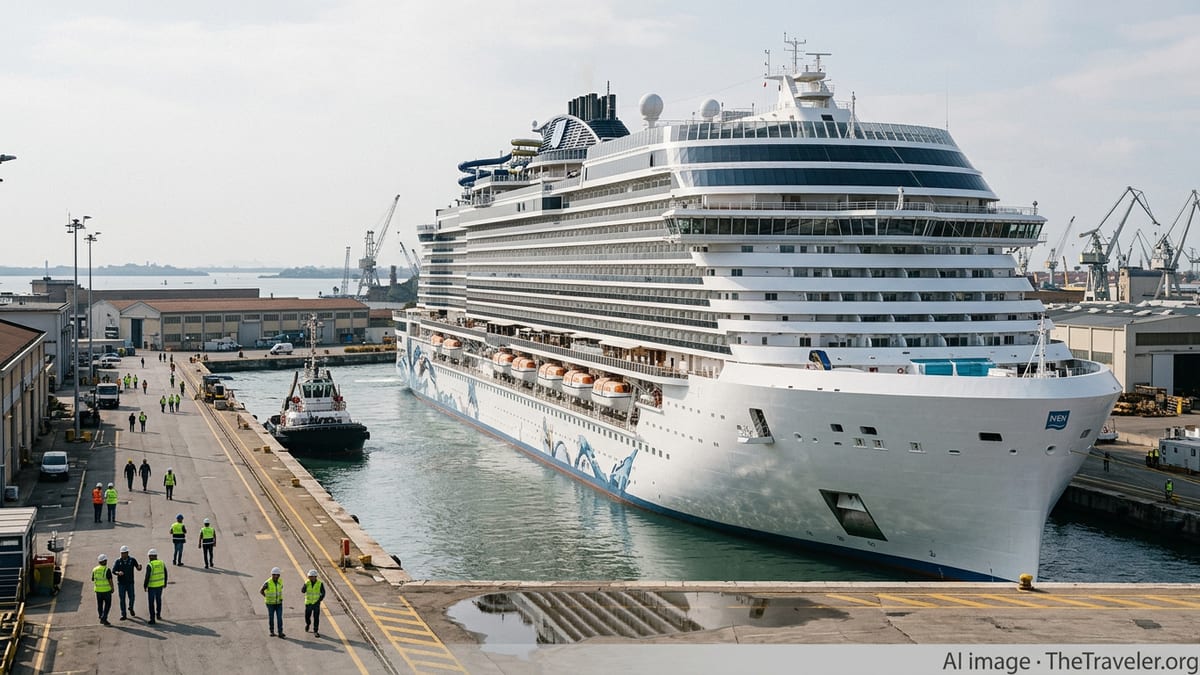
Italian shipbuilder Fincantieri has delivered Norwegian Luna to Norwegian Cruise Line at its Marghera yard near Venice, adding a new Prima Plus class vessel to the global cruise fleet and underscoring renewed momentum in large-ship tourism worldwide.
A New Flagship for the Prima Plus Class
Norwegian Luna, handed over on March 5, 2026, becomes the second ship in Norwegian Cruise Line’s expanded Prima Plus class, following Norwegian Aqua, which joined the fleet in 2025. At around 156,000 gross tons and 321 meters in length, the vessel is approximately 10 percent larger than the original Prima-class ships Norwegian Prima and Norwegian Viva, reflecting the brand’s strategy to grow capacity while refining its onboard product.
The ship can accommodate more than 3,550 guests, positioning it squarely in the contemporary mega-ship segment that has become central to the cruise industry’s growth plans. For Fincantieri, the delivery reinforces its role as one of the world’s leading builders of complex cruise vessels and a long-standing partner to Norwegian Cruise Line Holdings across its Norwegian Cruise Line, Oceania Cruises and Regent Seven Seas brands.
The handover ceremony at Marghera brought together senior executives from both companies, underlining the strategic importance of the project. For Italian industry, the event showcased Fincantieri’s ability to coordinate thousands of workers and suppliers on a single high-value project, while for Norwegian Cruise Line it marked a visible step in a multiyear newbuild program designed to refresh and expand its fleet.
Industry observers note that the Prima Plus concept represents an evolution rather than a wholesale redesign, leveraging guest feedback from earlier Prima-class ships and adapting spaces for higher demand and new onboard experiences. Norwegian Luna is expected to serve as a testbed for further refinements as additional Prima Plus vessels follow later in the decade.
Design Innovations Aimed at the Modern Cruiser
Norwegian Luna has been conceived around the idea of elevated outdoor space and flexibility, with an enlarged pool deck and an enhanced version of Norwegian’s wraparound Ocean Boulevard promenade. Located low and close to the waterline, the 360 degree promenade brings guests nearer to the sea, a trend that has accelerated as cruise lines seek to reconnect passengers with the ocean rather than enclosing them in inward facing interiors.
Inside, the ship continues the Prima Plus focus on spacious accommodations, high-end dining and entertainment normally associated with premium cruising, but deployed on a larger scale. Public areas integrate multiuse venues, allowing Norwegian to adjust programming across seasons and itineraries, while specialty restaurants and bars are designed to support longer sailings such as transatlantic crossings and extended Caribbean deployments.
The vessel also advances Norwegian Cruise Line’s sustainability profile. While still powered by marine gasoil engines coupled to podded propulsion, Norwegian Luna incorporates energy-efficient hull design, advanced waste heat recovery and optimized hotel systems aimed at reducing fuel consumption and emissions per passenger. These incremental gains are crucial as the cruise sector faces growing regulatory pressure in Europe and key destinations worldwide.
For passengers, such technical upgrades are mostly invisible, yet they contribute to quieter operations, smoother maneuvering in ports and improved onboard comfort. As more destinations scrutinize the environmental footprint of visiting ships, having newer, more efficient tonnage like Norwegian Luna becomes an important factor in securing berthing rights and community acceptance.
Ripple Effects for Italian Shipbuilding and European Tourism
The delivery of Norwegian Luna is being viewed in Italy as another signal of resilience for the country’s shipbuilding cluster, which anchors thousands of jobs in and around Venice and other coastal cities. Fincantieri’s cruise orderbook has been instrumental in sustaining high value employment across design, engineering, advanced manufacturing and maritime services.
The project involved roughly 3,000 workers from Fincantieri and partner companies in recent months, according to industry reports, providing a tangible boost to the local economy. Spending related to Norwegian Luna’s construction and outfitting has flowed through metalworking firms, interior design studios, technology providers and hospitality suppliers across northern Italy.
European tourism also stands to benefit as Norwegian Luna begins operations. The ship is scheduled to offer a maiden transatlantic sailing followed by Caribbean and North American itineraries, as well as future deployments that are likely to include Mediterranean seasons. Each turnaround in European homeports such as Civitavecchia, Barcelona or Piraeus can generate significant port fees, hotel stays and local excursions.
Regional tourism boards view new cruise capacity as a double edged development, balancing crowd management concerns with the economic upside of higher-spending international visitors. The Prima Plus class’s emphasis on extended port times and more immersive shore excursions could help distribute spending beyond heavily trafficked city centers into smaller coastal towns and rural attractions.
Strengthening Norwegian Cruise Line’s Global Network
For Norwegian Cruise Line, Norwegian Luna strengthens the company’s ability to offer year round capacity in key markets while experimenting with new routes. The line has already signaled plans for transatlantic crossings connecting Europe and North America, followed by weeklong Caribbean itineraries from major U.S. homeports such as Miami.
The additional berths will give Norwegian more flexibility in adjusting capacity between North America, Europe and other regions, particularly during shoulder seasons when demand patterns have become more volatile. Norwegian Luna is expected to feature heavily in promotional campaigns targeting North American, European and Latin American travelers seeking newer hardware and expanded onboard entertainment.
The ship’s scale and amenities also align with the trend toward longer stays at private island destinations and resort style ports, where lines can better control the guest experience. Norwegian Cruise Line’s investments in its own destinations in the Caribbean and beyond could see Norwegian Luna deployed strategically to maximize onboard spending and shore excursion revenue.
At the same time, adding a modern ship to the fleet can help Norwegian retire or redeploy older tonnage to secondary markets, where smaller ports or emerging cruise regions still value mid sized vessels. This cascading effect is part of a broader fleet renewal strategy that most major cruise groups are pursuing as they seek to raise yields and meet evolving environmental regulations.
Implications for the Global Cruise Recovery
The entry of Norwegian Luna into service comes at a moment when global cruise demand is showing sustained recovery and, in some markets, record booking levels. Major cruise groups have reported strong forward bookings into 2027, with newer ships generally commanding higher pricing and stronger onboard spending than older vessels.
Capacity additions such as Norwegian Luna are therefore not just symbols of confidence but also levers for revenue growth. By combining higher cabin yields with a broad mix of dining, entertainment and wellness offerings, Norwegian Luna is designed to capture more guest spend over the course of each voyage, reinforcing the cruise model’s focus on onboard revenue streams.
For destinations, the arrival of another large contemporary ship presents both opportunity and challenge. Ports that can accommodate Norwegian Luna’s size stand to benefit from passenger volumes and shore excursion sales, while those with limited infrastructure may need to invest in terminals, tender operations and port services to remain competitive.
Looking ahead, analysts expect the Norwegian Luna delivery to be followed by further Prima Plus class ships and an additional wave of next generation vessels ordered by Norwegian Cruise Line Holdings from Fincantieri. Together, these projects will continue to shape global cruise deployment patterns, influencing where and how millions of travelers experience coastal cities, islands and seaside regions in the years to come.