

More news on this day
Finnair is set to launch direct flights between Helsinki and Luxembourg in late March 2026, a move that industry observers see as a strategic bet on business travel and Europe’s evolving network of financial and logistics hubs.
Get the latest news straight to your inbox!
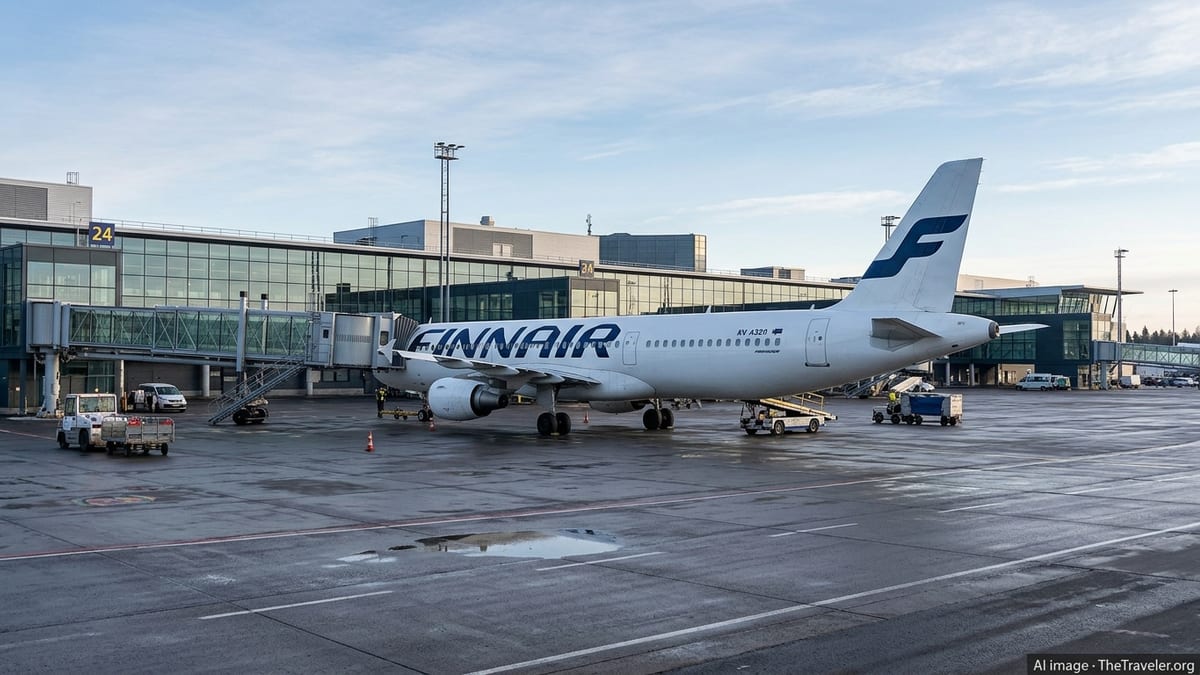
New Route Taps into Europe’s Finance and Governance Corridor
Publicly available airport schedule data indicates that flights between Helsinki Airport and Luxembourg Findel Airport operated by Finnair are scheduled to begin on 29 March 2026. The link will connect Finland’s capital with one of Europe’s most concentrated clusters of banks, investment funds and European Union institutions, underlining Luxembourg’s role that far outweighs its small geographic size.
Helsinki has built a reputation as a nimble Northern European hub with efficient connections to both intra-European and long-haul services. By pairing it with Luxembourg, Finnair is moving into a niche that combines high-yield corporate travel, institutional traffic and specialist financial-sector mobility with a relatively under-served point-to-point market.
Aviation analysts note that the route also reflects how secondary European capitals and regional centers are seeking to bypass traditional mega-hubs. Direct connectivity between two advanced, high-income economies reduces the travel time and complexity for executives, civil servants and technical specialists whose work requires frequent movement between Nordic markets and the Grand Duchy.
The launch comes at a time when European carriers are rebalancing their networks for a landscape shaped by remote work, resilient premium demand and renewed competition from rail on shorter sectors. Routes that combine strong business fundamentals with growing leisure appeal are emerging as priorities.
Strengthening Finnair’s European Network Strategy
Finnair has been reshaping its network in recent years in response to shifting long-haul dynamics and evolving passenger flows. The Helsinki to Luxembourg launch fits into a broader pattern of adding selectively targeted European destinations, alongside new services to regional cities and seasonal leisure markets.
Schedule and planning documents for Helsinki Airport show that Finnair continues to develop a web of short- and medium-haul routes designed to feed its long-haul operations and to serve point-to-point demand within Europe. New services to destinations such as Alta and additional Northern Norwegian cities illustrate how the airline is using its hub to connect niche markets that are attractive to both tourism and business segments.
Industry observers point out that the Helsinki–Luxembourg route enhances Finnair’s ability to offer one-stop itineraries between Luxembourg and Asia-Pacific, North America and the Nordics via its home base. This aligns with the carrier’s strategy of leveraging Helsinki’s geographic position for efficient connections and using its European spokes to secure premium transfer traffic.
The choice of Luxembourg also gives Finnair additional resilience within continental Europe, complementing links to major centers like London, Paris and key German and Scandinavian cities. High-frequency connectivity across a diversified set of European business destinations is seen as a buffer against volatility on any single long-haul market.
Boost for Corporate Mobility and Policy Travel
Luxembourg’s economic profile makes the new link particularly significant for business travel. The country is a major domicile for investment funds, banking and insurance, as well as a base for logistics and satellite communications. It also hosts European Court and European Investment Bank functions, making it a frequent destination for policymakers, legal professionals and technical experts.
Direct flights from Helsinki are expected to simplify itineraries for Nordic and Baltic corporates that maintain Luxembourg entities or rely on its financial infrastructure. Instead of multi-stop journeys via larger Western European hubs, travelers will have a more streamlined option that reduces connection risk and total door-to-door time, an important factor for short-notice trips and tight meeting schedules.
The route may also appeal to government and institutional travelers. Finland’s active role within the European Union and its engagement on digital policy, security, sustainable finance and climate issues generate a steady flow of delegations and expert missions. A direct connection could support closer working ties, particularly as Brussels, Luxembourg and Strasbourg continue to function as a rotating triangle of EU-related travel.
Travel management companies following the development suggest that the route could gradually build a mix of corporate contracts, institutional demand and high-end individual travelers. The strength of that mix will likely determine future frequencies and seasonal adjustments once the service matures beyond its launch phase.
Connecting Global Networks through Helsinki
Helsinki Airport has positioned itself as a gateway linking Northern Europe with Asia-Pacific and, increasingly, North America and Oceania. Recent plans and announcements around new long-haul services, including additional routes to Canada and a forthcoming connection to Melbourne, signal a renewed push to secure long-distance traffic flows through the Finnish hub.
Within that context, the Helsinki–Luxembourg route effectively plugs one of Europe’s key financial centers into a broader global network. Travelers from Luxembourg will gain new one-stop options to destinations in East Asia and the Pacific via Helsinki, while passengers from those regions will have a more direct path into Luxembourg’s finance and governance ecosystem.
Aviation network specialists note that this kind of mid-size hub strategy differs from the megahub model of Western Europe’s largest airports. Rather than relying on sheer scale, Helsinki aims to compete on transfer efficiency, punctuality and tailored connectivity to high-value destinations. Finnair’s move into Luxembourg fits that pattern by emphasizing quality of connection over volume of traffic.
The development also has implications for cargo and high-value freight. Luxembourg hosts significant logistics operations, while Finland is an important node for technology, forestry products and advanced manufacturing. Enhanced bellyhold capacity between the two markets can facilitate time-sensitive shipments and support supply chains that link Northern Europe with global partners.
Implications for Travelers and Regional Competition
For travelers, the new service promises more itinerary choice and potentially more competitive fares between Finland, Luxembourg and beyond. Direct flights reduce the need to route through crowded hubs where congestion and delays can erode the benefits of nominally frequent services. The added capacity may also spur competitive responses from other carriers that currently dominate indirect routings.
Regional tourism organizations are likely to watch how the route influences visitor flows. Luxembourg’s compact historic center, countryside wine routes and cross-border attractions in the Greater Region could become more accessible to Finnish and Nordic leisure travelers seeking short breaks. Conversely, Finland’s nature tourism, design-focused city breaks and Northern Lights itineraries may draw more visitors originating in Luxembourg.
The timing of the launch, at the start of the northern summer season, suggests a deliberate attempt to capture both corporate travel that ramps up after Easter and leisure demand that builds toward peak holiday months. How Finnair shapes schedules, aircraft deployment and potential seasonal adjustments after the first year will provide further signals about the route’s performance.
As European aviation continues to recalibrate after years of disruption and structural change, the Helsinki to Luxembourg link illustrates how targeted new routes can reinforce broader shifts in connectivity. Rather than focusing solely on the largest capitals, airlines like Finnair are increasingly investing in smart, business-focused corridors that tie together influential but previously under-connected corners of the continent.