

More news on this day
Finnair has suspended all flights to and from Doha and Dubai until March 6, 2026, as an abrupt escalation in Middle East tensions shutters key air corridors and unleashes fresh turmoil across global aviation networks.
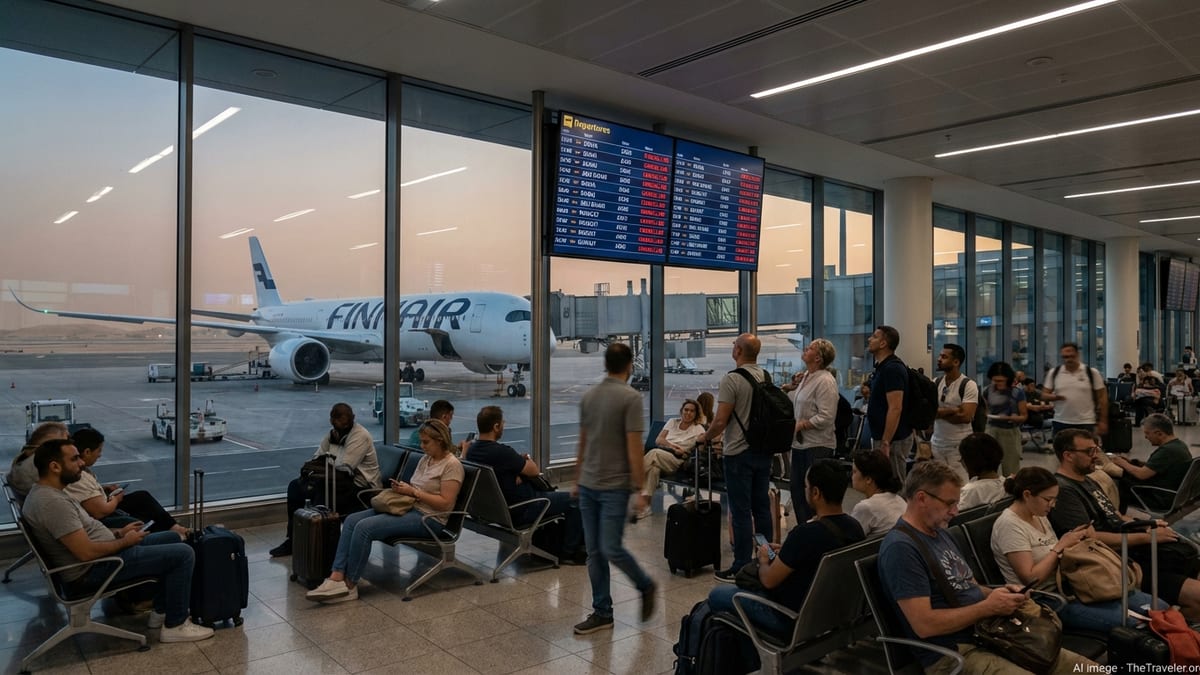
Finnair Extends Cancellations Amid Heightened Security Risk
The Helsinki-based carrier announced on Saturday that it is cancelling all Doha and Dubai services between February 28 and March 6, 2026, citing a sharply deteriorating security environment following United States and Israeli strikes on Iran and subsequent regional retaliation. The airline said it is also temporarily avoiding the airspace of Iraq, Iran, Syria and Israel, adding distance and complexity to many of its long-haul operations.
Finnair stressed that passenger safety remains its overriding priority and that it is closely following guidance from international and national aviation authorities as the situation evolves. The carrier is directly contacting affected customers by text message and email with rebooking options or instructions on how to seek refunds where alternative routings are not available.
The decision builds on a shorter cancellation window issued earlier, which initially covered services only through March 1. As airspace closures spread on Saturday and military activity intensified across several Gulf and Levant states, Finnair moved to extend the suspension for an additional five days to March 6, signalling expectations of continued instability in the region’s skies.
Airspace Closures Empty Skies Over the Gulf
The Finnair decision comes as large swathes of Middle Eastern airspace fall abruptly quiet. Authorities in Iran, Israel, Iraq, Jordan, Qatar, Bahrain, Kuwait and the United Arab Emirates have announced full or partial airspace shutdowns following the wave of strikes and counterstrikes, forcing airlines to cancel or divert hundreds of flights and leaving flight-tracking maps showing vast empty zones across the region.
Gulf hubs that normally function as vital crossroads between Europe, Asia and Africa have been hit particularly hard. Qatar has suspended air traffic to and from Doha, while the United Arab Emirates has imposed partial restrictions that have disrupted operations at Dubai and Abu Dhabi. Local carriers including Emirates, Etihad and Qatar Airways have temporarily halted many services or sharply curtailed schedules as they await clarity from aviation and security authorities.
European, Asian and Indian airlines are responding in parallel by scrapping or rerouting flights that would ordinarily pass through the affected corridors. With Russian and Ukrainian airspace already largely off-limits to many Western carriers, the loss or restriction of key Middle Eastern routes further narrows available options and intensifies congestion on remaining long-haul pathways.
Global Travellers Face Cancellations, Detours and Long Delays
For passengers, the rapid unraveling of flight schedules is creating immediate and widespread disruption far beyond the Middle East itself. Travellers headed to Dubai, Doha and other Gulf destinations have been stranded at origin airports, diverted mid-journey to secondary hubs in Europe and Asia, or informed that rebooking may not be possible in the near term due to a severe shortage of available seats.
Finnair has warned that options for rerouting customers to Doha and Dubai are extremely limited while airspace remains restricted and capacity at alternative hubs is strained. The airline is advising customers whose journeys cannot be re-accommodated to apply for ticket refunds and to contact customer service if they are already in transit and require assistance with new routing or accommodation.
Across the industry, carriers are extending waivers, relaxing change fees and offering broader date flexibility for itineraries touching the region. Nonetheless, analysts say that with so many aircraft out of position and schedules in flux, travellers should brace for rolling delays, missed connections and extended travel times on numerous Europe–Asia routes in the coming days.
Operational and Financial Strain on Airlines Already Under Pressure
Beyond immediate passenger disruption, the latest crisis adds another layer of operational and financial strain to airlines still contending with elevated fuel prices, supply chain bottlenecks and war-related airspace restrictions elsewhere. Avoiding large blocks of Middle Eastern airspace forces many carriers to fly longer, more circuitous routes that increase fuel burn, crew costs and schedule complexity.
Aviation safety agencies in Europe and beyond have underscored what they describe as a high level of risk to civil aviation in and near conflict zones, urging airlines to steer clear of affected areas. Insurers are expected to reassess war-risk premiums for operations that remain anywhere near the region, adding further cost pressures to already thin margins on some long-haul services.
For airlines like Finnair, which pivoted in recent years to build network connectivity through Gulf partnerships and stopover points after losing access to traditional Siberian short-cuts, the latest closures threaten to undercut carefully rebuilt strategy. Capacity and scheduling decisions will likely need to be revisited if the regional instability proves prolonged.
What Finnair Passengers Need to Know This Week
Finnair has urged customers with bookings to or from Doha and Dubai between February 28 and March 6 to monitor their email, text messages and the airline’s digital channels closely for updates. Travellers whose flights are cancelled are being offered three primary options: accept a proposed rebooking on the best available alternative route, change travel dates once without a change fee within a defined window, or request a full refund if travel is no longer possible or desired.
Because alternative flights are in short supply and fill up quickly, the carrier cautions that rebooking may take longer than usual, particularly for customers who began their journey before the cancellations were announced and now need to be rerouted through different hubs. For those already en route, Finnair says it will work with airports and, where necessary, national authorities to arrange accommodation and onward travel.
Travel experts recommend that passengers holding itineraries through the wider Middle East over the coming days check flight status frequently, keep contact details updated with their airline and consider building in extra time for connections. As security assessments and airspace restrictions can change at short notice, the next week is expected to remain highly unpredictable for anyone flying between Europe, Asia and Africa via the region.