

More news on this day
Finnair is strengthening its regional network in Northern Europe by leasing additional Embraer E190-E1 and ATR 72-600 aircraft for services operated by Nordic Regional Airlines, better known as Norra, as demand for short-haul connectivity in and out of Helsinki continues to grow.
Get the latest news straight to your inbox!
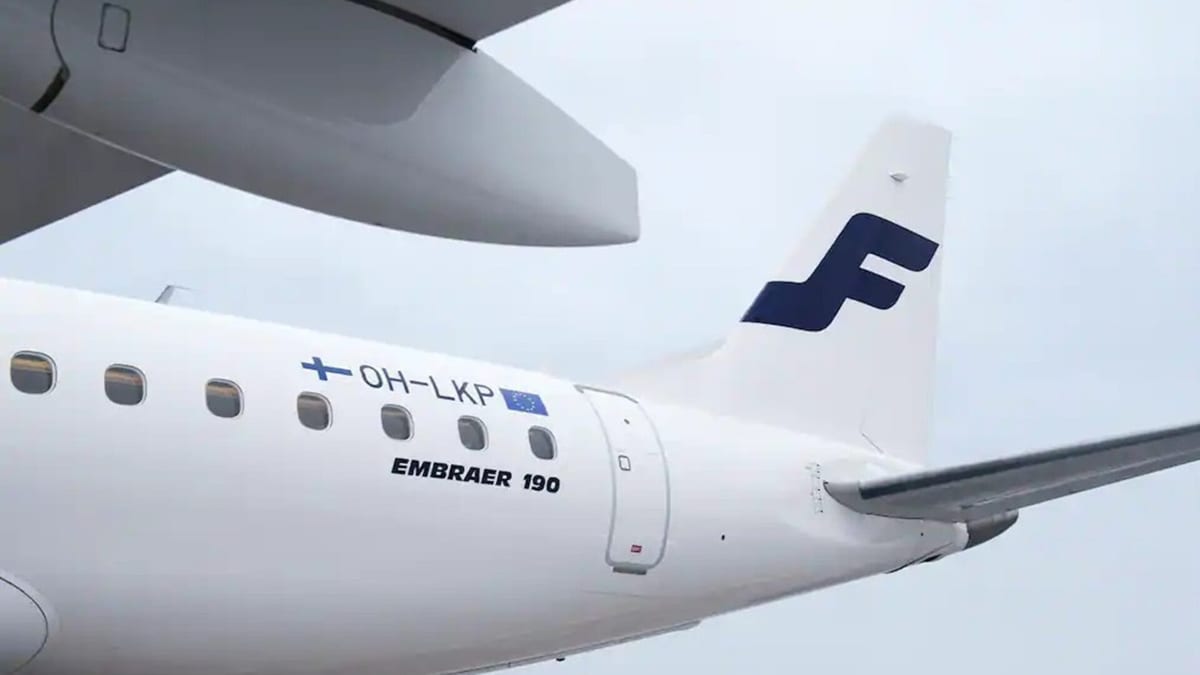
Image by AeroTime
Lease Move Targets Capacity and Flexibility
According to recent industry coverage, Finnair has opted to bring in extra Embraer E190-E1 regional jets and ATR 72-600 turboprops under lease arrangements to be operated by Norra on its behalf. The aircraft are intended to support Finnair’s short-haul schedule, particularly on domestic Finnish routes and cross-border services around the Baltic Sea and Scandinavia.
Publicly available information indicates that Norra already operates a mixed fleet of Embraer E190 and ATR turboprops in full Finnair colours, providing high-frequency links between Helsinki and secondary cities. By leasing additional units of the same types, Finnair can increase capacity without adding complexity to training and maintenance, while also adjusting more rapidly to market conditions.
The decision comes at a time when regional air travel in Northern Europe is recovering and in some cases surpassing pre-pandemic levels, with passengers seeking reliable connections from smaller cities to long-haul hubs. Finnair’s hub-and-spoke strategy is centered on Helsinki, and additional regional aircraft give the carrier more options to bank flights into key evening and morning waves.
How Norra Fits Into Finnair’s Network Strategy
Nordic Regional Airlines operates flights for Finnair on a contract basis, focusing on thinner routes where smaller-gauge aircraft are better suited than the Airbus narrowbodies in the mainline fleet. The airline’s operations are fully integrated into Finnair’s timetable and branding, so travelers typically experience Norra flights as part of the wider Finnair offering.
Reports on Finnair’s fleet structure describe Norra as the backbone of the carrier’s domestic and short regional portfolio, serving cities such as Tampere, Turku and Rovaniemi, as well as nearby capitals and regional centers around the Baltic and Nordic region. Leasing additional E190-E1 and ATR 72-600 aircraft allows that backbone to be reinforced without major long-term capital commitments.
The fleet expansion via leases also supports schedule resilience. Regional aircraft can be flexibly rotated between domestic and short international routes, helping Finnair maintain frequencies even during seasonal peaks, irregular operations or maintenance events on larger jets. This flexibility is particularly valuable in winter, when demand for Lapland and northern Finland services can spike sharply.
Why Embraer E190-E1 and ATR 72-600 Suit the Nordic Market
The Embraer E190-E1 is a 100-seat class regional jet widely used across Europe for high-frequency routes where demand does not justify larger narrowbodies. In Finnair and Norra service, the type offers a familiar single-aisle cabin and relatively quick turnarounds, making it well suited to business-heavy routes linking Helsinki with major regional cities.
The ATR 72-600, a twin-engine turboprop, is regarded as an efficient workhorse for shorter sectors, particularly on routes under 500 kilometers. Its ability to operate from shorter runways and in challenging winter conditions makes it a natural fit for parts of the Finnish domestic network and smaller airports around the Nordic region.
Both aircraft types help Finnair match capacity to demand with greater precision. On routes with strong year-round business traffic or pronounced seasonal swings, the combination of a 100-seat jet and a 70-seat turboprop gives network planners a fine-grained toolkit. It also supports higher frequencies, which are often more attractive to regional travelers than simply operating fewer flights with larger aircraft.
Link to Broader Fleet Renewal and Market Trends
The leasing of additional E190-E1 and ATR 72-600 aircraft for Norra comes against the backdrop of Finnair’s long-term fleet renewal plans. Public financial disclosures and industry reports point to continuing investment in long-haul Airbus A350 aircraft and preparations for refreshing the narrowbody fleet in the coming years.
In that context, leasing established regional types provides a bridge solution. It allows Finnair to maintain and grow regional connectivity while the group evaluates next-generation aircraft options for later in the decade, including more fuel-efficient jets for European services. The move also aligns with a wider European trend, where airlines are using regional partners and leased aircraft to fine-tune capacity in an uncertain demand environment.
For travelers, the development is likely to translate into more consistent schedules and, in some markets, additional frequencies or restored routes. For airports across Finland and neighboring countries, extra Norra-operated flights under the Finnair banner can mean improved connectivity to the Helsinki hub and, through it, to long-haul destinations in Asia and North America.
Implications for Competition in Northern Europe
The reinforcement of Norra’s fleet positions Finnair more strongly in the competitive Nordic short-haul market, where carriers such as Norwegian, SAS and various low-cost operators are vying for regional passengers. With additional regional aircraft, Finnair can better defend key domestic routes and selectively grow cross-border services that feed its long-haul network.
Industry observers note that regional capacity has become a critical differentiator in Northern Europe, where geography and long travel distances give airlines an advantage over surface transport on many routes. By leveraging Norra’s expanded fleet, Finnair can sustain a dense web of spokes into Helsinki, underpinning its ambition to act as a preferred connecting hub for both business and leisure travelers.
While specific schedules and route adjustments will evolve over time, the decision to lease more Embraer E190-E1 and ATR 72-600 aircraft signals that Finnair sees continued value in regional connectivity. For passengers, it underscores that smaller aircraft, high frequency and reliable links to a strong hub remain central to the airline’s strategy in the years ahead.