

More news on this day
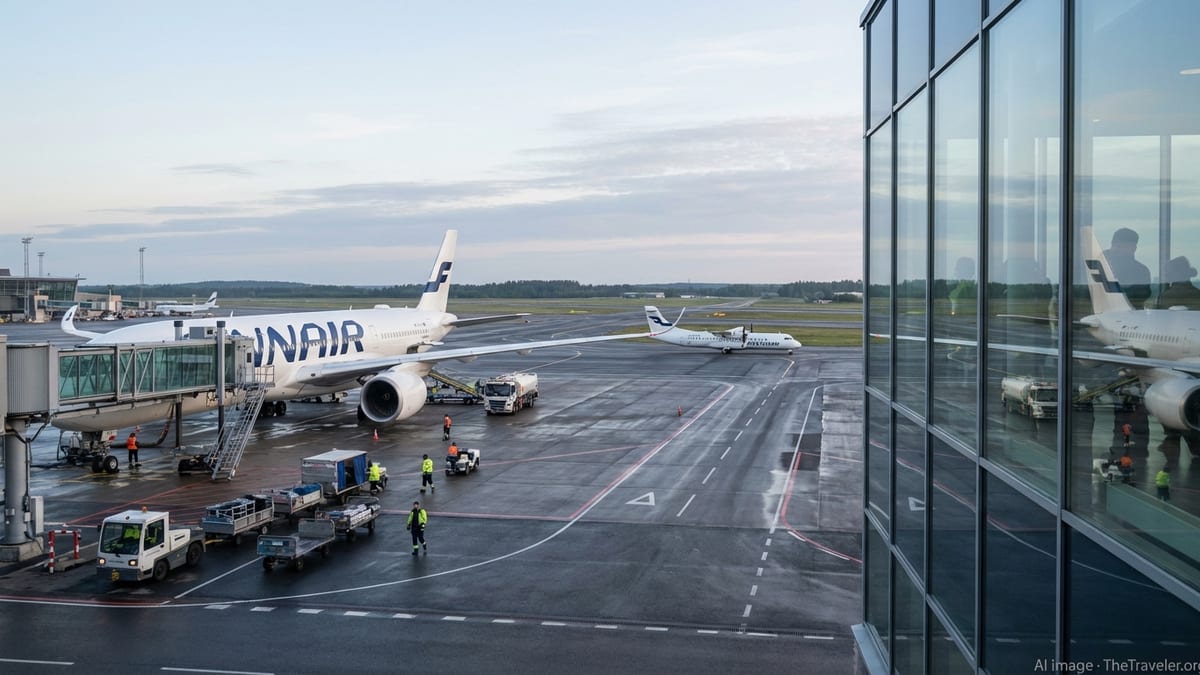
Finnair is preparing a substantial expansion of its European schedule for the summer 2025 season, adding new routes and boosting key short-haul frequencies to reinforce Helsinki’s role as a fast one-stop hub between Europe, Asia and North America.
New Arctic Route Extends Network to Northern Norway
At the heart of Finnair’s summer 2025 upgrade is the launch of a new route to Kirkenes in northern Norway, a gateway town close to the Barents Sea and the Russian border. The service will operate three times weekly from Helsinki via Ivalo in Finnish Lapland, using 68-seat ATR turboprops, opening fresh options for travelers heading to the far north.
The new Kirkenes link deepens Finnair’s already strong presence in the Arctic, where it has long marketed Lapland as a year-round destination rather than solely a winter playground. By tying Kirkenes into the same network that feeds popular Lapland resorts, the airline is betting on continued demand for nature-focused travel, small-ship cruises and multi-country itineraries across Finland and Norway.
Kirkenes is also expected to appeal to cruise passengers connecting to or from coastal voyages along Norway’s fjord-lined shoreline. Finnair is positioning the Helsinki transfer as a time-efficient alternative to more circuitous routings through larger Central European hubs, particularly for travelers originating in Asia or North America.
The move reflects a wider trend among Nordic carriers, which are increasingly using regional aircraft to stitch together secondary cities and niche destinations into their long-haul networks. For Finnair, the new route is a way to extract more value from its Arctic brand and capture higher-yield leisure traffic during the summer months.
More Flights Across the Baltics and Key European Gateways
Finnair’s summer 2025 plan also calls for a notable increase in frequencies to the Baltic capitals of Tallinn, Riga and Vilnius. Tallinn and Riga will each gain five additional weekly flights, while Vilnius will see two more, reinforcing Helsinki’s role as a northern connecting hub for the wider region.
The additional services are designed to create more finely timed connections into Finnair’s long-haul and European banks at Helsinki, cutting transfer times and offering more choice on departure and arrival hours. For business travelers, the extra morning and evening options help support same-day trips, while leisure passengers gain more flexibility when planning multi-country itineraries.
Beyond the Baltics, the airline is maintaining elevated capacity on several major Western European routes that were ramped up ahead of summer 2025. Flights between London Heathrow and Helsinki, for example, have been increased by about half compared with previous schedules, supporting both point-to-point traffic and onward connections to Asia and the Nordics.
The strengthened European schedule is intended to dovetail with Finnair’s expanding long-haul offering, particularly to Japan and North America, where it is adding frequencies and smoothing schedules. The result is a denser web of short-haul links feeding a relatively compact but high-value set of intercontinental destinations.
Stronger Connections to Japan and Beyond via Helsinki
While the summer 2025 expansion focuses on European connectivity, Finnair is closely aligning it with a parallel build-up in Asia, especially Japan. By the start of the season, the airline plans to operate daily flights to both Tokyo Haneda and Tokyo Narita, while stepping up frequencies to Nagoya and Osaka.
The added capacity to Japan consolidates Finnair’s longstanding position as a specialist in Europe–Japan traffic, a role that has required significant adjustment since Russian airspace closures lengthened flying times. To compensate, the carrier has doubled down on schedule quality, modern cabins and efficient connections in Helsinki.
For European passengers, the combination of more short-haul options and stronger Japanese frequencies translates into easier access to multiple cities in Japan on a single Finnair ticket. Travelers from regional markets such as the Baltics or Scandinavia can now connect through Helsinki with shorter layovers and a broader choice of departure days.
Finnair is also leaning on its North American partnerships to funnel additional traffic into these Asian routes. A daily year-round service to Dallas Fort Worth, timed for fast onward connections with a major U.S. partner’s domestic network, is intended to bring more travelers from the United States into the Helsinki hub and onwards to Europe and Japan.
Competitive Positioning in a Recovering European Market
The summer 2025 schedule enhancements come as European aviation continues to reshape after several years of disruption. Finnair, which faced a particularly sharp challenge from the loss of its traditional shortcut over Siberia, is now pursuing a strategy built around a denser European network, a premium-focused long-haul product and a carefully selected set of intercontinental destinations.
Boosting frequencies, rather than simply adding new cities, is central to that approach. High-frequency routes into Helsinki from regional markets give the airline a level of schedule agility and reliability that is difficult for low-cost competitors to match, particularly for time-sensitive corporate and connecting passengers.
The addition of Kirkenes and extra Baltic flights also underlines Finnair’s focus on regions where it sees sustainable demand and a clear competitive edge. Nordic and Baltic markets, together with select leisure destinations further south, form the backbone of a network that aims to balance year-round business traffic with seasonally strong holiday flows.
As bookings open across the full summer season, which runs from late March to late October 2025, the carrier will be watching closely how travelers respond to the expanded choices. Early indications from trade partners suggest solid interest in both the new Arctic option and the boosted frequencies to established European gateways.
Implications for Travelers Planning Summer 2025 Journeys
For travelers, Finnair’s summer 2025 schedule means more one-stop options across Europe, Asia and North America via Helsinki, especially from smaller regional airports. The increased flight density improves the chances of finding convenient same-day connections, minimizing overnight stays and long layovers.
Those heading to northern Europe and the Arctic will benefit most directly from the new Kirkenes service and the stronger Baltic schedule. Tour operators are already packaging itineraries that combine Helsinki, Lapland and Norway’s far north, while independent travelers gain new flexibility to design open-jaw trips using different entry and exit points.
Passengers bound for Japan will see a broader range of travel dates and connection possibilities, particularly from cities such as London, Tallinn, Riga and Vilnius. Finnair’s emphasis on a consistent long-haul product, including refreshed cabins on its widebody fleet, is another selling point for long-distance travelers connecting through Helsinki.
As airlines across Europe jostle for position in the next peak season, Finnair’s summer 2025 program underscores its determination to stay relevant in the transfer market while doubling down on its Nordic identity. For many passengers, that will mean more ways to reach both classic European city breaks and some of the continent’s most remote northern landscapes with a single, well-timed connection.