

More news on this day
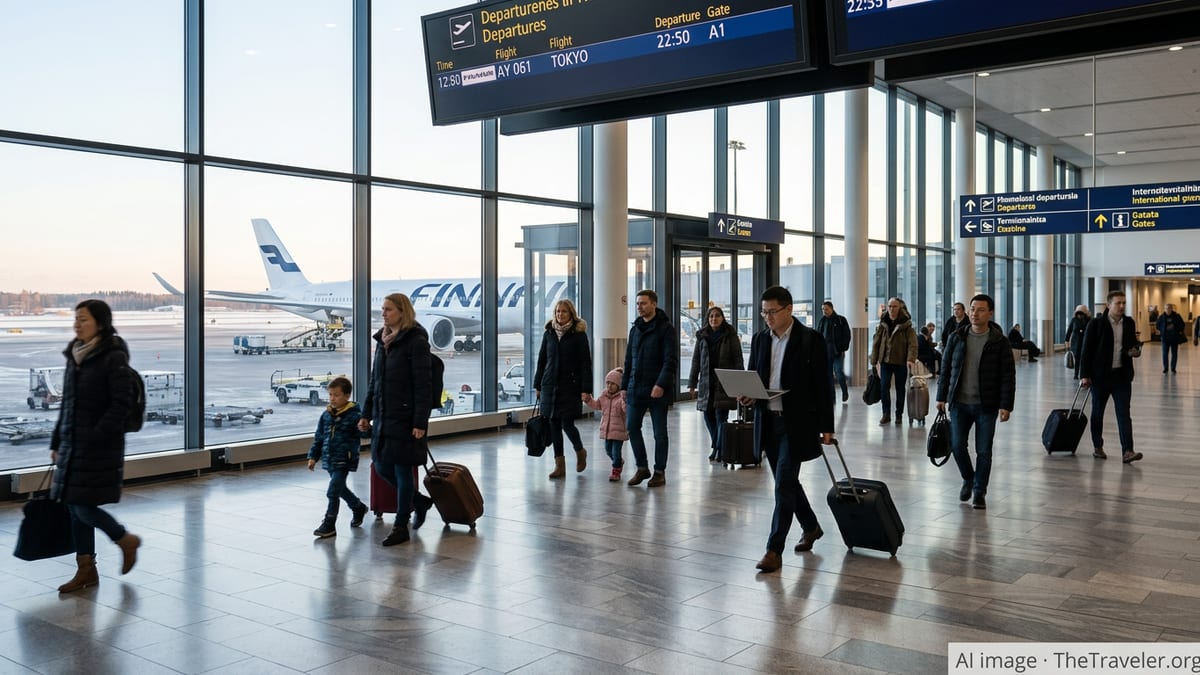
Finnair’s latest traffic figures for February 2026 show a sharp rebound in Europe–Asia travel, with strong passenger growth on its Helsinki–Tokyo services helping to cement the Finnish flag carrier’s role in the wider tourism recovery between the two regions.
February Numbers Point to Renewed Momentum
Finnair carried 904,400 passengers in February 2026, a 6.9 percent increase on the same month a year earlier, when industrial action constrained operations and reduced long-haul connectivity. The airline also reported an 8.5 percent rise in traffic measured in revenue passenger kilometres, indicating that more of those passengers were flying longer sectors, particularly between Europe and Asia.
Capacity, measured in available seat kilometres, rose by 4.8 percent year on year, reflecting the return of aircraft and crews to full service after last winter’s disruptions. Finnair’s passenger load factor improved to 77.7 percent, up 2.6 percentage points, a sign that additional seats are being met with solid demand rather than oversupply.
The February performance extends a broader trend across the winter 2025–2026 season in which Finnair has steadily rebuilt long-haul schedules and restored its position as the primary carrier at Helsinki Airport. With Asian demand accelerating, the airline is again leaning into its historical strength as a connector between Northern Europe and key cities in Japan.
Helsinki–Tokyo Back at the Heart of the Network
Added frequencies to Tokyo were among the most significant drivers of Finnair’s February capacity growth. The airline is operating daily services to Tokyo Haneda and additional weekly flights to Tokyo Narita during the winter 2025–2026 season, reinforcing the Japanese capital as the main Asian gateway in its long-haul portfolio.
These Tokyo routes underpin Finnair’s strategy of using Helsinki as a compact, transfer-friendly hub for travellers moving between European cities and major Asian markets. Even after the closure of Russian airspace forced longer routings, Helsinki remains a competitive option for many itineraries to and from Japan, supported by coordinated schedules and shared traffic with Japanese partners.
The emphasis on Tokyo comes on top of renewed services to Osaka and other Japanese destinations, which together have been among the fastest growing parts of Finnair’s Asian network since borders reopened fully. For leisure travellers, this has translated into more choice of departure times from Europe and better onward connections in Japan.
Tourism Flows Rebound Between Europe and Asia
Finnair’s February surge comes as global air travel demand continues to recover, with industry data showing international passenger traffic edging above pre-pandemic levels at the start of 2026. Asia Pacific markets, in particular, are seeing a release of pent-up demand as travel restrictions fade into the background and currencies stabilize, encouraging long-haul trips.
From the European perspective, Tokyo has re-emerged as a flagship long-haul leisure and business destination. Tour operators report renewed interest in multi-stop itineraries that pair Japan with Scandinavian city breaks, while corporate travel managers are reinstating in-person meetings and events across the region. Helsinki’s role as a connecting point means that Finnair’s performance is a useful proxy for the broader health of Europe–Asia tourism.
For Asian travellers heading west, improved connectivity via Helsinki is restoring access not only to Finland but to dozens of secondary European cities that rely heavily on transfer traffic. This is particularly important for regional tourism economies that are still rebuilding visitor numbers during the shoulder seasons of late winter and early spring.
Helsinki Airport Benefits From Long-Haul Recovery
Helsinki Airport, Finland’s main international gateway, has seen its transfer traffic grow steadily as Finnair rebuilds its long-haul programme. International transfer passenger numbers increased in 2025 compared with the previous year, underscoring how quickly long-haul networks can restore hub activity when aircraft and slots return to service.
The combination of more Tokyo flights and additional services to other Asian destinations has strengthened Helsinki’s position among Nordic airports. While its traffic is still in a gradual catch-up phase compared with pre-pandemic peaks, the airport’s role as a specialist hub for Northern Europe–Asia flows is again visible in winter schedules and terminal activity.
Airport operators and tourism authorities are closely watching February’s figures as a leading indicator for the coming summer season, when capacity typically expands and visitor volumes climb. Strong load factors on Asian routes during the quieter winter months suggest room for further growth once peak holiday travel resumes.
What Travellers Need to Know Now
For passengers planning trips between Europe and Tokyo, Finnair’s February data translates into more nonstop options from Helsinki and better one-stop connections from cities across the continent. Daily service to Tokyo Haneda and additional flights to Tokyo Narita offer flexibility on departure times and improve the chances of securing competitive fares outside the busiest travel days.
Travel agents advise that demand for Japan remains robust, particularly around Finland’s February ski holidays and key events in Tokyo, so early booking is still recommended for popular dates. With load factors already approaching 80 percent on many Asian flights, last-minute availability can be limited in premium cabins and on weekend departures.
Operational reliability is also in focus, with Finnair maintaining a strong on-time performance record despite challenging Nordic winter weather. For travellers connecting through Helsinki, tight connection windows remain feasible, although industry experts continue to recommend allowing a reasonable buffer when combining separate tickets or planning time-critical itineraries.
As Finnair heads into the peak booking months of spring, the airline’s February surge on routes such as Helsinki–Tokyo signals a more confident phase in the recovery of Europe–Asia tourism. For both leisure visitors and corporate travellers, the message is clear: the long-haul corridor between Northern Europe and Japan is back in business and gathering pace.