

More news on this day
Rail passengers heading to and from Heathrow Airport and western England are facing severe disruption this morning after a fire next to the tracks near London Paddington forced the closure of all train lines serving the airport and key routes to Reading and beyond.
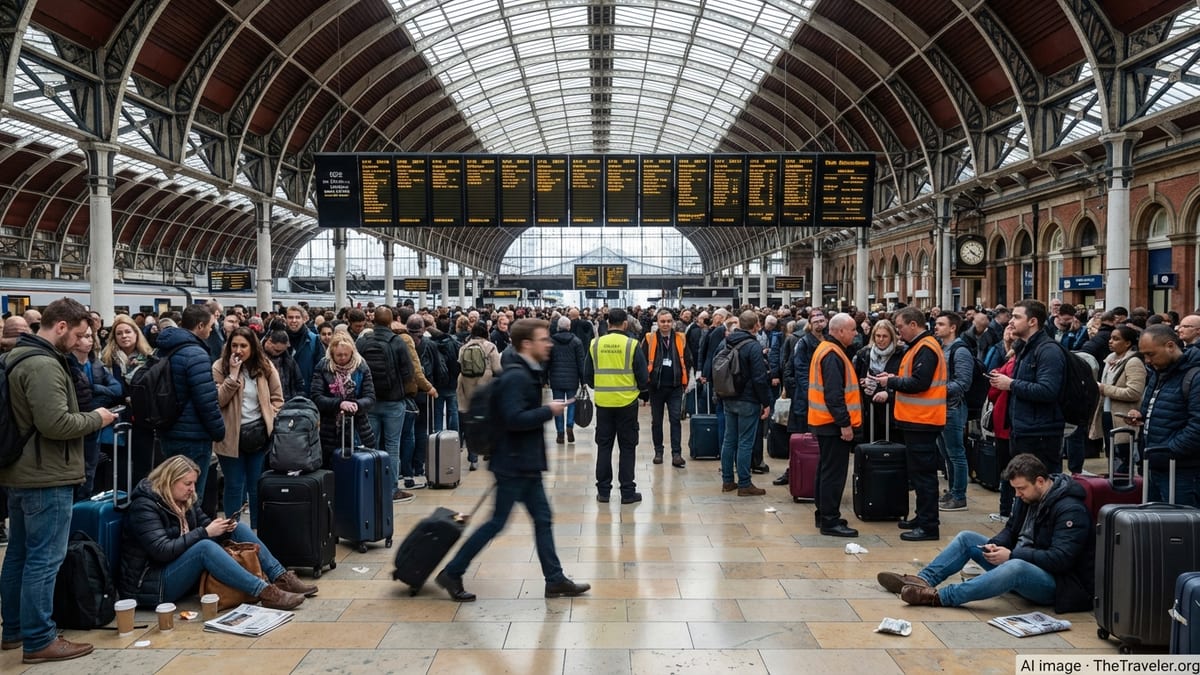
Fire Near Paddington Halts Heathrow and Western Routes
Services on the Elizabeth line, Heathrow Express and Great Western Railway were suspended on Sunday morning after a fire broke out beside the railway in the Paddington area, according to National Rail. Operators warned that trains between London Paddington, Heathrow Airport and Reading may be cancelled, heavily delayed or revised as emergency teams work at the scene.
The incident was first reported shortly after 8am, with power to sections of the route switched off for safety, effectively bringing services in and out of Paddington to a standstill. National Rail said major disruption was expected to continue until at least midday, with passengers urged to delay travel where possible or seek alternative routes.
The blaze, understood to be in or near a rail depot, prompted engineers to carry out detailed inspections before any services can resume. Until that work is completed and the power is safely restored, trains on the affected lines cannot operate through the area.
The disruption has immediate consequences for one of the country’s busiest air corridors. Heathrow Express, the non stop link between central London and Heathrow Terminal 5, confirmed that its services are fully suspended, while the Elizabeth line is unable to run between Paddington and Heathrow or Reading.
Heathrow Passengers Urged to Use the Underground
With all rail links between Paddington and Heathrow currently cut, airport bound travellers are being advised to switch to London Underground services. The Piccadilly line continues to operate to Heathrow terminals, providing the main public transport connection while National Rail and Transport for London work to restore main line services.
National Rail has warned that journey times to and from the airport could be significantly longer than usual and that those with flights later on Sunday should allow extra time and check the status of both their train and airline before setting out. Queues at Underground stations serving the Heathrow branch are expected to build through the morning.
For those already en route, rail and station staff are directing passengers to alternative options and helping with route planning. Loudspeaker announcements at key interchange stations, including Paddington, are advising travellers not to attempt to use Elizabeth line or Heathrow Express services until further notice.
The timing of the incident, at the start of a busy travel day with departures and arrivals throughout the morning, has compounded pressure on Heathrow’s wider transport network. Road traffic around the airport was already reported to be heavier than usual as more passengers switch to taxis, private hire vehicles and buses.
Alternative Routes via Waterloo, Buses and Local Services
Elizabeth line tickets are being accepted on a range of other services to help passengers continue their journeys. Travellers between London and Reading are being directed towards South Western Railway services from London Waterloo, although engineering works on that route mean journeys will involve a combination of trains and rail replacement buses.
National Rail has advised Reading bound passengers to take a train from Reading to Virginia Water, transfer to a replacement bus to Hounslow, and then continue by train to London Waterloo. From there, connections across the capital via London Underground remain available. While this route offers an alternative for some, it significantly extends journey times and is likely to be busy throughout the disruption.
London Underground and London buses are also accepting affected tickets via any reasonable route, with extra demand expected on services linking west London, Paddington and Heathrow. Local bus routes between the airport, west London suburbs and central London are anticipated to carry many travellers who would normally rely on direct rail links.
Great Western Railway long distance customers heading to destinations in the West Country, South Wales and the Cotswolds have been told to check carefully before travelling. Some services are starting and terminating away from Paddington, while others may be cancelled or delayed as operators attempt to work around the closed section of line.
Safety Checks and Uncertain Timeline for Reopening
Rail engineers are carrying out detailed inspections of infrastructure in the Paddington area before power can be restored and trains allowed to pass. The fire has affected trackside equipment close enough to the railway that services cannot resume until the site is fully secured and any damage assessed.
National Rail has indicated that disruption is expected until at least midday, but warned that this estimate could change depending on the outcome of safety checks and the progress of emergency services. Passengers are being encouraged to monitor live updates from operators throughout the day, as timetables may be altered at short notice.
The incident highlights the vulnerability of one of London’s key western rail corridors, used daily by thousands of commuters, business travellers and international visitors. Recent months have already seen a series of separate issues affecting services between Paddington, Heathrow and Reading, including power line faults and other infrastructure problems, leading to repeated disruption on what is usually a high frequency route.
For now, travellers are being urged to allow plenty of extra time, remain flexible about their route and be prepared for crowded conditions on alternative services as the rail industry works to bring lines back into service.
Impact on Travellers and Advice for the Rest of the Day
Early reports from stations across the affected network described busy concourses, with some passengers forced to abandon planned journeys or rebook flights where connections could not be maintained. Those travelling with heavy luggage or young children are facing particular challenges as they navigate longer and more complex routes to Heathrow.
Travel operators are advising ticket holders to check their rights to refunds or compensation if they are significantly delayed or decide not to travel. Rail companies have reminded customers to keep their tickets and note their actual travel times, as both are required when submitting a claim.
Tourists and occasional visitors unfamiliar with London’s transport network are being encouraged to seek help from station staff before setting out. Clear signage, public address announcements and information displays are in place at major hubs, but staff say that face to face assistance can often be the quickest way to find the best available route.
With disruption likely to continue into the afternoon and knock on delays possible even after lines reopen, both domestic and international travellers are being advised to stay alert to further updates. Those with flexibility in their plans may wish to postpone non essential journeys into or out of London’s western corridor until services have stabilised.