

More news on this day
A fire incident at Mumbai’s Chhatrapati Shivaji Maharaj International Airport Terminal 1 has disrupted operations, prompting evacuations, significant delays and diversions, and tense scenes for hundreds of domestic passengers using one of India’s busiest aviation hubs.
Get the latest news straight to your inbox!
Smoke, Sirens and Sudden Evacuations
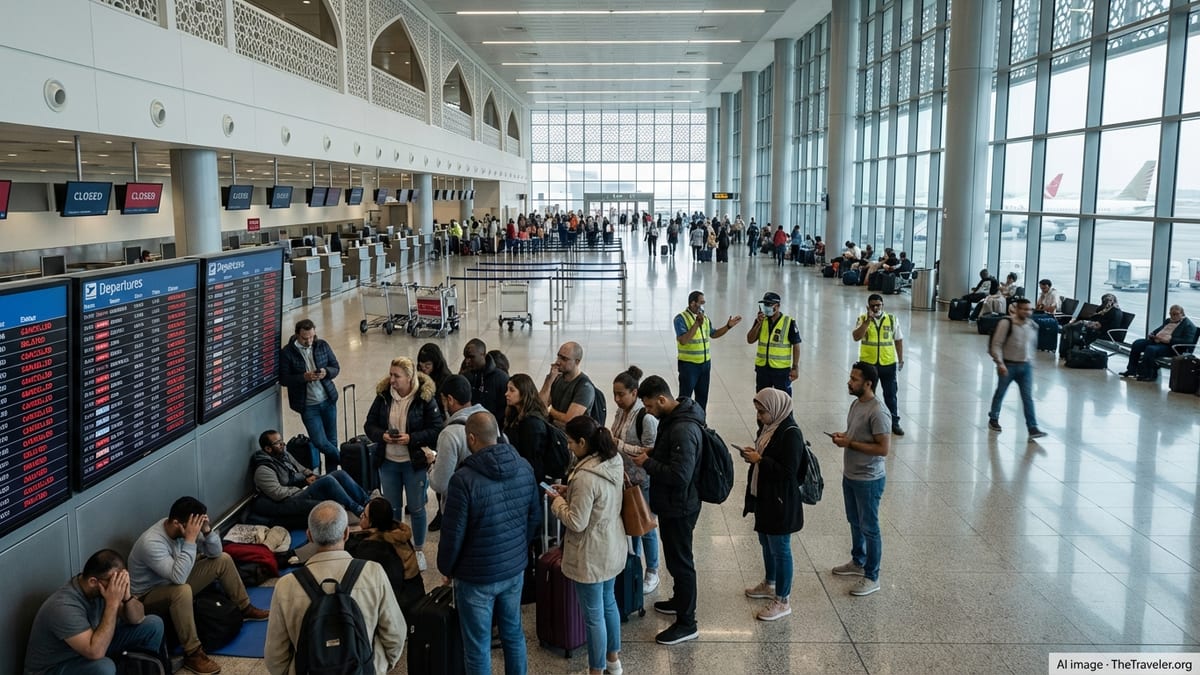
Initial reports indicate that smoke was detected in a section of Terminal 1 used for domestic departures, triggering alarms and an immediate response from airport emergency teams. Visuals shared across news coverage and social media showed passengers moving quickly through concourses, with some abandoning trolleys and baggage as they were directed away from the affected area.
Publicly available information suggests the fire originated in an infrastructure or services zone of the terminal complex, rather than in an aircraft or airside fuel installation. The precise source and cause are still being assessed by technical teams, but early descriptions point to a localized blaze that generated heavy smoke within parts of the building.
Although the incident was brought under control within a relatively short window, the decision to move travelers out of congested departure halls led to bottlenecks along access roads and pick-up areas. Families traveling with children and elderly passengers were pictured waiting outside security perimeters, while staff attempted to regroup passengers by flight once authorities deemed specific zones safe.
Travelers already through security reported being held near boarding gates or redirected back toward central concourses as announcements advised them to remain calm and await further instructions. The combination of sirens, smoke and shifting instructions contributed to confusion that rippled across the terminal for much of the evening.
Flight Cancellations, Diversions and Mounting Delays
The disruption at Terminal 1 quickly cascaded into the wider flight schedule at Mumbai, a single-runway airport that routinely handles among the highest daily movements in the country. Domestic services using the terminal, including those of low-cost and regional carriers, experienced a mix of cancellations, rolling delays and diversions to other airports.
According to published flight-tracking data and airline advisories, multiple departures from Mumbai were initially put on hold as ground handlers, security teams and airline staff awaited clearance to re-enter affected zones. Some flights were ultimately cancelled when turnaround times became unworkable, while others departed hours behind schedule as aircraft and crew were repositioned.
Arrivals into Mumbai were also hit. Aircraft approaching the city were placed in holding patterns or diverted to nearby airports when it became clear that gate availability and passenger processing capacity at Terminal 1 were severely constrained. Travelers landing elsewhere faced extended waits for onward connections or ground transport arrangements.
For passengers, the impact ranged from missed business meetings and connecting flights to overnight stays in Mumbai and nearby cities. Travel insurers and corporate travel departments are expected to see a spike in claims and itinerary changes linked directly to the disruption at the domestic terminal.
Panic, Viral Videos and Crowd Management Challenges
Within minutes of the first alarms, images and short clips from inside Terminal 1 began circulating widely on social platforms, showing smoke in ceilings, crowded corridors and anxious travelers clustered near exits. The rapid spread of these visuals amplified concern among those still en route to the airport and relatives tracking flights from other cities and countries.
Observers of the Indian aviation sector note that Mumbai’s older domestic terminal has long contended with intense peak-hour crowding, as multiple carriers funnel large passenger volumes through relatively compact check-in and security zones. In that context, any emergency response that shuts off escalators, lifts or boarding bridges can quickly translate into stressful jams and bottlenecks.
Videos from the incident show airport staff using physical cues, loudspeaker announcements and improvised cordons to guide travelers away from the affected areas. While the controlled evacuation is being described in initial coverage as effective in preventing more serious harm, the experience for those inside the terminal was one of palpable anxiety, with many passengers unsure whether their flights would depart or where to assemble for updates.
Analysts point out that such episodes highlight the growing role of real-time communication in managing aviation disruptions. With passengers now routinely filming and sharing events as they unfold, airports increasingly face pressure to disseminate clear, consistent information quickly to counter rumors and ease tensions.
Safety Systems and Future of the Aging Terminal
Mumbai’s Terminal 1, which currently handles domestic operations for several carriers, has been under the spotlight in recent years as passenger volumes grew and infrastructure aged. Public documentation shows that the private operator has outlined plans to redevelop the terminal complex, citing the need for upgraded facilities and improved safety and structural resilience.
The fire incident is likely to intensify scrutiny of existing fire detection and suppression systems, evacuation routes and crowd-control planning within the terminal. Aviation safety specialists typically examine how quickly alarms were triggered, how effectively smoke was contained, and whether signage and public announcements were sufficient to guide travelers with different language and mobility needs.
Industry commentary following the incident suggests that regulators and the airport operator may accelerate ongoing discussions about refurbishing or reconstructing the domestic terminal. Modern terminal designs increasingly prioritize compartmentalized fire zones, redundant power and ventilation systems, and clear wayfinding intended to keep evacuees moving steadily rather than clustering in confined spaces.
For airlines that rely heavily on Mumbai as a hub for domestic connections, any medium-term construction program at Terminal 1 could mean temporary gate reallocations, revised schedules and investment in digital tools to steer passengers to the correct check-in and boarding points during phased works.
Advice for Affected and Upcoming Travelers
Travel advisories issued in the wake of the fire are encouraging passengers booked to fly into or out of Mumbai to allow additional time for airport formalities over the coming days. Even after operations resume, knock-on effects from aircraft and crew displacements can linger, particularly during busy morning and evening banks of departures.
Travelers holding domestic tickets through Mumbai are being urged by airlines and travel agents, according to published notices, to monitor flight status frequently on official channels and to update contact details for receiving last-minute schedule changes. Some carriers are temporarily waiving change fees or offering free date changes for passengers directly affected by the Terminal 1 disruption.
For those yet to depart, packing essential medications, chargers and a change of clothes in cabin baggage can mitigate the discomfort of extended waits or overnight delays. Passengers connecting from international flights into domestic services at Mumbai may wish to build in a wider buffer between arrival and onward departure until schedules at the domestic terminal stabilize.
While the full impact of the Terminal 1 fire will become clearer over the next 24 to 48 hours, the episode underscores how quickly a localized safety incident at a major hub can ripple through airline networks. For the millions who rely on Mumbai’s airport each month, the focus now turns to restoring confidence in the terminal’s safety systems and ensuring that any lessons from the disruption translate into more resilient infrastructure and clearer communication in the future.