

More news on this day
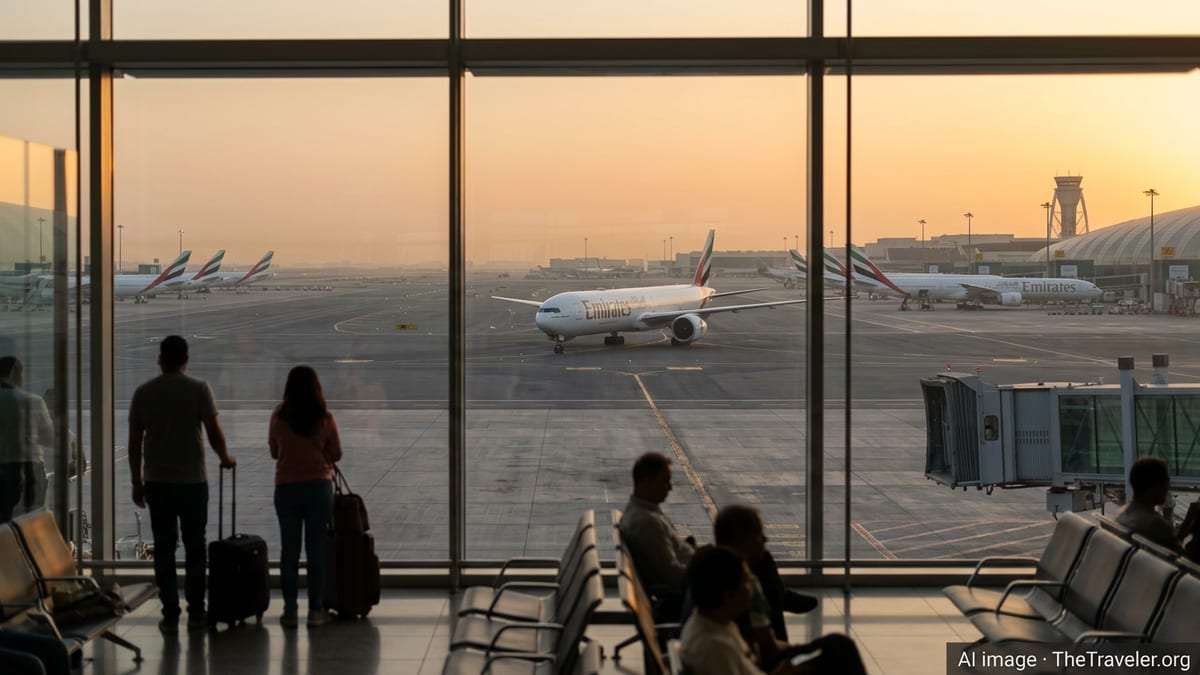
After a week in which large swathes of Middle Eastern airspace abruptly shut and thousands of flights were canceled or diverted, the first departures are now tentatively taking off from Dubai and Abu Dhabi, offering stranded travelers a sliver of hope even as airlines warn that a full return to normal operations is still days away at best.
Airspace Restrictions Ease, but Recovery Is Fragmented
Limited passenger services began to depart again from Dubai International and Abu Dhabi’s Zayed International on Monday evening and into Tuesday, following unprecedented shutdowns triggered by coordinated U.S. and Israeli strikes on Iran on February 28 and subsequent Iranian missile and drone barrages across the Gulf. Aviation tracking data shows that while departures have restarted, the volume of movements remains a fraction of normal levels as carriers test newly reopened corridors and operational risk assessments are updated in real time.
The scale of the disruption over the past several days has been severe. Aviation analytics firms estimate that more than 9,500 flights have been canceled since the crisis began, with over 3,400 flights scrubbed at the peak of the shutdown. Key hubs including Dubai, Abu Dhabi, Doha and Kuwait City, which together handle hundreds of thousands of connecting passengers each day, were reduced almost overnight to emergency operations and sporadic cargo or military movements.
Authorities across the region have been gradually lifting blanket closures and adjusting restrictions to allow carefully controlled traffic flows. Yet much of the airspace over Iran remains off limits to civilian aircraft, and Qatar’s skies are still subject to stringent controls after recent missile strikes on facilities around Doha. Airlines are continuing to route long haul services around the Gulf where possible, extending flight times and complicating network planning.
Industry observers caution that what is emerging is not a clear reopening but a patchwork of permissions, curfews and altitude limits that will take days to stabilize. While some airports are processing departures again, neighboring states may still be closed or heavily restricted, leaving carriers with limited diversion options if security conditions deteriorate.
Stranded Travelers Face Long Waits and Uncertain Itineraries
For passengers, the resumption of a handful of services has done little to relieve crowded terminals and mounting frustration. Tens of thousands of travelers have been stranded since the weekend, many sleeping on terminal floors when hotels filled up or were deemed unsafe due to proximity to targeted infrastructure. At Dubai International, one of the world’s busiest connecting hubs, check in halls have filled with makeshift queues as people attempt to secure scarce outbound seats.
Airlines are prioritizing repatriation and clearance of backlogged passengers over fresh bookings. Some carriers based outside the region have begun operating special services, including rescue flights to and from Jeddah and other relatively less affected airports, aimed at evacuating citizens and residents whose original itineraries routed through the Gulf. These flights are often announced at short notice, leaving passengers reliant on constant app checks and airport announcements.
Customer service systems remain under intense pressure. Call centers and online chat platforms have been overwhelmed by requests for rebooking, refunds and emergency assistance. With so many routes still suspended and alternative connections limited, travelers are frequently told that the only available itineraries involve detours of many hours via Europe, Central Asia or East Africa, often at higher fares and with additional overnight stops.
Travel insurers are also fielding a surge in claims, though coverage varies widely. Policies that exclude acts of war or political instability may leave some travelers bearing the costs of extended hotel stays and new tickets, while others with more comprehensive plans are being advised to keep meticulous records of expenses as they await processing.
Gulf Super-Connectors Walk a Tightrope
The region’s powerhouse airlines are at the center of the unfolding recovery. Emirates, Etihad and Qatar Airways built their business models on funneling global traffic through mega hubs in Dubai, Abu Dhabi and Doha. The near total halt in operations since late last week has not only stranded passengers but also severed crucial trade links for cargo, from pharmaceuticals and electronics to perishable food shipments.
Over the past 24 hours, Emirates and Etihad have cautiously restarted a limited number of departures, focusing on high demand regional links and select long haul services where airspace workarounds are viable. Schedules remain sharply curtailed, and many flights are operating with revised routings that add significant detours to avoid still volatile air corridors over Iran and parts of Iraq and the Gulf.
Qatar Airways, by contrast, continues to face tighter constraints due to the closure and partial reopening of Qatari airspace following missile strikes in and around Doha. While some repositioning and essential services have been permitted, normal passenger schedules through Hamad International have not yet resumed at scale. Smaller regional carriers are in a similar position, with several still grounded or operating skeleton timetables.
Analysts note that even once wider permissions are granted, rebuilding intricate global networks will take time. Aircraft and crews are out of position after days of cancellations and diversions, maintenance windows have been disrupted and crew duty time limits are forcing airlines to trim or cancel rotations at short notice. Capacity may therefore lag behind passenger demand for weeks, particularly on popular Europe to Asia routes that historically relied on Gulf stopovers.
Governments Balance Security Warnings With Evacuation Needs
The tentative reopening of some airports is unfolding against a backdrop of stark government travel advisories. The United States, United Kingdom and several European nations have urged their citizens to leave parts of the Middle East as soon as commercial options allow, citing the risk of further missile strikes and retaliatory attacks on civilian infrastructure. That guidance has intensified demand for the very flights that remain in shortest supply.
Diplomatic missions in the United Arab Emirates, Qatar, Saudi Arabia and Bahrain are coordinating closely with both local authorities and home based carriers to prioritize vulnerable travelers and those with urgent medical or family needs. In some cases, embassies have chartered aircraft or reserved blocks of seats on commercial services to accelerate departures, mirroring measures last seen during the early months of the COVID 19 pandemic.
Regional governments, meanwhile, are under pressure to demonstrate that reopening steps do not compromise public safety. Civil aviation regulators are working with military and air defense officials to establish real time risk corridors that allow aircraft to depart and arrive while avoiding ongoing operations. That coordination is particularly critical in the Gulf, where dense airspace and closely spaced hubs leave limited margin for error.
Officials stress that security conditions remain fluid. A new round of missile launches or drone activity could trigger fresh ground stops or diversions with little warning, complicating evacuation plans and underscoring why many foreign ministries continue to advise against nonessential travel to the region.
What Travelers Should Expect in the Coming Days
As operations gradually ramp up, travelers can expect a messy and uneven recovery rather than a single moment when everything snaps back to normal. Airlines are publishing provisional schedules that may change overnight, and many continue to block new bookings on certain routes until they are confident that airspace permissions will hold. Even confirmed flights are prone to last minute rerouting or extended flight times as crews navigate evolving restrictions.
Experts recommend that passengers with imminent travel monitor airline apps and airport departure boards far more closely than usual, check in online at the earliest opportunity and allow extra time at the airport for security screening and document checks. Those planning new trips to or through the Gulf in the next week are being urged to maintain flexible plans, consider alternatives that avoid the most affected hubs, and confirm that tickets and insurance products allow for changes without hefty penalties.
For the global travel industry, the week’s events have delivered another stark reminder of how quickly a regional security crisis can ripple through far flung networks. From backpackers en route to Southeast Asia to business travelers heading for Africa or Europe, the closure of a handful of strategic hubs has reshaped itineraries on multiple continents.
The first flights now leaving the Middle East’s major airports signal that the worst phase of the shutdown may be passing. Yet with geopolitical tensions still high and air corridors only partially restored, clear skies for travelers remain more a hope than a guarantee.