

More news on this day
CrossCountry has returned its first fully refurbished Voyager train to passenger service, marking the public debut of a major upgrade programme aimed at improving comfort, efficiency and reliability across some of Britain’s busiest long-distance routes.
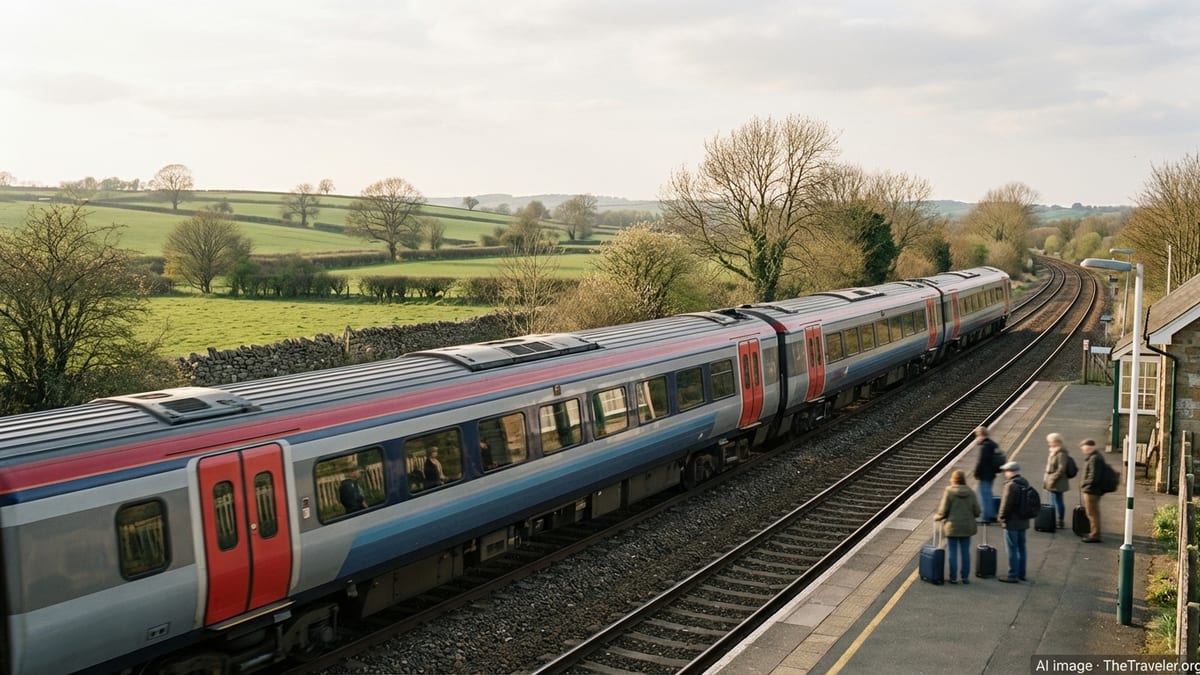
Milestone Launch for Long‑Distance Voyager Fleet
The inaugural upgraded set, unit 220033, re-entered traffic on 24 February 2026 after a comprehensive overhaul by Alstom at its historic Litchurch Lane facility in Derby. The train, which has already accumulated more than 5.8 million miles in service, operated its first passenger diagrams between Birmingham and Newcastle, giving customers an early look at the new interior and exterior design.
The return of the first refurbished Voyager marks the visible start of CrossCountry’s fleet-wide modernisation, a programme valued at around 60 to 75 million pounds that will see all 70 Class 220 and 221 diesel multiple units upgraded over the next two years. The work is being carried out in partnership with rolling stock owner Beacon and manufacturer Alstom, which also maintains the fleet at its Central Rivers depot in Staffordshire.
CrossCountry describes the project as a transformative investment in the backbone of its inter-regional network, which spans routes from the South West and South Coast through the Midlands to northern England and Scotland. The operator carried close to 40 million passengers in 2025, and expects the refurbished trains to support further growth by offering a more attractive alternative to driving and domestic flying.
Industry leaders say the relaunch underlines a wider shift in the UK rail sector toward sweating existing assets more intelligently. Rather than waiting for entirely new fleets, operators are increasingly turning to deep refurbishments that can extend life, cut emissions and deliver a step-change in passenger experience on shorter timescales.
Passenger Comfort Upgrades Aim to Redefine Onboard Experience
Inside the refurbished Voyager, the most noticeable changes for passengers are in the seating and interior finish. All saloons receive new seats with extra padding and reshaped backs designed to improve comfort on the long cross-country journeys for which the fleet is known. Seat layouts have been optimised to create more consistent legroom, and upgraded tables are intended to make working and dining onboard easier.
Every seat now benefits from modern at-seat power, with a combination of traditional three-pin sockets and USB-A and USB-C outlets. This move responds directly to passenger feedback about the need to keep devices charged on longer trips, and brings the Voyagers into line with expectations set by newer intercity trains elsewhere on the network.
The interiors also feature new carpets, refreshed wall and ceiling panels, and full LED lighting, giving the trains a noticeably brighter and cleaner feel. Toilets and vestibules have been fully refurbished, addressing one of the most persistent complaints from regular travellers on the long-serving fleet. The exterior carries a revised CrossCountry livery that aligns the Voyagers more closely with the operator’s refreshed Class 170 Turbostar units.
In First Class, the refurbishment focuses on improved seating comfort and a more contemporary look and feel, with the aim of attracting business travellers who might otherwise fly or drive. Together, the package of changes is positioned as a holistic uplift rather than a light refresh, intended to make the trains feel essentially new from a customer perspective.
Efficiency, Data and Safety Enhancements Behind the Scenes
Alongside the visible interior transformation, the Voyager upgrade programme incorporates a series of technical changes intended to improve operational efficiency and reliability. New LED lighting and lighter interior materials are expected to reduce energy use and fuel consumption, contributing to lower emissions on the diesel-powered fleet.
The refurbished units are being fitted with enhanced CCTV coverage and forward-facing cameras, strengthening security and providing additional data for incident investigation and driver training. A new passenger counting system is designed to give CrossCountry much more granular insight into how and when people use its services, supporting smarter timetabling and capacity planning.
Sustainability has been a key consideration in the design of the refurbishment package. Alstom says the new seating is at least 95 percent recyclable and 98 percent recoverable by weight, while the choice of materials and components is intended to simplify eventual end-of-life processing. Reusing and upgrading existing trains rather than procuring new stock also reduces the embedded carbon associated with manufacturing.
From a maintenance perspective, standardised components and refreshed systems should help to improve reliability and reduce time out of service. That, in turn, is expected to translate into more consistent punctuality and fewer short-notice train swaps, an important consideration on a network where many journeys involve tight connections across multiple operators.
Network Coverage and Travel Market Impact
The refurbished Voyager fleet will continue to operate across the full span of CrossCountry’s core network, including routes linking Birmingham with Manchester, Bristol, the South West, Reading, Bournemouth, Leeds, Newcastle, Edinburgh and Glasgow. With no direct equivalent high-speed intercity alternative on many of these flows, the trains play a pivotal role in connecting regional cities and major employment centres.
By improving comfort and onboard amenities, CrossCountry is targeting both discretionary leisure travellers and time-sensitive business passengers. The operator believes that higher-quality interiors, reliable connectivity and consistent power provision can tip journey decisions in favour of rail, particularly on corridors where journey times are competitive with driving.
The timing of the Voyager upgrade dovetails with other rolling stock changes across the British network, including the retirement of Super Voyagers from Avanti West Coast and the entry into service of new electric and bi-mode fleets elsewhere. The result is a gradual reshaping of long-distance travel, in which refurbished diesel units like CrossCountry’s Voyagers are expected to serve for another decade or more while infrastructure and electrification catch up.
For regional destinations away from London, the investment sends a signal that intercity-standard trains will continue to call at intermediate towns and cities, rather than being concentrated solely on core trunk routes. Tourism bodies in the South West, North East and Scottish destinations served by CrossCountry have long argued that comfortable, reliable rail links are essential to attracting visitors and supporting year-round economies.
Broader Refurbishment Wave Across the CrossCountry Fleet
The Voyager programme is part of a wider modernisation effort at CrossCountry, which is also rolling out a mid-life refresh for its Class 170 Turbostar diesel units. Those trains, used on routes such as Birmingham to Leicester and Stansted Airport and Cardiff to Nottingham, are receiving new seats and tables, updated interiors, at-seat power and upgraded information screens, bringing regional services closer in standard to the intercity offer.
Together, the two projects amount to a substantial reinvestment in existing rolling stock at a time when large new-train orders are proving harder to justify financially. By leveraging refurbishment rather than replacement, CrossCountry and its partners aim to deliver visible benefits to passengers more quickly while still aligning with government objectives on decarbonisation and value for money.
Rail analysts note that the success of the Voyager upgrades will be closely watched by other operators considering similar life-extension projects. If passenger satisfaction and ridership respond positively, deep refurbishment combined with targeted new fleets could become a standard model for renewing Britain’s mixed-age rolling stock over the coming decade.
For now, the first refurbished Voyager in service offers a tangible preview of that future: a familiar train, but with a markedly improved environment and a quieter, more efficient feel, setting a new benchmark for what passengers can expect from upgraded inter-regional rail travel in the UK.