

More news on this day
As bookings surge for 2026 sailings on Europe’s marquee rivers, first-time cruisers bound for the Danube, Rhine and Seine are finding that preparation, not pampering, is what most often determines whether a river voyage feels effortless or overwhelming.
Choosing the Right Season and Itinerary
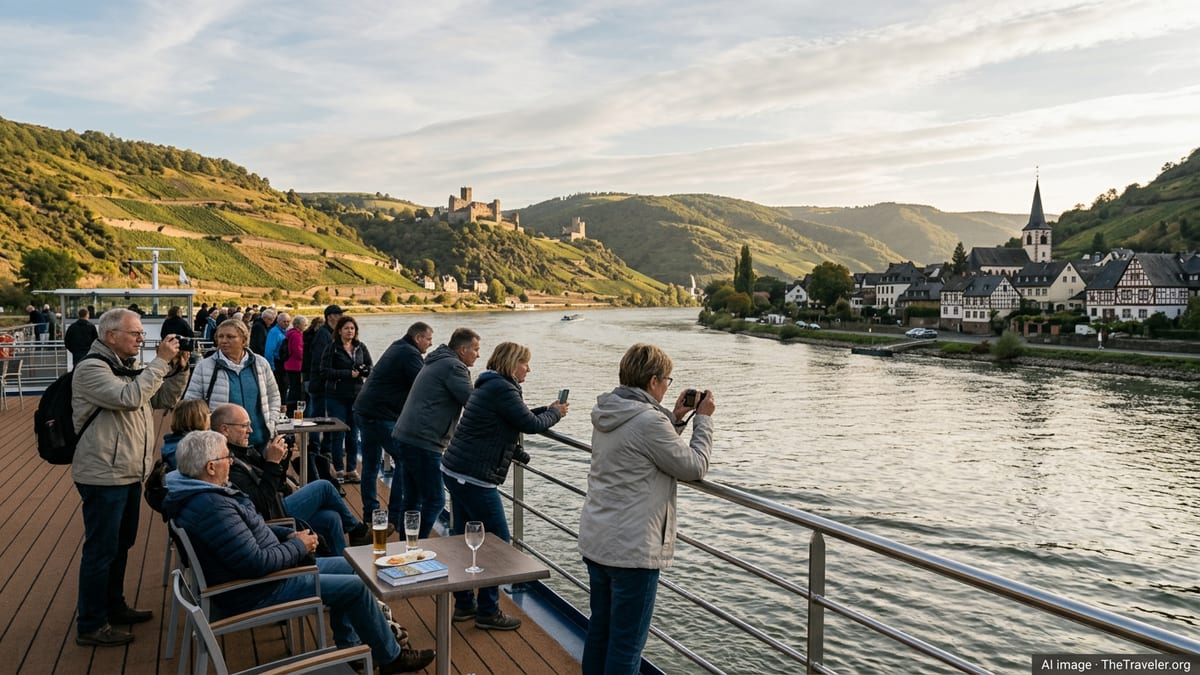
Across the Danube, Rhine and Seine, when you go can be just as important as where you go. Spring and early autumn continue to be the most sought-after windows, with cooler temperatures, fewer crowds and vineyard scenery that appeals to first-time passengers wary of summer heat. Travel advisors report strong early bookings for shoulder-season departures in 2026, particularly on Danube routes through Austria’s Wachau Valley and along Germany’s castle-studded Middle Rhine.
Summer departures still dominate capacity, but newcomers are being urged to look closely at what each river offers at different times of year. On the Danube, July and August can bring busy quays and warmer days in Budapest and Vienna, while the Rhine comes alive with outdoor festivals and terrace dining. The Seine, by contrast, can feel more intimate in late spring and early fall, when Parisian streets and Normandy villages are easier to navigate.
Specialty itineraries are also shaping how first-timers choose. Christmas market cruises on the upper Danube and Rhine, increasingly popular with North American travelers, require a tolerance for cold but reward guests with atmospheric riverside towns and extended evening stays. On the Seine, art- and history-focused sailings that pair Paris with Monet’s Giverny or the D-Day beaches remain a strong draw, especially for travelers combining a cruise with a longer European stay.
Industry planners advise that those booking their first river cruise build in at least one pre-cruise night in the embarkation city to buffer against flight delays and lost luggage. With smaller ships unable to wait on late arrivals the way large ocean vessels sometimes can, arriving a day early in cities such as Budapest, Amsterdam or Paris has become a standard recommendation rather than a luxury add-on.
Packing for Smart Comfort, Not Formal Nights
For travelers more familiar with traditional ocean cruising, one of the biggest surprises on Europe’s rivers remains how relaxed life on board actually is. Major operators on the Danube, Rhine and Seine describe their dress codes as “smart casual,” and recent traveler reports from Rhine and Seine sailings confirm that guests often head straight to dinner in the same neat jeans, trousers and sweaters worn on daytime excursions.
That shift has practical implications for suitcases. Travel advisors are increasingly nudging first-time passengers to prioritize layers, neutral pieces that mix and match, and footwear suited to cobblestones and changing weather over seldom-used cocktail wear. A light waterproof jacket, packable umbrella and comfortable walking shoes are now considered near-universal essentials, whether guests are climbing to a Rhine castle viewpoint, joining a Danube bike tour or navigating Parisian pavements along the Seine.
Season-specific preparation is also sharpening. For Christmas market departures, recent cruisers cite insulated coats, gloves and warm socks as crucial for hours spent outdoors in riverside squares, while spring Rhine and Danube itineraries often call for a combination of light sweaters and breathable rain gear. On the Seine, where days can blend urban touring with coastal breezes in Normandy, passengers benefit from scarves and layers that transition easily from city streets to open decks.
With cabin storage on river vessels more compact than on large ocean ships, operators note that packing light pays dividends. Many lines sailing the Danube, Rhine and Seine now offer reasonably priced laundry services and encourage guests to use them rather than overfilling wardrobes. The goal, advisors say, is a small, flexible wardrobe that works from breakfast buffet to lounge concert without the need for a dedicated formal outfit.
Cabins, Connectivity and Life On Board
Securing the right cabin is emerging as a key decision point for first-timers, particularly as newbuild ships continue to offer a mix of lower-deck windows, French balconies and full-step-out balconies on popular Danube and Rhine routes. Recent passenger feedback suggests that while balcony cabins are prized for private views through scenic stretches such as the Wachau Valley or the Rhine Gorge, many newcomers are comfortable starting with a standard window cabin, spending more time instead in panoramic lounges and on open decks.
Travel counselors advise first-timers to pay attention to cabin location as much as category. Rooms near the bow can experience more engine vibration, while those directly under lounges or dining rooms may pick up more noise. On the Seine, where vessels sometimes dock close to city streets, cabins slightly away from the gangway can feel calmer. On the Rhine and Danube, where rafting alongside other ships is common in busy ports, guests are reminded that balcony views may occasionally be blocked by a neighboring vessel.
Connectivity on Europe’s rivers has steadily improved, but is not yet seamless. Operators on the Danube, Rhine and Seine typically include onboard Wi-Fi, but signal quality can vary in narrow gorges or remote stretches. Travel advisors recommend that guests download maps, reading material and streaming content before departure, and carry a power strip or small extension cord to cope with limited outlets in cabins. Portable chargers have become a standard packing suggestion for those relying on phones for photography and digital excursion documents.
Once on board, the rhythm of a river cruise tends to be more intimate and port-focused than ocean sailings. Daily briefings, small-group excursions and regionally influenced menus are standard on the big three rivers. On the Danube, guests might move from a morning in baroque squares to a classical concert; on the Rhine, wine tastings and castle tours dominate; along the Seine, culinary workshops and World War II history talks are common. Newcomers are encouraged to review the daily program each evening to balance organized outings with independent exploration and quiet time on deck.
Money, Documents and Insurance for Europe’s Waterways
Behind the scenes of the scenic riverbanks, practical paperwork is playing a larger role in trip planning. Operators and travel agents continue to stress the importance of passports valid for at least six months beyond the return date, a requirement that can catch first-time European cruisers off guard. With 2026 demand strong on marquee Danube, Rhine and Seine sailings, some lines are also tightening final payment and cancellation timelines, adding urgency to administrative checklists.
Travel insurance has moved from optional to strongly recommended as river lines increasingly highlight weather- and water-level-related disruptions in their terms and conditions. On the Danube and Rhine, high or low water can force ship swaps or partial coach transfers, while Seine itineraries can be affected by seasonal river management around Paris. Policies that cover trip interruption, medical care and evacuation within Europe are now widely promoted by both cruise lines and independent agents.
On board, tipping practices remain a frequent query for first-timers. While many Danube, Rhine and Seine itineraries suggest guideline amounts per person, per day, lines vary in whether gratuities are prepaid, added automatically or left to guests’ discretion at the end of the sailing. Advisors suggest that travelers clarify policies before departure and carry some small-denomination euros for local guides, coach drivers and café stops in port.
As contactless payments become more common in European cities along all three rivers, cash needs have shifted, but not disappeared. River cruise veterans still recommend withdrawing a modest amount of local currency upon arrival for markets, small shops and rural stops, especially on Danube and Rhine routes that pass through smaller towns. Credit cards remain widely accepted in Paris and major Rhine and Danube capitals, though travelers are urged to notify their banks of international use and carry a backup card in case of fraud alerts.
Onshore Culture: Making the Most of Every Stop
The most memorable moments on a first river cruise often unfold off the ship, and preparations are increasingly focused on maximizing time in port. Industry specialists encourage guests booked on Danube, Rhine and Seine itineraries to read up on key stops before sailing, whether that means Viennese coffeehouse traditions, Cologne’s Gothic architecture or the layered history of Rouen and the Normandy coast.
With many calls lasting only a few hours, travelers are being urged to prioritize rather than attempt to see everything. In practice, that can mean choosing between a guided city tour and an independent museum visit, or deciding to linger over a glass of local Riesling in a Rhine village instead of rushing through a shopping list. Operators note that first-timers who identify a personal highlight for each port tend to return with a stronger sense of connection to the places they have visited.
Comfortable daypacks, refillable water bottles and simple security measures are now standard recommendations across all three rivers. In compact medieval centers along the Danube and Rhine, where narrow lanes can be crowded in peak season, keeping valuables close and hands free is considered essential. On the Seine, especially in and around Paris, guests are reminded to be aware of pickpockets in popular areas while still engaging fully with café culture and riverfront promenades.
Ultimately, travel planners say, the secret to an unforgettable first river cruise on the Danube, Rhine or Seine lies less in elaborate wardrobes or packed schedules and more in small acts of preparation: a thoughtfully chosen season, an extra night at the start, a suitcase geared to walking and weather, and a willingness to slow down and watch Europe’s history drift by from the rail of a low-slung ship.