

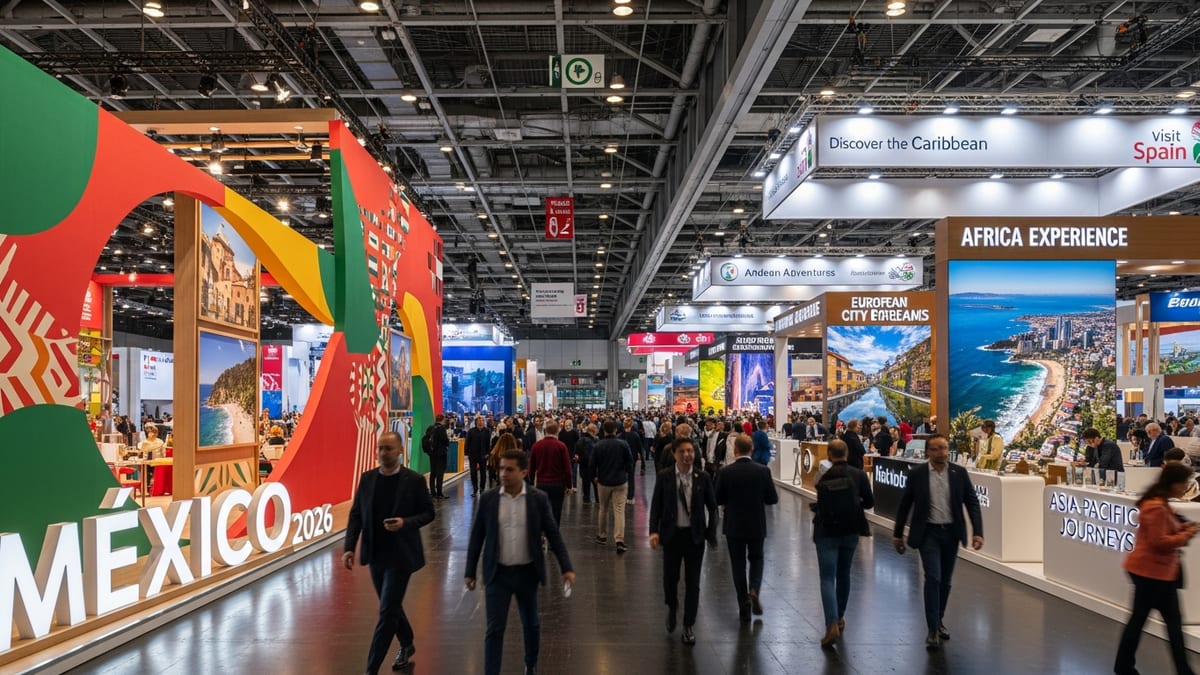
FITUR 2026 has closed its doors in Madrid with record crowds and an unprecedented economic boost, consolidating the Spanish capital’s place at the center of the global tourism industry.
Over five days, the world’s leading tourism fair drew more than 255,000 attendees and injected an estimated 505 million euros into the city’s economy, marking a new high-water mark for both visitor numbers and local impact.
More News
- Canada Tightens Travel Warnings as Extreme Weather Claims 83 Lives
- Snowstorm Chaos in Manali: Tourists Stranded as Himachal Issues Urgent Travel Alert
- Cyclone Harry Keeps Silver Muse in Valletta, Turning Disruption Into Deeper Malta Discovery
Record Attendance Cements FITUR’s Global Standing
The 46th edition of the International Tourism Fair, held at the IFEMA Madrid exhibition center from January 21 to 25, 2026, slightly surpassed its already historic 2025 attendance, with more than 255,000 visitors passing through the halls. Organizers report that professional attendance held at around 155,000 travel trade visitors across the first three days, while the weekend open to the general public attracted about 100,000 people.
This combination of stable professional turnout and robust public interest has allowed FITUR to retain its position as one of the largest tourism gatherings in the world in terms of professional participation. The fair’s global pull was evident in the packed aisles, sold-out hotel rooms around the fairgrounds, and steady flows of visitors across the 8 pavilions dedicated to destinations, technology, experiences, and niche travel segments.
Crucially, the event sustained its momentum despite a challenging context marked by a deadly rail accident in Adamuz, Córdoba, just days before opening, which disrupted travel from southern Spain and altered the agendas of several institutional delegations. Even with those headwinds, queues at the entrance, busy lounges, and fully booked networking areas testified to a strong appetite for in-person business and destination marketing at the start of the tourism year.
Economic Windfall: 505 Million Euros for Madrid
Beyond the fairgrounds, FITUR 2026 has delivered a record economic return for Madrid. According to IFEMA Madrid’s estimates, the fair generated 505 million euros in direct and indirect impact for the city, a double-digit increase on the previous year’s figure and a new all-time high. The boost reflects spending on accommodation, dining, transport, retail, event services, and ancillary tourism activities linked to the fair.
That 505 million euro impact represents an approximate 11 percent rise compared with the 2025 edition, a result that points not only to higher visitor numbers but also to greater per-capita spending and longer average stays. As a key opening event on the international trade fair calendar, FITUR fills hotels and short-term rentals across Madrid at what is traditionally a quieter time for city tourism, helping to balance seasonal demand.
Local business associations noted strong performance in centrally located districts and around the airport corridor, with restaurants, bars, and cultural venues reporting an influx of foreign visitors extending their stays beyond the fair dates. The figures underscore the role of large-scale professional events as drivers of urban tourism, especially in shoulder-season months when business travel and congress activity can offset softer leisure demand.
Jobs, Business Confidence and the Tourism Outlook
The financial footprint of FITUR 2026 goes hand in hand with its contribution to employment and industry confidence. Organizers calculate that the fair supported the equivalent of 3,753 jobs in Madrid across sectors such as hospitality, transport, events, logistics, and trade services. For many local suppliers, from stand builders to catering companies, the January event represents a crucial piece of annual revenue.
This year’s performance also sends a positive signal about the health of the global tourism economy after several consecutive years of recovery and recalibration. According to figures invoked during the fair, international tourist arrivals worldwide surpassed 1.5 billion in 2025, while Spain closed last year with a record number of foreign visitors and rising tourism revenue. The solidity of FITUR’s professional turnout and the volume of business meetings conducted over five days reinforces expectations of continued growth, albeit with a stronger focus on quality, sustainability, and higher value-added segments.
Tourism executives and public officials who gathered in Madrid pointed to robust bookings in key markets for 2026 and highlighted areas such as experiential travel, city breaks, and long-haul itineraries as particular drivers. The fair’s upbeat closing balance, coupled with the breadth of participating destinations, suggests that both emerging and established markets are banking on another strong year, even as they grapple with issues ranging from geopolitical tensions to climate-related disruptions.
A Truly Global Marketplace: 10,000 Companies and 161 Countries
FITUR 2026 reinforced its credentials as a global marketplace for tourism by bringing together more than 10,000 companies from 161 countries and territories. Of these, 111 were present with official national or institutional representation, underlining the fair’s importance as a stage for destination branding and international diplomacy.
The exhibition space hosted 967 main exhibitors spanning national tourism boards, regional and city destinations, hotel groups, airlines, cruise lines, tour operators, technology companies, and startups. Organizers highlighted an 11 percent increase in international exhibitors, mirroring a 12 percent rise in international professional visitors. The growing share of foreign participation indicates that Madrid remains a preferred platform for Latin American, European, African, and increasingly Asia-Pacific markets looking to negotiate access to outbound travelers.
For many destinations, FITUR serves as the first major opportunity of the year to unveil new campaigns, announce airline routes, sign co-marketing agreements, and present tourism investment opportunities. Meeting rooms adjacent to the pavilions reportedly operated at or near capacity, as delegations held back-to-back appointments with buyers and partners. This dense schedule of negotiations is one reason why the event is seen not only as a showcase but as a deal-making engine with concrete effects on travel flows later in the year.
Mexico as Partner Country and the Rise of Latin American Tourism
This year’s edition featured Mexico as the official Partner Country, a role that placed the Latin American giant at the center of FITUR’s promotional and institutional activities. With a tourism sector that has expanded at a double-digit pace and ambitions to solidify its position among the world’s most visited destinations, Mexico used the fair to spotlight both its traditional sun-and-sand offerings and a broader portfolio of cultural, gastronomic, and nature-based experiences.
The Mexican pavilion attracted consistent crowds with a high-visibility stand design, live cultural performances, and a full agenda of professional presentations. Officials and private-sector representatives emphasized new investment in infrastructure, diversification into lesser-known regions, and efforts to improve connectivity with European and Asian markets. The Partner Country status also translated into prominent visibility across the fair’s signage, conferences, and official ceremonies.
More broadly, Latin American destinations from the Caribbean to the Southern Cone leveraged FITUR to court European operators and investors. Several countries highlighted initiatives aimed at balancing tourist numbers across regions, promoting community-based tourism, and improving sustainability standards in response to growing traveler awareness. The prominence of Latin American stands illustrated Madrid’s enduring role as a bridge between Europe and the Americas in travel and aviation networks.
Innovation, Knowledge and New Segments in the Spotlight
FITUR 2026 continued to expand its role as a laboratory for tourism innovation through its Knowledge Hub, a large cluster of conference and content spaces integrated into the exhibition area. Across eight auditoriums and ten themed programs, the fair hosted more than 200 sessions featuring over 250 speakers from the public and private sectors, academia, and international organizations.
Discussions ranged from artificial intelligence in travel planning and hotel operations to data-driven destination management, climate adaptation, and strategies for combating misinformation in tourism communication. The growth of the travel technology area, which has doubled in size in recent editions, reflected how digital solutions are reshaping everything from revenue management and customer experience to sustainability monitoring and accessibility.
Specialized FITUR sections dedicated to emerging and niche segments also drew strong interest, including areas focused on accessible tourism, cruises, LGBTQ+ travel, sports tourism, screen tourism tied to film and television locations, and talent development. These zones provided platforms for smaller operators and specialist brands to stand out against the backdrop of major national stands, and they offered visitors a curated look at growth pockets within the wider tourism ecosystem.
A Fair Marked by Tragedy, Security and Urban Change
Despite its positive closing balance, FITUR 2026 unfolded under the shadow of the fatal rail accident in Adamuz, Córdoba, which claimed dozens of lives and interrupted rail service between Madrid and parts of southern Spain. The incident prompted institutional mourning, forced the cancellation of some official delegations from Andalusia and other regions, and led to the suspension of a high-profile tourism forum that traditionally attracts top political and business leaders.
Security considerations were also heightened around the visit of Spain’s King and Queen, who formally inaugurated the fair after initial uncertainty over their attendance. Their presence drew large crowds and media attention, but it also led to long queues and congestion at the entrances as strict access controls were implemented around the royal route. Attendees reported significant waits during peak hours, particularly on the day of the royal visit.
On top of those factors, ongoing construction work linked to the future Formula 1 circuit in Madrid affected parking capacity and traffic flow around the IFEMA complex. Organizers and city authorities encouraged visitors to use public transport, and many attendees opted for metro, bus, or ride-hailing services. The disruptions highlighted how major infrastructure projects and exceptional events can interact with large trade fairs, prompting calls from some industry figures for more integrated urban planning and mobility strategies for future editions.
Madrid’s Strategic Bet on Business Tourism
The record impact of FITUR 2026 underscores Madrid’s broader strategy to position itself as a leading hub for business and meetings tourism. City and regional authorities have consistently framed large-scale fairs and congresses as pillars of the local economic model, complementing the capital’s appeal to leisure visitors with a dense calendar of professional events spanning sectors from tourism and technology to health and logistics.
IFEMA Madrid’s role as both organizer and venue operator places it at the heart of this strategy. The institution has invested in modernizing its exhibition infrastructure, expanding digital services, and enhancing the visitor experience, with FITUR serving as one of its flagship events each year. The fair’s growing economic return, together with high levels of international participation, bolsters arguments in favor of continued investment in congress spaces, transport connectivity, and urban amenities that serve both residents and visiting professionals.
Tourism leaders in Madrid have also emphasized the reputational benefits that come from hosting a globally recognized fair at the start of the year. The intense media coverage surrounding FITUR, combined with the influx of influencers, travel content creators, and opinion leaders, provides the city with extended visibility in key markets. That exposure, they argue, translates into future leisure trips, repeat visits, and word-of-mouth recommendations that stretch far beyond the immediate five days of the fair.
Looking Ahead to Future Editions
With the 2026 edition now wrapped, attention is already turning to how FITUR can build on its record performance in the years ahead. Organizers have signaled that the focus will remain on consolidating quality over sheer volume, with an emphasis on attracting high-value buyers, expanding the innovation ecosystem, and strengthening the fair’s role as a platform for sustainable and responsible tourism models.
Potential areas of evolution include further integration of hybrid formats, enhanced matchmaking tools using data and artificial intelligence, and deeper collaboration with international organizations on climate and social impact initiatives. Industry observers also anticipate that future editions will continue to diversify geographically, bringing in more representation from Africa, the Middle East, and Asia-Pacific as their outbound and inbound markets expand.
For Madrid, the 505 million euro windfall and the confirmation of FITUR’s global drawing power are powerful arguments for maintaining its commitment to large-scale tourism and business events. As the city emerges from this year’s fair with buses and metros returning to normal and stands being dismantled at IFEMA, the deals struck and relationships forged during the week are only beginning to shape travel patterns for the year to come.