

More news on this day
A five-day immediate ceasefire announced by the United States in its confrontation with Iran is rippling quickly through the Middle East, with Qatar joining the United Arab Emirates, Bahrain, Saudi Arabia, Lebanon, Oman, Iraq and other countries in cautiously welcoming a rare window of de-escalation that could ease airspace pressures and offer a modest lifeline to the region’s shuttered tourism and hospitality sectors.
Get the latest news straight to your inbox!
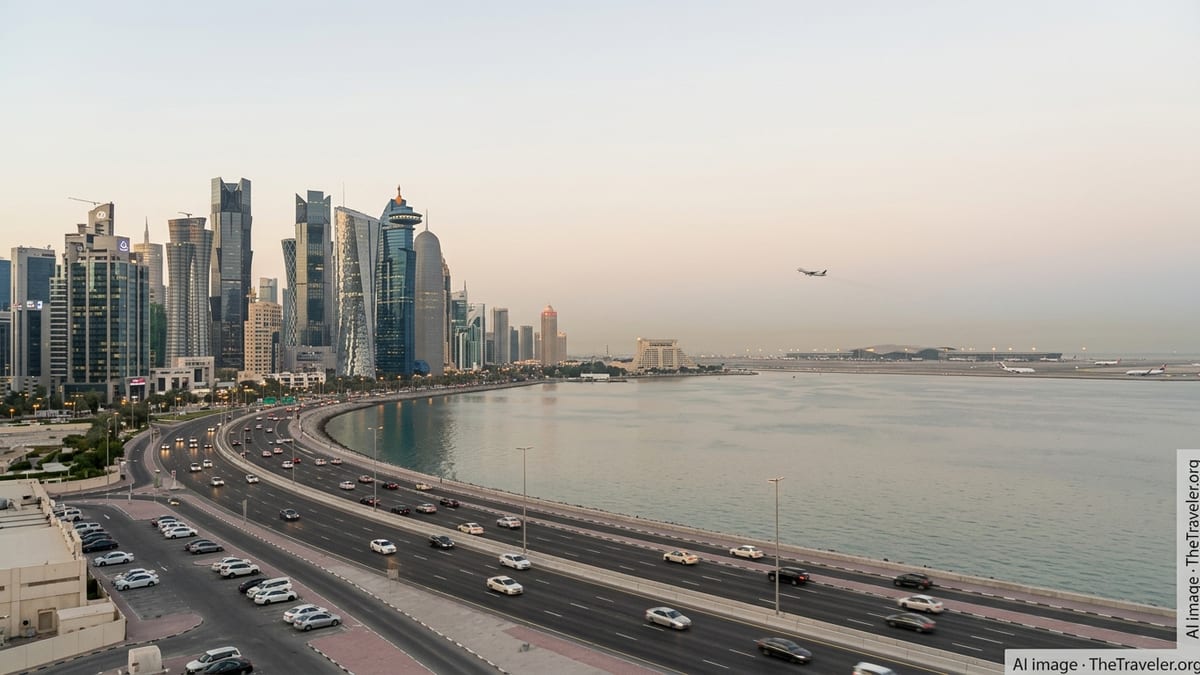
Ceasefire Brings Tentative Relief After Weeks of Disruption
The US announcement of a short, immediate pause in offensive military action against Iran comes after weeks of heightened regional tensions, airspace closures and missile incidents that severely disrupted aviation corridors across the Gulf. Publicly available coverage of the conflict describes a sharp contraction in overflight options and the diversion or cancellation of hundreds of flights linking Europe, Asia and Africa via Middle Eastern hubs.
Analyses of the broader economic fallout from the Iran war indicate that the closure or restriction of key Middle East airspace has produced some of the most severe global aviation disruptions since the COVID-19 pandemic, with Gulf hubs such as Doha, Dubai and Abu Dhabi facing damage, temporary shutdowns or heavy congestion as airlines scrambled to re-route traffic. Aviation advisories issued in early March noted partial reopenings at certain airports but warned that selected corridors remained at risk of sudden closure.
The new five-day ceasefire is not a comprehensive peace agreement and remains contingent on ongoing talks, but the immediate halt to planned US strikes is already being framed by regional observers as a chance to stabilize skies that have become increasingly unpredictable. Governments in the Gulf and Levant, including Qatar, the UAE, Bahrain, Saudi Arabia, Lebanon, Oman and Iraq, have publicly signaled support for moves that lower the risk of missiles or drones transiting shared airspace, a precondition for any meaningful normalization of passenger and cargo flows.
Airspace Reopenings and Overflow Traffic Through Gulf Hubs
In the days leading up to the ceasefire announcement, aviation briefings pointed to a gradual, patchwork reopening of some national airspaces. Advisory documents circulated to corporate travel managers in early March reported that Oman’s airspace was fully open but handling overflow traffic, Saudi Arabia was operating what was described as the main remaining East–West corridor for long-haul flights, and Qatar, Bahrain, Kuwait and the United Arab Emirates were preparing for a phased resumption of more normal traffic patterns as security conditions allowed.
Public notices from Qatar’s civil aviation authorities earlier this month referred to a partial resumption of air navigation through designated contingency routes with limited operational capacity, following a complete shutdown that forced Qatar Airways and other carriers to cancel or re-route services. Informal accounts from passengers and travel forums described aircraft turning back mid-flight, extended layovers and uncertainty over refunds as schedules were repeatedly reworked around temporary closures.
The five-day US ceasefire is expected to accelerate planning for broader reopenings. Aviation risk consultancies have suggested that, if the pause holds, regulators in Qatar, the UAE, Bahrain and Saudi Arabia may be able to relax some of the most restrictive no-fly zones and expand usable corridors, though most assessments stress that any change is likely to be incremental and closely tied to real-time security monitoring. Airlines are expected to continue building in additional fuel, contingency routing and crew buffers even as they restore capacity.
Tourism and Hospitality Eye a Fragile Uptick
The travel and hospitality industries across the Middle East have been among the hardest hit by the latest round of conflict. Economic analyses of the Iran war’s impact on regional tourism point to a sharp drop in visitor arrivals to Gulf destinations, disruptions to eastern Mediterranean itineraries and a loss of confidence among long-haul travelers transiting via Doha, Dubai, Abu Dhabi and other hubs. For countries such as Qatar, the UAE, Saudi Arabia and Oman, which have invested heavily in tourism as part of broader diversification plans, the downturn came on the heels of a strong post-pandemic rebound.
Industry commentators note that even a brief de-escalation can have outsized signaling value for travelers and tour operators. A clearly defined five-day window in which major powers step back from new strikes reduces the perceived risk of being stranded or caught in crossfire, and could prompt some airlines to reinstate limited frequencies on popular routes. Hotel groups in Doha, Dubai, Riyadh and Muscat are monitoring booking engines closely for signs of renewed interest in stopover stays, short-break city trips and conferences that had been postponed or moved.
However, most regional forecasts remain cautious. Travel advisories issued by security consultancies in early March emphasized that while some airports had resumed partial operations, the broader strategic picture, including the Iran war and the unresolved situation in Gaza and Lebanon, continues to weigh on demand. Analysts quoted in regional business media argue that a durable rebound in international tourism to Qatar and its neighbors will depend on whether the five-day ceasefire becomes a stepping stone to longer pauses or a more comprehensive framework for de-escalation.
Regional Coordination and Competitive Pressures Between Hubs
The ceasefire window is also testing the resilience and adaptability of the Gulf’s aviation and tourism ecosystem. With Qatar, the UAE and Bahrain all positioning themselves as leading global transit hubs, the gradual restoration of airspace has created both opportunities and competitive pressures. Earlier in March, specialist travel briefings pointed to Saudi airspace as one of the few stable East–West routes, channeling flights that would ordinarily pass over Iran, Iraq or the Gulf. Oman, with its open skies and relative distance from direct strikes, has been described as absorbing overflow traffic, temporarily raising the profile of Muscat as an alternative gateway.
For Qatar, partial airspace reopening and the prospect of a safer operational environment could allow Doha’s Hamad International Airport to claw back some of the long-haul transfer traffic diverted during the height of the crisis. Aviation analysts note that Qatar Airways has historically leveraged its geographic position to connect secondary cities in Europe and Asia through dense banked waves of flights, a model that depends heavily on the predictability of surrounding airspace. Even modest improvements in flight planning flexibility during the ceasefire could translate into better on-time performance and more attractive itineraries.
At the same time, regional tourism strategies are likely to converge rather than compete in the immediate term. Public messaging from Gulf governments has emphasized shared interests in stability, safe passage for civilians and the protection of critical infrastructure. Industry observers expect to see continued coordination on NOTAMs, risk assessments and joint exercises in air defense and civil aviation, as well as informal alignment on marketing campaigns designed to reassure travelers once a more stable security environment is in place.
Travelers Weigh Opportunity Against Ongoing Risk
For travelers, the five-day US ceasefire offers both a potential opportunity and a dilemma. Some long-stranded passengers and expatriates in Qatar, the UAE, Bahrain, Lebanon, Oman and Iraq are likely to seize any chance to move while airspace is more predictable, even if schedules remain thin and connections complex. Reports circulating on travel forums suggest a mix of relief and lingering anxiety, with many would-be visitors considering whether to reinstate spring and early summer itineraries that include Doha stopovers, Gulf beach resorts or cultural trips to cities such as Muscat, Riyadh and Beirut.
Corporate travel managers and tour operators are expected to take a more measured approach. Advisory notes from risk consultancies stress the importance of flexible booking policies, real-time tracking of airspace notices and the use of carriers with robust contingency planning. In practice, this means that even if more flights return to the skies over Qatar and its neighbors during the ceasefire window, demand may be skewed toward essential travel, family reunification and business-critical trips, rather than discretionary leisure.
Looking beyond the five-day period, the trajectory of airspace, tourism and hospitality across the Middle East will depend heavily on whether negotiators can translate a temporary halt in strikes into a broader reduction in regional tensions. For now, Qatar and fellow states across the Gulf and Levant appear determined to use the breathing space to stabilize aviation networks, reassure nervous travelers and prepare their tourism-dependent economies for a gradual and uncertain path back to growth.