

More news on this day
Severe flash flooding linked to an unusually persistent storm system has killed at least two people and left dozens stranded across parts of Oman, as new emergency alerts are issued for Muscat, Nakhal, Barka, South Al Batinah, Musandam and Al Dakhiliyah with heavy rain and unstable conditions expected to continue through March 30, 2026.
Get the latest news straight to your inbox!
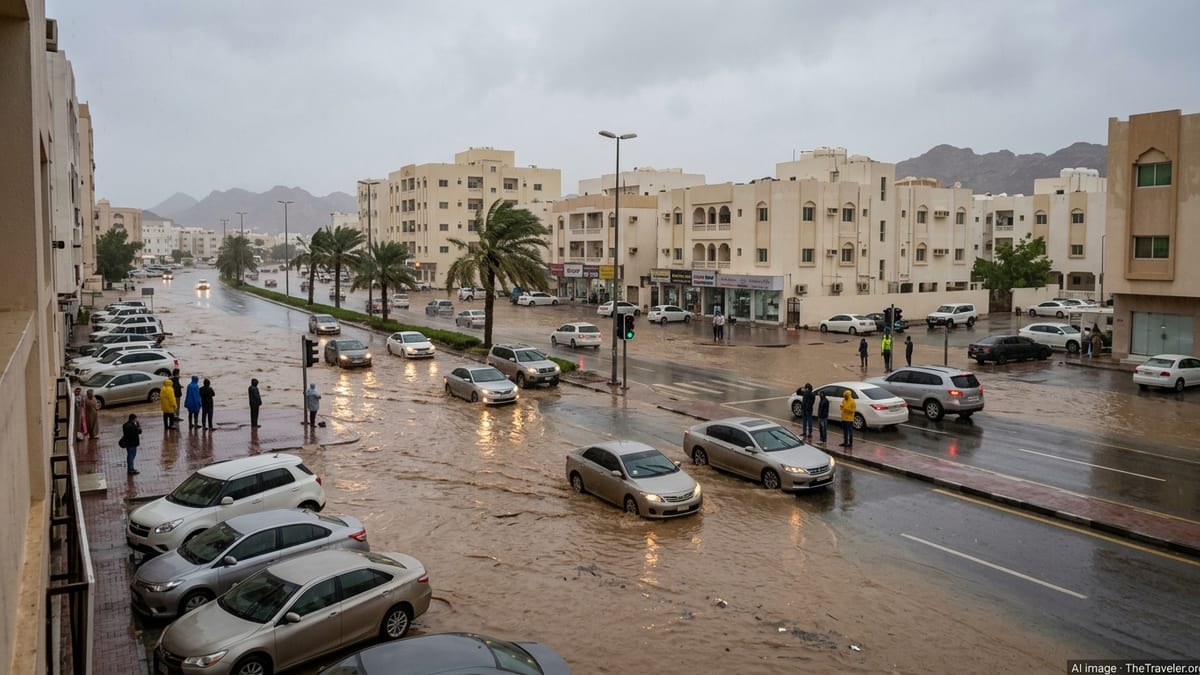
Deadly Flooding Hits Muscat and Key Coastal Towns
Publicly available information from local media and regional observers indicates that intense rainfall over recent days has rapidly swollen wadis and urban drainage channels in and around Muscat, triggering sudden flash floods that swept through low-lying neighborhoods and key road corridors. At least two fatalities have been reported in connection with the flooding, with initial details pointing to people being caught in fast-moving waters.
Images and video circulating on social platforms show vehicles partially submerged on main arteries, water surging through residential streets and floodwater pooling around popular commercial areas in the capital. Traffic disruptions have been extensive at peak times, with some underpasses and junctions rendered impassable as water levels rose quickly during the heaviest downpours.
Reports from coastal communities west of Muscat, including Nakhal and Barka in South Al Batinah, describe similar scenes of sudden runoff cascading from surrounding hills into populated areas. Observers note that saturated ground conditions following repeated rain episodes have increased the speed at which wadis fill, giving residents and motorists little time to react once storms move overhead.
Local accounts suggest that some residential compounds, small businesses and roadside farms along the Batinah corridor have sustained water damage, particularly in informal or older structures located along natural drainage paths. Assessments of property and infrastructure impacts are ongoing as waters recede between storm cells.
Dozens Stranded as Wadis Rise and Roads Close
As the storm complex intensified, multiple wadis in affected governorates rose sharply, cutting off routes that connect villages to main highways. Regional coverage and community updates indicate that dozens of people have been left temporarily stranded in vehicles or isolated communities after attempting to cross flooded stretches or after access roads were washed out.
In several locations, four-wheel-drive vehicles and smaller passenger cars were reported to be stuck mid-crossing when water levels suddenly surged. Video shared online appears to show residents climbing onto vehicle roofs or higher ground while awaiting assistance, highlighting the speed and force of the flash floods.
Emergency response teams and local volunteers have been reported conducting high-risk rescues using ropes and light craft in narrower wadis, especially where roads run parallel to or through seasonal watercourses. Publicly available information points to a coordinated push to move stranded groups to nearby schools, mosques or community centers being used informally as temporary shelters.
Travelers have been urged, through official advisories and widely shared safety messages, to avoid attempting to cross flowing wadis, even when water appears shallow. Prior flood events in Oman have demonstrated that seemingly manageable flows can intensify within minutes, quickly sweeping away vehicles and endangering occupants.
New Emergency Alerts Across Musandam and Interior Regions
As the system tracks across northern and interior Oman, Musandam and Al Dakhiliyah have been placed under fresh alerts warning of heavy rainfall, potential hail and strong winds, in addition to further flash flooding. Forecasts issued through national meteorological channels and regional weather services suggest repeated storm rounds rather than a single passing front.
In the mountainous governorates, the storm risk is heightened by the steep terrain, where short, intense bursts of rain can funnel rapidly into wadis that traverse narrow valleys and populated plateaus. Communities in these areas, including popular heritage towns and mountain villages, have been advised via public messaging and broadcast updates to remain vigilant for sudden water level changes.
Information from travel and aviation trackers indicates that while Muscat International Airport remains operational, localized flooding and reduced visibility during heavy bursts of rain may cause intermittent delays. Some domestic and regional road-based tour itineraries have already been modified or postponed, especially excursions that cross wadi systems or involve off-road travel in the interior.
Residents in Musandam and Al Dakhiliyah have been encouraged through public campaigns to monitor official weather bulletins, avoid non-essential journeys into mountainous or remote areas and prepare for potential short-notice school or workplace disruptions as conditions evolve.
Storm System Forecast to Persist Until March 30
Meteorological outlooks compiled from regional weather models and satellite analysis indicate that the current storm system affecting Oman is likely to remain active through at least March 30, 2026. Instead of a single cyclone landfall, the pattern appears to be driven by a series of low-pressure disturbances feeding moist air over the Gulf of Oman and adjacent interior.
This setup raises the prospect of repeated heavy showers and thunderstorms over the same catchments, a scenario that can exacerbate flood impacts even if individual rain episodes are relatively short-lived. When soils are already saturated and wadis are running high, additional rainfall can quickly trigger renewed surges and fresh road closures.
Forecasters cited in regional coverage note that day-to-day variability is expected, with some windows of drier and calmer weather between storm pulses. However, they caution that any apparent improvement may be temporary, and that local conditions can change quickly, particularly in the afternoon and evening when convective storms tend to peak.
Travelers planning journeys within Oman over the coming week are being advised by airlines, tour operators and local travel communities to build flexibility into schedules, check road status before departure and allow extra time for diversions. Coastal and mountain excursions, wadi hikes and off-road drives are being singled out as activities requiring heightened caution or postponement.
Travel, Safety and Infrastructure Concerns for Visitors
The flash flooding has raised immediate concerns for visitors currently in Oman or scheduled to arrive during the ongoing storm period. Travel forums and tourism operators are fielding questions about road safety, excursion viability and the status of hotels and attractions in Muscat, South Al Batinah, Musandam and the interior.
Most major hotels in central Muscat and established resort areas are understood to be operating with contingency plans that account for heavy rain, including backup power, elevated drainage and sheltered drop-off points. However, access roads to smaller guesthouses, desert camps and rural homestays may be more vulnerable, especially where routes cross seasonal streams or unpaved stretches.
Widely shared safety guidance emphasizes keeping clear of wadi banks, avoiding photography or sightseeing near fast-moving water and refraining from driving into water-covered roads, even in urban areas where the depth and condition of the surface beneath may be obscured. Travelers are also encouraged to store important documents and electronics in waterproof bags and to keep battery power and drinking water on hand in case of delays.
While Oman remains a key destination for Gulf and international travelers seeking coastal scenery and mountain landscapes, the current events underline the significance of the country’s flash flood risk during intense rain periods. Observers note that how quickly drainage infrastructure, transport links and tourism services recover after this episode will be watched closely by residents and visitors alike as the storm system plays out over the coming days.