

More news on this day
Alibaba-owned travel services platform Fliggy has moved from experimentation to execution with its generative AI assistant, AskMe, now enabling users to complete end-to-end travel bookings directly through a conversational interface.
Get the latest news straight to your inbox!
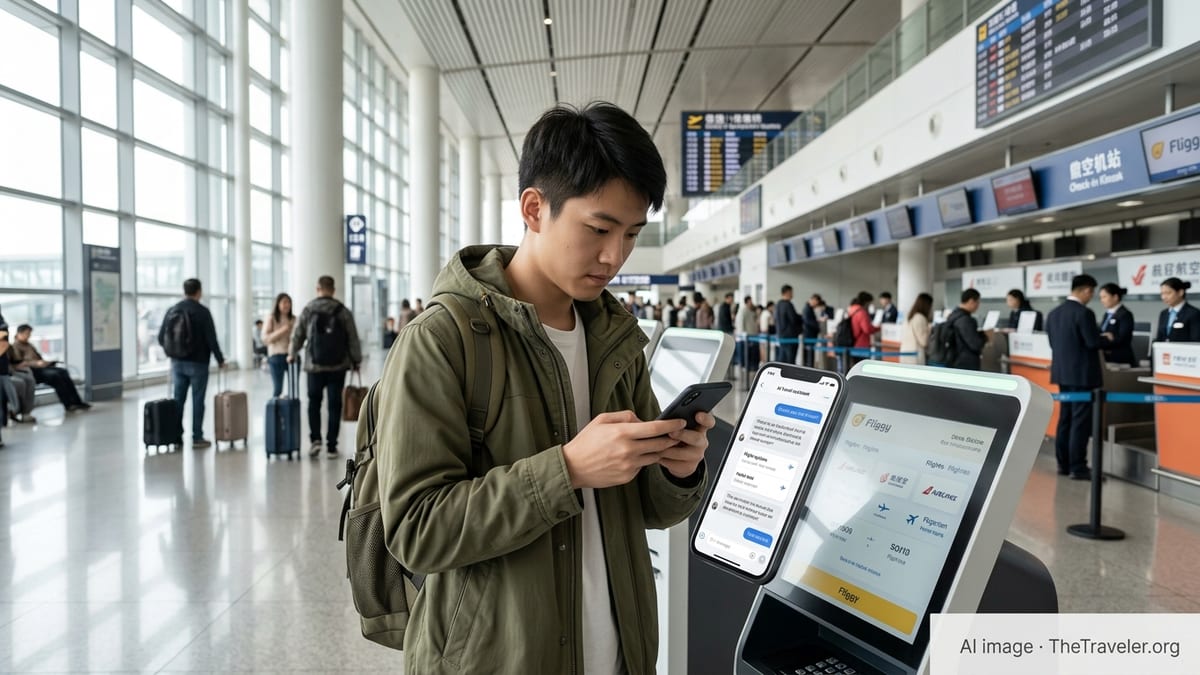
From Trip Ideas to Completed Bookings in a Single Chat
AskMe was first introduced as an AI travel assistant designed to mimic the problem-solving skills of a human consultant, using Fliggy’s extensive inventory of flights, hotels, attractions and curated experiences. Recent updates now make that assistant fully transactional, allowing users to progress from initial inspiration to confirmed reservations without ever leaving the chat-style interface.
Publicly available information shows that AskMe is powered by a multi‑agent architecture that can break complex travel requests into smaller tasks. The system can search transport options, combine them with accommodation choices, and layer in sightseeing and dining suggestions to generate day‑by‑day itineraries that are immediately bookable.
Instead of tapping through multiple filters and pages, travelers can describe their preferences in natural language, such as budget, travel style or desired pace. The AI then proposes a complete, costed plan and gives users the option to confirm flights, hotels and activities directly from the conversational flow.
This approach reflects a wider industry shift toward agentic AI, where digital assistants execute tasks on behalf of users rather than simply returning search results. Fliggy’s move to go live with bookings via AskMe places that model at the center of its consumer experience.
Budget Controls and Real‑Time Itinerary Adjustments
One of the most notable features of Fliggy’s AI interface is its emphasis on budget management. Reports indicate that AskMe can instantly regenerate itineraries when a user adjusts spending limits, rebalancing flight choices, hotel categories and paid activities to stay within a new target.
The assistant also supports real‑time edits. Travelers can shorten or extend stays, swap destinations or remove specific experiences, with the system recalculating logistics such as check‑in dates, intra‑city transfers and ticketed entries. The objective is to reduce the trial‑and‑error that often characterizes online trip planning, particularly for multi‑city or family journeys.
Multimodal outputs add another layer of usability. AskMe can present results as structured day plans, lists of confirmed services, or shareable itineraries that can be passed to friends and family. This is designed to keep the AI interface relevant not just at the research stage but throughout the booking and pre‑departure phases.
By reducing the friction of editing and re‑quoting, Fliggy is positioning its AI as an ongoing trip companion rather than a one‑time search tool, reinforcing the platform’s role across the entire travel planning cycle.
Part of Alibaba’s Broader AI Ambitions
Fliggy’s AI booking rollout sits within a larger push by Alibaba to embed generative models across commerce and services. The company’s Qwen large language model family already powers a variety of consumer applications, and a dedicated Qwen Travel Planner, highlighted in recent coverage, integrates deeply with Amap and Fliggy to deliver real‑time routing and hotel recommendations.
Connecting AskMe to live booking capabilities effectively turns Fliggy into a showcase for Alibaba’s AI stack in travel. The assistant can tap into proprietary data on inventory, pricing and user behavior, which gives it an advantage over standalone travel chatbots that rely only on public sources and affiliate links.
At the same time, Alibaba gains an additional testing ground for agentic AI behaviors such as multi‑step planning, constraint handling and transaction execution. The travel vertical, with its mix of fixed schedules, fluctuating prices and complex user preferences, provides a demanding environment for refining these capabilities.
Industry observers note that China’s domestic travel market, dominated by mobile‑first consumers and super‑app ecosystems, is fertile ground for this kind of AI‑driven booking experience, potentially accelerating adoption compared with more fragmented markets.
Competitive Pressure in the AI Travel Race
Fliggy’s move to make AI‑driven bookings live comes amid intense competition in the travel technology space. Global platforms and airlines have been experimenting with chat‑based search, dynamic packaging and AI customer support, but not all have fully integrated direct booking inside conversational interfaces.
According to published coverage across the sector, airlines are rolling out generative AI assistants to handle queries and manage reservations, while corporate travel tools are adding agentic engines that can monitor fares, rebook trips and enforce policy rules. Startups are targeting both consumer and business travel with chat‑first planners that sit on top of existing booking systems.
Fliggy’s strategy differs in that the AI runs natively inside a major online travel platform with control over the underlying inventory and payment flow. This allows the interface to move beyond recommendation into transaction, potentially increasing conversion rates and basket size as travelers accept bundled itineraries instead of piecing trips together manually.
The launch also raises expectations among travelers that AI travel tools should be not only informative but actionable. As more platforms follow suit, chat interfaces that stop at suggestions may begin to feel incomplete compared with assistants that can finalize the booking.
Implications for Chinese Outbound and Domestic Travelers
Fliggy has long been a prominent player in China’s online travel ecosystem, with particular visibility among younger, mobile‑savvy travelers. The activation of bookings via AskMe is likely to resonate with this demographic, which is accustomed to conversational services and integrated payments across other lifestyle apps.
For domestic travelers, the AI’s ability to parse complex rail and flight combinations, connect hotel stays with attractions, and surface local dining options could streamline short‑notice trips and weekend breaks. The system’s focus on personalized itineraries also aligns with a growing preference for niche, interest‑driven travel rather than standardized group tours.
On the outbound side, the assistant’s capacity to handle multi‑leg routes and cross‑border logistics may help Chinese travelers navigate increasingly diverse destination choices as international connections continue to expand. By lowering the planning barrier, the platform could stimulate demand for lesser‑known destinations that benefit from detailed, AI‑generated guidance.
For the broader industry, Fliggy’s live deployment of AI‑based bookings underscores how quickly conversational interfaces are moving from pilot projects to production systems. As travelers grow more comfortable trusting AI to assemble and purchase trips, traditional search‑and‑filter booking workflows may need to adapt to stay relevant.