

More news on this day
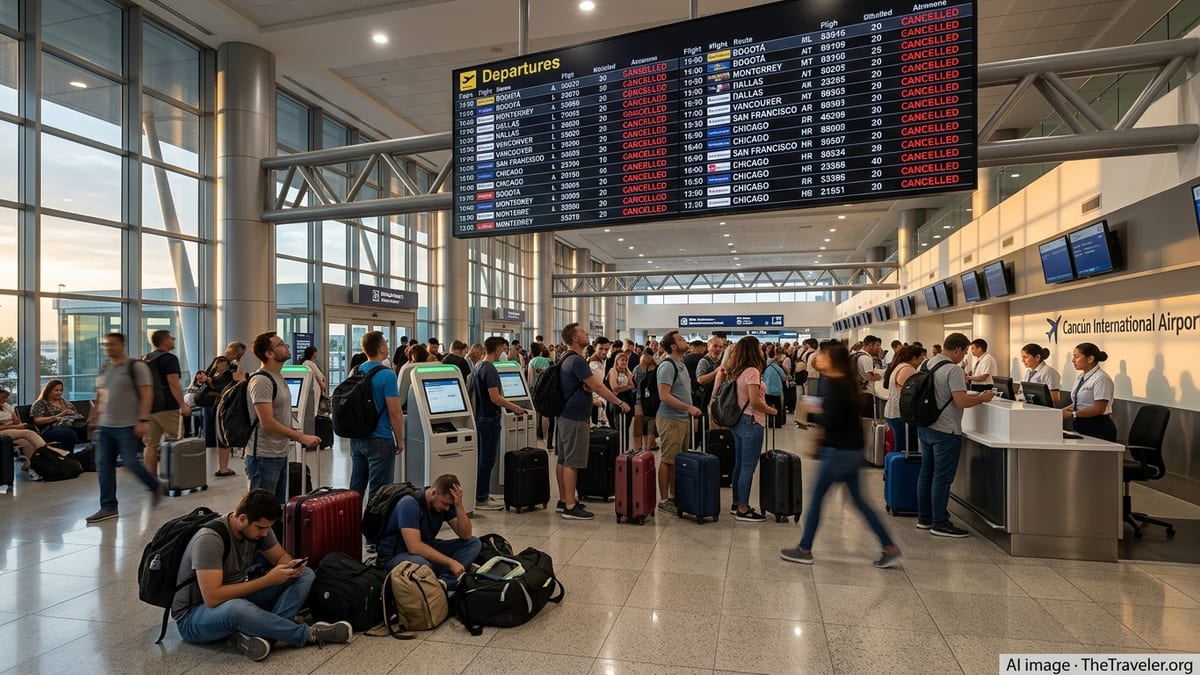
Travelers across North America are facing fresh disruption as a new round of flight cancellations from Mexico, including routes from Cancún, has affected services operated by Viva Aerobus, United, AeroMexico, WestJet and other carriers to major cities such as Bogotá, Monterrey, Dallas, Vancouver, San Francisco and Chicago, according to published airline notices and recent media coverage.
Get the latest news straight to your inbox!
Wave of Cancellations Hits Mexican Gateways
Recent days have brought renewed instability to air travel in and out of Mexico, with multiple airlines curbing or canceling services on select routes. Publicly available information from airline advisories and airport bulletins shows that flights touching key Mexican leisure and business gateways, particularly Cancún, have been among those affected. Routes linking Mexico with major hubs across the Americas have seen over a dozen newly canceled or suspended services, complicating travel plans for both tourists and business passengers.
These latest disruptions come on top of a season marked by operational challenges, including security-related slowdowns in parts of the country, infrastructure bottlenecks and tight aircraft and crew availability. While core schedules at major airports remain largely intact, the cancellations are creating pinch points on specific high-demand city pairs, especially where travelers rely on limited nonstop options.
Airports serving resort destinations and secondary cities are feeling the strain in particular. Flight boards at hubs such as Cancún and Monterrey have recently displayed clusters of cancellations and significant delays, while some long-haul connections to Canada and the United States have been thinned out or shifted to alternate days.
Routes to Bogotá, Monterrey and Dallas Particularly Affected
According to recent schedule changes and media summaries of airline operations, flights linking Mexico with Bogotá, Monterrey and Dallas rank among the most notably affected in this latest round. Services between Mexico and Colombia have seen adjustments as carriers rebalance capacity in response to fluctuating demand and operational constraints, reducing options on routes that are especially popular with leisure travelers and visiting friends and relatives.
Within Mexico, connections through Monterrey remain essential for domestic and cross-border itineraries. Cancellations and reductions on Monterrey routes can easily cascade, disrupting onward links to northern industrial corridors and to the United States. Travelers using the city as a transfer point have reported rebookings, longer layovers and forced overnight stays as airlines consolidate flights and attempt to keep aircraft and crew in sequence.
On the U.S. side, Dallas has emerged as another point of friction. The city is a central gateway for connections from Mexico to multiple U.S. and Canadian destinations. Recent adjustments in schedules between Mexican airports and Dallas have reduced same-day options on some routes, pushing passengers onto less direct routings or alternative hubs when their original flights are canceled.
Cancún and Key North American Hubs See Knock-On Effects
Cancún International Airport, one of Latin America’s busiest leisure gateways, continues to experience periodic waves of disruption as airlines tweak schedules in response to shifting conditions. Published coverage of recent security operations and road closures in Quintana Roo and other states has already highlighted how ground transport bottlenecks and temporary operational constraints can ripple into the air network, leading to rolling delays and cancellations even when runways remain open.
These changes are now being felt on routes to major North American hubs such as Vancouver, San Francisco and Chicago. Canadian carriers, including WestJet, along with U.S. and Mexican airlines, have recently adjusted frequencies or canceled select flights on certain days, according to schedule data and airline travel waivers. For travelers, that can mean fewer nonstop options back to western Canada and the U.S. West Coast, and a heightened risk of missed connections when remaining flights go out full.
Chicago and other central U.S. hubs are also exposed when transborder flights from Mexico are thinned out. When cancellations occur close to departure, rebooking options can be limited, especially during peak holiday and school vacation periods. Passengers may find themselves routed through alternate Mexican cities or through U.S. hubs far from their original itinerary as airlines search for available seats.
Viva Aerobus, United, AeroMexico and WestJet Adjust Operations
Low cost carrier Viva Aerobus has been among the Mexican airlines most frequently mentioned by travelers dealing with short-notice changes, as reflected in recent customer reports and discussion forums. The airline has rapidly expanded its network in recent years, connecting cities such as Cancún, Monterrey and Querétaro with destinations across Mexico, the United States and Canada. That growth has also increased its exposure when disruptions occur, as schedule changes in one part of the network can quickly affect flights elsewhere.
Flag carrier AeroMexico and U.S. airline United have also implemented targeted cancellations and travel waivers on select Mexican routes in response to evolving security and operational conditions, according to publicly available airline advisories. These measures are designed to give passengers more flexibility to postpone or reroute trips, but they also underscore the level of uncertainty facing travelers with upcoming itineraries to or from Mexican airports.
Canadian airline WestJet, a key player in winter and spring leisure traffic to Mexico from western Canada, has similarly adjusted some flights during recent periods of disruption. Schedule data and passenger accounts point to delayed or canceled departures on certain days between Mexican resorts and Canadian hubs such as Vancouver, particularly when external factors such as weather, airspace constraints or crew duty limits come into play.
While the scale of cancellations remains well below levels seen during peak pandemic disruptions, the concentration of changes on certain routes has made planning more complex for travelers relying on specific nonstop city pairs.
What Travelers Should Expect in the Coming Weeks
Looking ahead, industry observers expect airlines serving Mexico to continue fine tuning their schedules as security conditions, demand patterns and operational resources evolve into April. Public information from aviation authorities and airline portals suggests that most Mexican airports, including Cancún, remain open and functioning, but the risk of short-notice changes on individual flights is higher than usual on select domestic and international routes.
Travelers heading to or from cities such as Bogotá, Monterrey, Dallas, Vancouver, San Francisco and Chicago should be prepared for possible rebookings, schedule shifts and longer connection times. Those relying on onward connections may face particular challenges if a cancellation removes the only feasible same-day option between two cities.
Consumer advocates note that passengers affected by cancellations should review airline policies and any applicable travel waivers, which set out options for rebooking or refunds in cases of significant schedule disruption. Given the fluid situation, travel planners are also watching for further adjustments by Viva Aerobus, AeroMexico, United, WestJet and other carriers that could either restore capacity on affected routes or redistribute flights to alternate gateways in Mexico and North America.