

More news on this day
Travelers passing through Sweden’s busiest air hubs in Gothenburg and Stockholm faced mounting disruption on March 12, 2026, as Lufthansa, Ryanair, SAS and other carriers recorded at least 23 flight cancellations alongside dozens of delays, straining airport operations and leaving passengers scrambling for alternatives.
Get the latest news straight to your inbox!
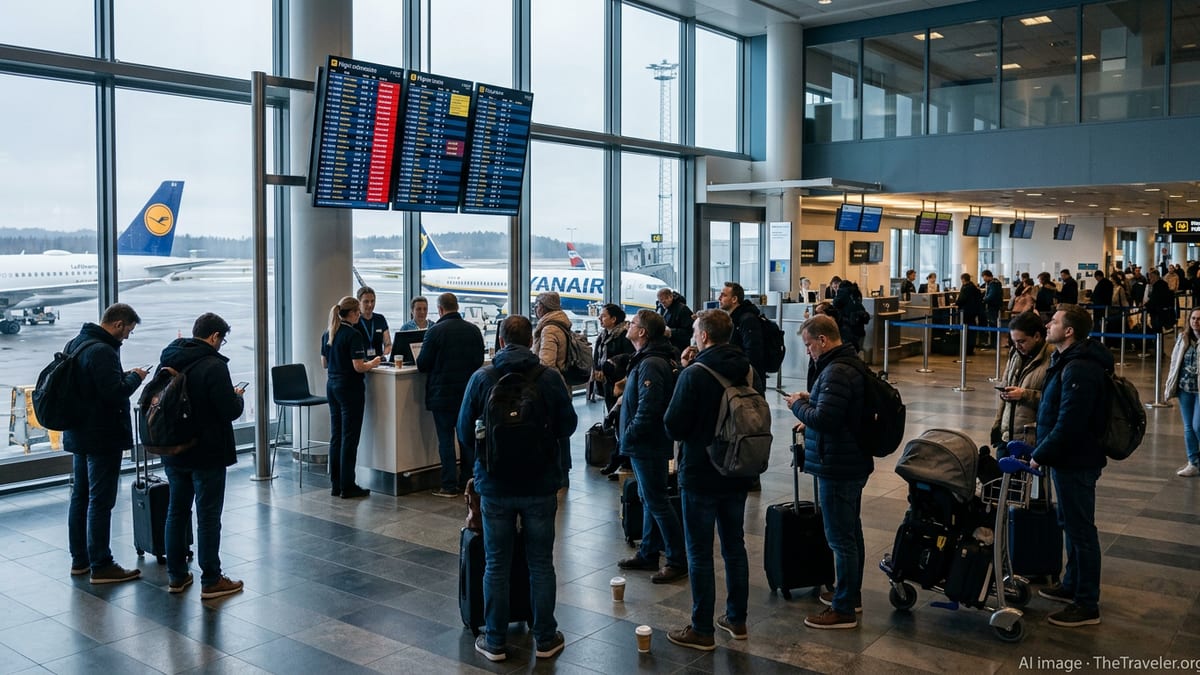
Air Travel Disruptions Hit Gothenburg and Stockholm
Operational data from Swedish airport authorities and European flight-tracking services on Thursday indicated a fresh wave of disruption at Gothenburg Landvetter and Stockholm Arlanda, with a cluster of cancellations and late departures affecting both domestic and international routes. While Stockholm Arlanda accounted for the majority of affected services, Gothenburg Landvetter also reported scattered delays and scrubbed flights as airlines adjusted their schedules.
The 23 confirmed cancellations, combined with multiple delayed departures and arrivals, formed part of a broader pattern of turbulence across European skies in recent days. Airlines including Lufthansa, Ryanair and SAS were among those registering irregular operations in Sweden, reflecting the ongoing knock-on effects of capacity constraints, congested European air corridors and recent strike-related schedule changes at major hubs in Germany and elsewhere.
Airport staff in both cities reported busier-than-normal customer service desks as lines of passengers sought rebooking options or clarification about rapidly changing departure times. Large crowds formed around departure boards at Stockholm Arlanda, where the majority of the Sweden-based cancellations and delays were concentrated.
Stockholm Arlanda Records Majority of Swedish Cancellations
Stockholm Arlanda, Sweden’s primary international gateway, bore the brunt of Thursday’s disruption, with local aviation data pointing to 80 cancellations and 22 delays at the airport alone. A significant share of those cancellations were associated with services operated by or in cooperation with major European carriers including SAS and Lufthansa, along with selected low-cost flights involving Ryanair and other operators.
Among the affected routes were departures to key European and Middle Eastern hubs such as Frankfurt, Brussels, Doha and Dubai, forcing passengers to re-route via alternative cities or accept later travel dates. Travelers heading for connecting flights beyond Europe, particularly long-haul itineraries structured around Frankfurt and other major transfer points, were especially vulnerable to missed onward connections.
Arlanda’s operator deployed additional staff to information points and check-in zones to answer questions and provide printed updates as schedules continued to shift throughout the morning and early afternoon. Despite the heightened activity, the airport remained open and security and baggage operations continued normally, with authorities emphasizing that the disruption was confined to individual airline schedules rather than any technical fault at the airport.
Lufthansa, Ryanair and SAS Adjust Schedules Amid Wider European Strain
The situation in Sweden unfolded against a backdrop of wider European air travel disruption this week, including rerouted flights around restricted airspace and lingering operational challenges at several continental hubs. Lufthansa, already contending with a cockpit crew strike affecting services on March 12 and 13, published special travel advisories giving ticketed passengers more flexibility to rebook onto alternative dates and routings without additional fees.
SAS, which has faced multiple waves of schedule adjustments across its Scandinavian and European networks in recent weeks, also reported cancellations touching Stockholm and Gothenburg services as it reallocated aircraft and crew to maintain core routes. Passengers on SAS services in and out of Stockholm Arlanda reported a mix of outright cancellations and significant delays, with some rebooked via Copenhagen or other Nordic hubs.
Ryanair, which operates a growing network from Swedish airports, saw select departures impacted as its services interfaced with the same congested European airspace and slot constraints affecting legacy carriers. While the low-cost airline’s point-to-point model limited some of the knock-on effects for connections, passengers relying on self-made itineraries with separate tickets were nevertheless exposed to missed onward journeys and additional costs.
Passengers Face Long Queues, Tight Connections and Confusion
On the terminal floors at Gothenburg Landvetter and Stockholm Arlanda, the disruption translated into practical challenges: long lines at airline service counters, crowded seating areas near affected gates and a general sense of uncertainty among travelers waiting for updated information. Families returning from winter breaks, business travelers en route to meetings, and tourists starting or ending trips across Scandinavia all reported delays in excess of two hours on some services.
Some Lufthansa passengers connecting through Frankfurt and Munich described being notified of cancellations or significant re-timings only hours before departure, forcing them to accept overnight stays or lengthy rerouting via other European hubs. SAS customers, particularly on regional services within Sweden and to neighboring Nordic countries, faced tight connection windows as delayed inbound aircraft put pressure on onward departures.
At Arlanda, airport staff urged travelers to remain near their gates and to monitor departure boards closely as gate assignments and departure times continued to change. Public announcements repeatedly reminded passengers not to proceed to security or border control earlier than advised by their airline, in an effort to reduce crowding in airside areas while schedules were being adjusted.
Advice for Travelers Caught in the Swedish Disruption
Travel experts in Sweden recommended that passengers scheduled to depart from Gothenburg Landvetter or Stockholm Arlanda over the next 24 to 48 hours proactively check their flight status before leaving for the airport, using airline mobile apps or direct contact with carrier call centers. With schedules still being fine-tuned and some additional knock-on delays expected, travelers were advised to allow extra time for check-in and security and to consider flexible ground transport or accommodation plans.
Under European air passenger rights rules, many travelers whose flights were canceled at short notice may be entitled to rebooking or refunds, and in some cases compensation, depending on the cause of the disruption and the notice period provided. Consumer advocates urged affected passengers to keep boarding passes, booking confirmations and any written communication from airlines to support potential claims.
For now, Swedish aviation authorities and airport operators in Gothenburg and Stockholm are working with airlines to stabilize schedules and minimize further disruption. With European skies still adjusting to ongoing operational pressures and isolated labor disputes, passengers planning trips through Sweden in the coming days are being cautioned to stay informed, keep documentation handy and prepare for potential last-minute changes to their itineraries.