

More news on this day
Travelers passing through Houston’s George Bush Intercontinental Airport on March 24 are facing a fresh wave of disruption, as at least 15 flights operated by Delta Air Lines, United Airlines, Mesa Airlines, Spirit Airlines, and Air Canada are reported suspended and more than 100 others delayed, affecting key connections to New York, San Francisco, Miami, Munich, Albuquerque, and other major destinations.
Get the latest news straight to your inbox!
Multiple Carriers Trim Schedules Amid Mounting Congestion
Publicly available flight-tracking data for Monday and Tuesday indicates that a cluster of cancellations and extended delays has built up across Houston Bush Intercontinental Airport, hitting a mix of short-haul and long-haul routes. The disruption is spread across several major and regional carriers, including Delta, United, Mesa, Spirit, and Air Canada, which together handle a significant share of the airport’s domestic and international traffic.
Reports indicate that roughly 15 flights involving these airlines have been fully suspended over the two-day period, while more than 100 additional services have been delayed, in many cases by several hours. The pattern of irregular operations is most visible on high-demand routes linking Houston with New York area airports, San Francisco, and Miami, along with transatlantic services to Munich and regional links to cities such as Albuquerque.
The disruptions come at a time when George Bush Intercontinental is already operating under reduced capacity because of ongoing construction and airfield work. Federal aviation planning documents for early 2026 describe the airport as facing a period of constrained runway and taxiway availability, a situation that can amplify the impact of staffing problems or weather-related slowdowns when traffic levels are high.
While the headline numbers of cancellations remain modest compared with nationwide storm events earlier in the year, the local effect on passengers in Houston and on connecting itineraries through the hub has been sharp, as delays propagate across airline networks throughout the day.
Long Security Lines Compound Airline Operational Strain
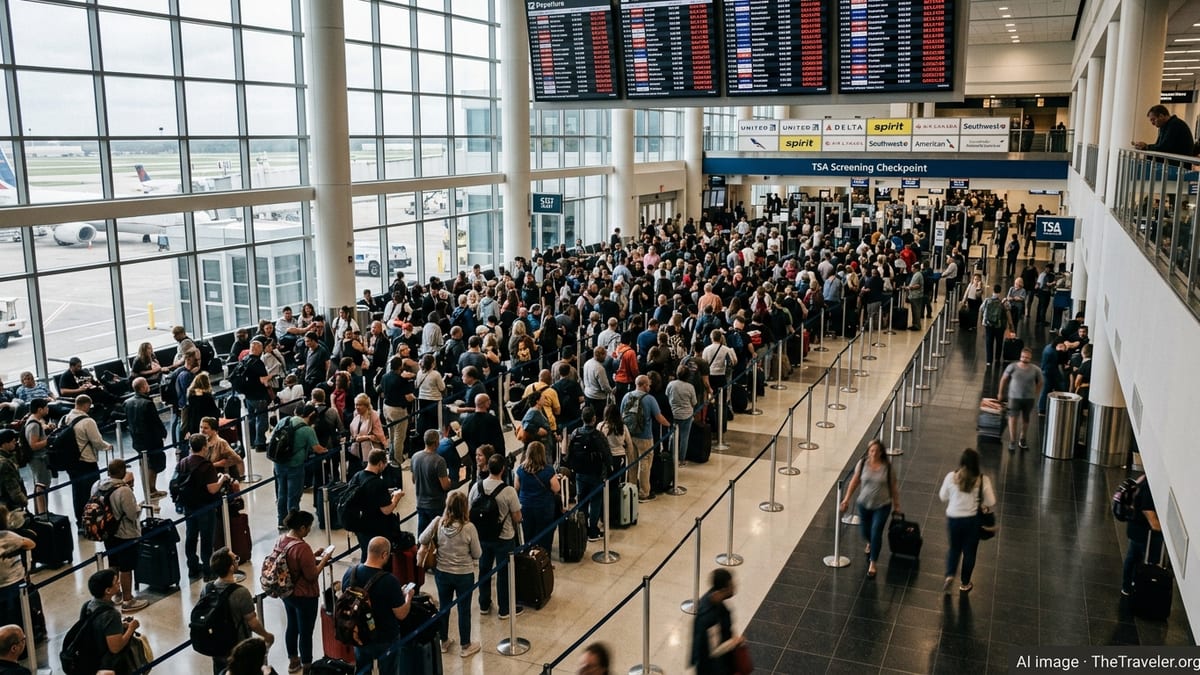
In addition to schedule changes by the airlines themselves, travelers have been contending with severe congestion at Transportation Security Administration checkpoints at Houston Bush Intercontinental. Accounts shared publicly by passengers over the past 48 hours describe security queues that have at times snaked across multiple floors of the terminal complex, with reported wait times stretching from two hours to more than five hours during peak periods.
Posts in widely viewed online travel and local community forums refer to a temporary shutdown of some expedited screening options at the airport, including PreCheck lanes, with security screening for several terminals consolidated into fewer checkpoints. According to these passenger reports, some travelers who arrived several hours before departure still missed flights after being held up in lines that extended out of the main screening areas and into roadway drop-off zones.
The combination of long security delays and tight departure banks for key hubs such as New York and San Francisco appears to be amplifying the operational challenges for airlines. Even where aircraft and crew are available, significant portions of booked passengers are arriving late to the gate, forcing carriers to rebook travelers, adjust loads, or in some cases cancel lightly filled departures if onward connections are no longer viable.
Publicly shared airline notifications indicate that at least one major carrier serving Houston has issued a temporary travel waiver for flights to and from Bush Intercontinental on March 23 and March 24. Such waivers typically allow customers to change travel dates or reroute through alternate gateways without change fees, a step that often helps carriers stabilize schedules during periods of abnormal strain.
Key Domestic and International Routes See Knock-On Effects
The operational turbulence at Houston Bush Intercontinental is rippling across a mix of domestic and international routes that are central to airline network planning. Flights linking Houston with New York, including services to LaGuardia and Newark, are among those seeing disruptions, as carriers juggle aircraft rotations and manage the after-effects of recent incidents and bad weather in the Northeast that have already pressured schedules.
Services to the West Coast, particularly between Houston and San Francisco, have also been affected. Reports from passengers on recent Houston to San Francisco departures describe rolling delay estimates and, in some cases, missed onward international connections from California. For travelers using Houston as a starting point for long-haul journeys to Asia and the Pacific via San Francisco, these delays have added a further layer of uncertainty.
To the southeast, Miami routes are showing delay clusters as well, a concern for passengers heading on to the Caribbean and Latin America. Meanwhile, transatlantic connectivity has been dented by disruptions on services between Houston and Munich, an important gateway for European and Middle Eastern connections. On the domestic front, regional flights to cities such as Albuquerque have seen schedule changes as airlines reassign aircraft and crews to protect higher-demand trunk routes.
Air Canada and its regional affiliates are experiencing a share of the disruption on cross-border and connecting services, while Delta and Spirit are adjusting operations on point-to-point routes. Mesa, which operates flights on behalf of larger network carriers, is part of a broader pattern of regional capacity being trimmed as airlines prioritize core hubs and time-sensitive departures.
Federal Shutdown and Staffing Pressures Provide Difficult Backdrop
The situation at Houston Bush Intercontinental is unfolding against the backdrop of a partial federal government funding lapse that has intensified strain on airport operations around the United States. National reporting on the 2026 federal budget impasse describes a climate of heightened uncertainty for agencies tied to aviation, with staffing shortages and overtime constraints compounding seasonal demand at major hubs.
Passenger accounts circulating online suggest that transportation security staffing at Houston has been especially tight in recent days, contributing to the extraordinary wait times at checkpoints. Some travelers describe federal screening officers coping with surging queues despite limited manpower, while others report that colleagues and friends chose to cancel or postpone trips rather than attempt to navigate the long lines.
Separate from federal staffing issues, construction and modernization work underway at Bush Intercontinental has been flagged in aviation planning documents as a source of potential bottlenecks through the first half of 2026. Reduced runway availability, temporary taxiway closures, and terminal realignments can all extend turnaround times for aircraft, making it harder for airlines to recover from early-morning disruptions as the day progresses.
These overlapping factors mean that even relatively small numbers of cancellations, such as the 15 suspended flights reported among major and regional carriers in Houston, can cascade into far larger numbers of delays and missed connections, especially for hub-and-spoke networks that rely on finely timed arrival and departure waves.
What Travelers Through Houston Need to Know Right Now
For travelers scheduled to pass through Houston Bush Intercontinental in the coming days, publicly available information from airlines and passenger forums points to a need for unusually early airport arrival and flexible itineraries. Many travelers are opting to reach the airport in the very early morning hours or even overnight, hoping to secure earlier positions in security lines that have periodically stretched well beyond posted estimates.
Airline travel waivers, where available, offer an important tool for reducing exposure to the worst of the disruption. Passengers who can shift trips by a day or reroute through alternative hubs such as Dallas, Austin, or New Orleans may find more reliable options, especially if their plans involve tight international connections from New York, San Francisco, Miami, or European hubs like Munich.
For those who must travel through Houston, the pattern of delays suggests that carrying hand luggage only, monitoring airline apps closely, and being prepared for last-minute gate or schedule changes may improve the chances of completing journeys as planned. Travelers who miss flights because of extended security waits are often rebooked on later departures, but seat availability can be limited on popular routes.
As federal budget negotiations continue in Washington and construction projects at Houston Bush Intercontinental move toward scheduled milestones in April 2026, the operational picture at the airport may evolve rapidly. For now, however, the combination of suspended flights, more than 100 delays, and unprecedented security lines has turned one of the nation’s key hubs into a challenging waypoint for domestic and international travelers alike.