

More news on this day
Singapore’s Changi Airport is experiencing a new wave of flight disruptions, with publicly available schedules showing nearly a dozen cancellations involving Gulf Air, Malindo Air, Philippine Airlines and other carriers on key routes to Kuala Lumpur, Penang, Manila and Bahrain.
Get the latest news straight to your inbox!
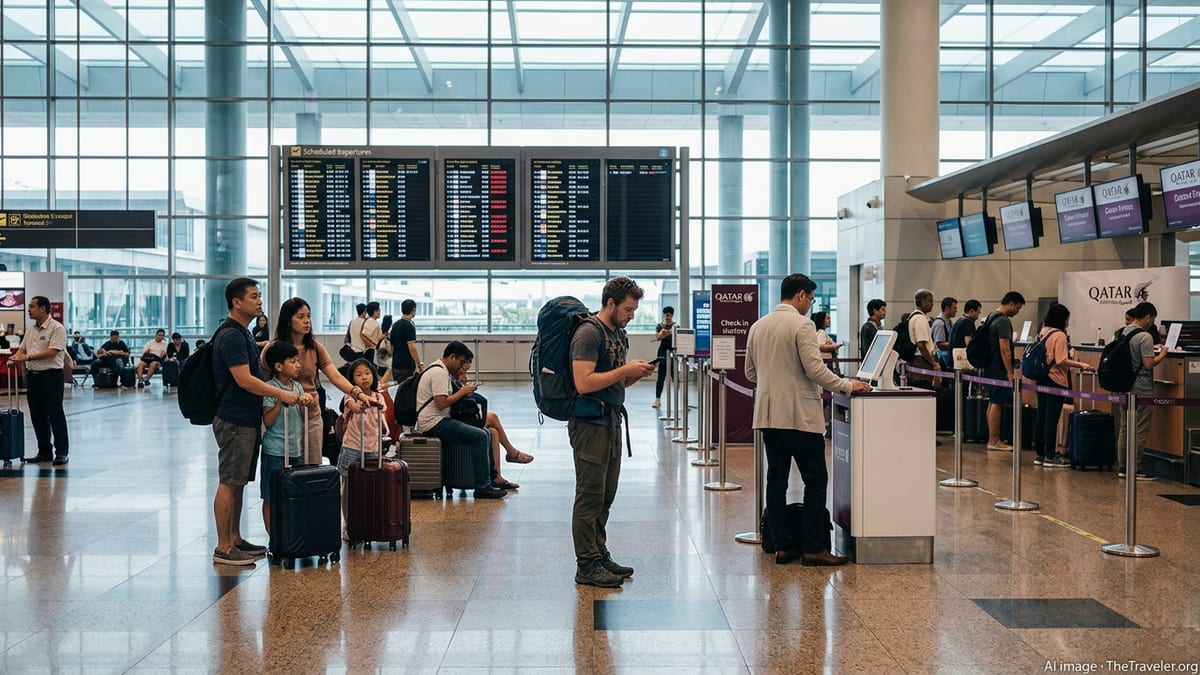
Targeted Cancellations Hit Regional and Gulf Links
Flight information published on airline and airport channels indicates that a cluster of services operated by Gulf Air, Malindo Air and Philippine Airlines has been withdrawn from the schedule over the current travel period, affecting passengers moving through Singapore’s Changi Airport. The routes most directly impacted include short-haul links to Kuala Lumpur and Penang, as well as medium-haul connections to Manila and onward services to Bahrain.
Gulf Air, the flag carrier of Bahrain, has already been operating a reduced network across parts of the Middle East due to regional airspace restrictions and operational adjustments. Recent customer advisories and timetable updates show that additional services to and from Changi have been pulled, constraining one of the main one-stop options between Singapore and Bahrain for both business and leisure travellers.
Malindo Air, which has progressively aligned its branding with Batik Air Malaysia, lists cancellations on some of its Singapore to Kuala Lumpur and Penang rotations, cutting into one of Southeast Asia’s busiest city pairs and a popular leisure corridor to northern Malaysia. Philippine Airlines has also trimmed its Changi flights to Manila, reducing capacity on a heavily trafficked route for overseas Filipino workers, corporate travellers and holidaymakers.
In total, the schedule changes amount to nearly a dozen scrapped or temporarily removed flights over several days, a relatively small number in the context of Changi’s overall operations but significant on particular city pairs where frequencies are now more limited or remaining departures heavily booked.
Regional Tensions and Network Reshuffles Shape Airline Decisions
The cancellations at Changi are unfolding against a broader backdrop of network reshuffling by airlines across Asia and the Gulf. Published coverage of recent events in the Middle East describes how renewed tensions and airspace restrictions have disrupted operations at hubs such as Doha and Bahrain, prompting carriers to reroute, consolidate or suspend flights over certain corridors.
In this environment, Gulf Air’s service patterns in and out of Southeast Asia have come under pressure. Travel forums and airline advisories describe a combination of voluntary rebooking options and short-notice cancellations on some Gulf-linked routes, as carriers weigh aircraft utilization, crew routing and alternative stopover points outside the most sensitive airspace.
Within Southeast Asia, Malindo Air and Philippine Airlines have been managing their own sets of operational and commercial challenges. Public timetable summaries and on-time performance data for the region show that Malindo has historically run higher cancellation and delay rates than some competitors, reflecting a network that is often adjusted to match shifting demand. Philippine Airlines, meanwhile, has been calibrating capacity on its Manila to Singapore sector as it balances strong point-to-point traffic with the need to feed long-haul services to North America and the Middle East from its Manila hub.
These wider dynamics help explain why seemingly modest schedule cuts at Changi can ripple quickly through key regional routes. When multiple airlines trim flights simultaneously, redundancy in the network shrinks, leaving passengers with fewer alternative departures on the same day and driving up load factors on the services that remain.
Impact on Travellers to Kuala Lumpur, Penang, Manila and Bahrain
For travellers, the immediate impact of these cancellations is most visible on routes where flight frequencies are traditionally high and itineraries tightly timed. Singapore to Kuala Lumpur is one of the world’s busiest short-haul corridors, heavily used by commuters, corporate road warriors and weekend travellers. Even a small reduction in daily services can translate into fewer convenient departure times, longer connection windows and increased competition for seats on surviving flights.
Penang, a major Malaysian leisure and culinary destination, relies on a steady stream of short-haul arrivals from Singapore to fill hotels and heritage properties, particularly around school holidays and long weekends. With Malindo removing some Changi rotations to Penang, travellers may find that popular evening or late-afternoon departures are no longer available, forcing them to either travel at less optimal times or route via Kuala Lumpur on separate tickets.
On the Manila side, Philippine Airlines’ adjustments to its Singapore services can disrupt carefully planned connecting itineraries, particularly for those continuing from Manila to secondary Philippine cities or long-haul destinations. Publicly available booking engines already show some peak departures sold out or carrying waitlist indicators, a sign that capacity on remaining flights is tight.
Passengers bound for Bahrain face a different sort of challenge. With Gulf Air scaling back services and other Gulf carriers also juggling schedules amid regional uncertainty, options for a one-stop journey between Singapore and Bahrain have narrowed. Travellers may need to consider alternative routings through hubs such as Dubai, Abu Dhabi or Doha when those operations permit, or stitch together itineraries that involve an extra stop in another Asian city.
What Passengers Should Check Before Flying From Changi
Given the evolving situation, travel industry commentary and airline customer notices consistently urge passengers to monitor their bookings closely. The most immediate step is to check flight status on the day of departure and in the 24 to 48 hours prior, since some of the recent cancellations have appeared relatively late in the booking cycle as airlines refine their operating plans.
Where flights have been removed, carriers are generally offering standard remedies such as free date changes within a limited window, rebooking on the next available service on the same route, or in some cases refunds back to the original form of payment. The exact options depend on the airline, fare type and whether the ticket was purchased directly or via a third-party agent. Passengers who booked through online travel agencies may need to allow additional time for changes to be processed.
Travellers with tight onward connections, particularly those connecting from a regional flight at Changi onto a long-haul service, are being encouraged by public advisories and travel forums to leave more buffer time between flights or to consider adjusting their plans if their original short-haul segment has been cancelled. Those flying to or through the Gulf region should pay close attention to transit rules, possible rerouting and any special instructions regarding check-in, baggage tagging and minimum connection times.
Travel insurers and airline conditions of carriage typically include provisions for schedule changes and cancellations, but coverage varies. Passengers are advised, based on published guidance from consumer groups, to review policy wording carefully to see whether disruption linked to geopolitical events, airspace closures or operational decisions is covered before submitting a claim.
Outlook for Changi’s Key Short-Haul and Gulf Connections
While nearly a dozen cancellations represent only a fraction of the hundreds of daily movements at Changi, the pattern underscores how external shocks and commercial decisions elsewhere in the region can quickly reshape connectivity through Singapore. Routes to Kuala Lumpur, Penang, Manila and Bahrain have long been pillars in the airport’s short-haul and medium-haul offering, supporting everything from weekend city breaks to vital labour and business flows.
Analysts following airline schedules expect more fine tuning in the weeks ahead as carriers respond to booking trends, fuel prices and the evolving security environment. Some flights may return to the roster if demand proves resilient or if airspace constraints ease, while others could remain suspended longer than initially indicated, especially if airlines find better returns by redeploying aircraft on alternative routes.
For now, the developments serve as a reminder that even mature, well-served markets are not immune to sudden schedule shifts. Passengers planning trips through Singapore in the near term, particularly on the affected Malaysia and Philippines routes or any service linked to the Gulf, may need to build extra flexibility into their plans and remain prepared for further adjustments as airlines continue to recalibrate their networks.