

More news on this day
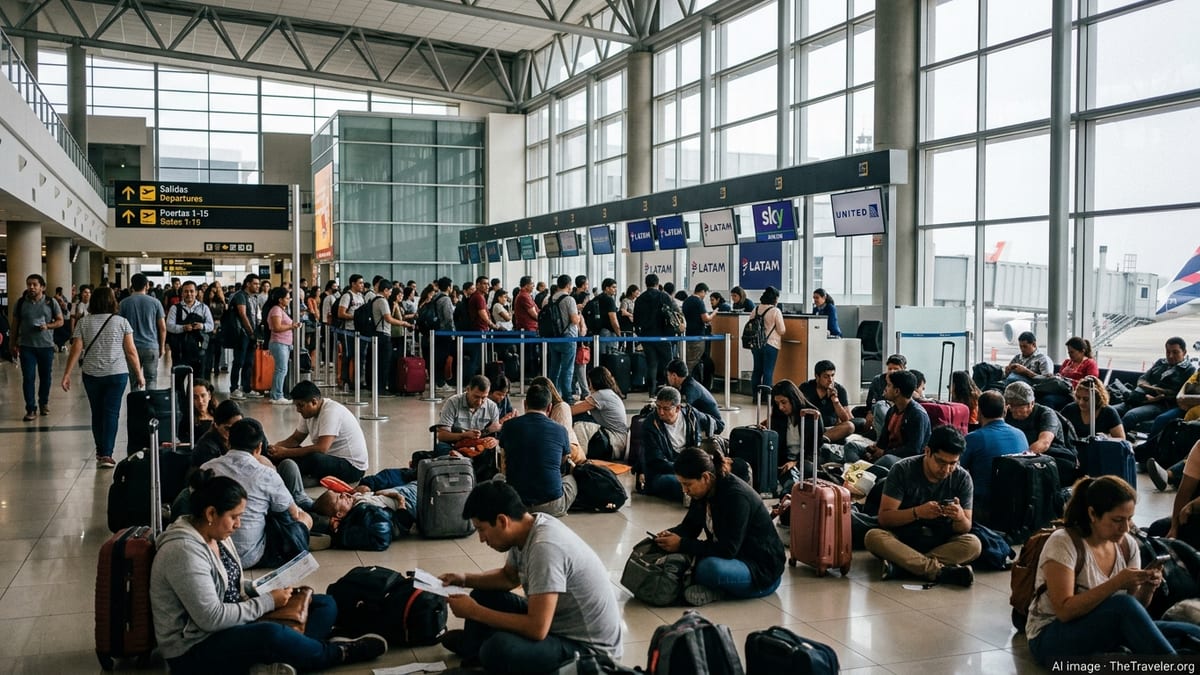
Passengers at Lima’s Jorge Chávez International Airport faced hours of uncertainty and unexpected overnight stays after a cluster of cancellations disrupted key domestic and international routes, affecting services operated by LATAM Airlines, Sky Airline, United Airlines and other carriers on links to Houston, Cusco, Arequipa, Chiclayo and additional destinations.
Get the latest news straight to your inbox!
Cluster of Cancellations Hits Lima Hub
A series of cancellations at Jorge Chávez International in Lima has disrupted travel across Peru and beyond, leaving passengers struggling to reconnect itineraries and reach onward destinations. Publicly available flight-tracking data and local media reports indicate that at least four significant services involving LATAM Airlines, Sky Airline, United Airlines and other operators were removed from schedules within a short timeframe, creating bottlenecks at one of South America’s busiest hubs.
The affected services included an international link to Houston and domestic routes to Cusco, Arequipa, Chiclayo and other regional cities. The disruption has been especially acute for travelers using Lima as a central connection point between international long-haul flights and Peru’s interior, where alternative options are limited and same-day rebooking can be difficult during peak travel periods.
The cancellations come as Jorge Chávez International continues to transition operations between its original facilities and a major new terminal complex designed to expand capacity. Industry publications have previously highlighted constraints on the airport’s airside growth and operational flexibility, and the latest disruptions underline how quickly any schedule changes can cascade across the network serving Peru’s capital.
Domestic Links to Cusco, Arequipa and Chiclayo Disrupted
The impact has been particularly visible on Peru’s high-demand domestic corridors. Cusco, gateway to Machu Picchu, relies heavily on frequent short-haul flights from Lima to support both international tourists and local travelers. When services from Lima to Cusco and back are canceled or consolidated, passengers risk missing onward intercontinental departures or prepaid tour itineraries.
Reports from recent travelers describe last-minute cancellations on morning flights out of Cusco and schedule changes that shrink already tight connection windows in Lima. Some passengers have recounted being rebooked onto later services that arrive in Lima only a few hours before long-haul departures, increasing anxiety about missed flights and overnight delays. Others have faced overnight stays in Lima when no same-day alternative to or from Cusco, Arequipa or Chiclayo was available.
Arequipa and Chiclayo, important commercial and cultural centers in southern and northern Peru respectively, have fewer daily frequencies than the Lima–Cusco corridor. When flights linking these cities to Lima are canceled, travelers can find that the next available departure is not until the following day, effectively isolating them from timely connections and forcing changes to hotel bookings and ground transport plans.
International Passengers on Houston Route Caught in Knock-On Effects
The disruptions have also affected international travelers, particularly those using United’s connection between Lima and Houston as a bridge to North American and European networks. When a Lima–Houston flight is canceled, passengers can lose access to onward same-day connections out of Texas, forcing airlines to reroute them through other hubs or hold them overnight in Lima.
Recent online accounts from travelers using United and partner carriers describe complex rebookings, with some itineraries shifted to alternative departure days or moved onto different alliance hubs when space from Lima became scarce. For passengers already in transit from Peru’s interior, a canceled Houston-bound service can mean being stranded in Lima despite having successfully completed the domestic leg of the journey.
The situation is further complicated by the mix of full-service and low-cost airlines on routes into and out of Lima. Travelers who booked separate tickets on different carriers to piece together cheaper itineraries often discover that protections for missed connections are limited. If a domestic segment operated by one airline is canceled or delayed, access to compensation or no-cost rebooking on a separately ticketed international flight is not guaranteed.
Airport Transition and Capacity Pressures Highlighted
The episode comes at a delicate moment for Jorge Chávez International, which has been working through a long-running expansion project involving a second runway and a new terminal. Aviation industry documents and trade briefings in recent years have pointed to repeated delays in bringing the full new infrastructure online and have noted that Lima’s existing terminal complex has been operating close to its designed capacity.
While the current wave of cancellations appears linked primarily to short-term operational and scheduling decisions by individual airlines, the broader context of constrained capacity and infrastructure transition may be amplifying the impact on passengers. When gate space, runway slots and staffing are tightly balanced, sudden schedule changes can ripple through the system, leaving fewer options for rapid recovery.
Jorge Chávez International serves as Peru’s central aviation hub, funnelling almost all long-haul traffic and a majority of domestic flights through a single airport. This hub-and-spoke structure benefits airlines and can simplify itineraries in normal conditions, but it also means that a cluster of cancellations in Lima can quickly isolate regional cities such as Cusco, Arequipa and Chiclayo from the global network.
Travelers Face Uncertainty as Airlines Work Through Backlog
In the wake of the cancellations, passengers have reported long lines at customer service desks, difficulty reaching airline call centers, and limited availability of hotel vouchers or meal support in Lima. Online forums and social media posts from recent days describe travelers sleeping in terminal seating, scrambling to rebook through alternate cities, or accepting multi-stop routings that add many hours to journeys that would normally be completed in a single day.
Aviation analysts note that Peru’s domestic market has become more competitive in recent years, with carriers such as LATAM, Sky Airline and newer low-cost operators reshaping schedules and capacity. While increased competition can bring lower fares and more choices, it can also lead to thinner schedules on some routes and fewer spare seats available when unexpected cancellations occur.
Travel organizations and seasoned visitors to Peru are advising passengers with upcoming trips routed through Lima to allow extra time for connections, monitor flight status closely, and keep flexible backup plans for key domestic sectors. Some tour operators have begun building larger buffers into itineraries that combine Lima with Cusco or other regions, acknowledging that even short disruptions at Jorge Chávez International can now have far-reaching consequences for travelers across the country.