

More news on this day
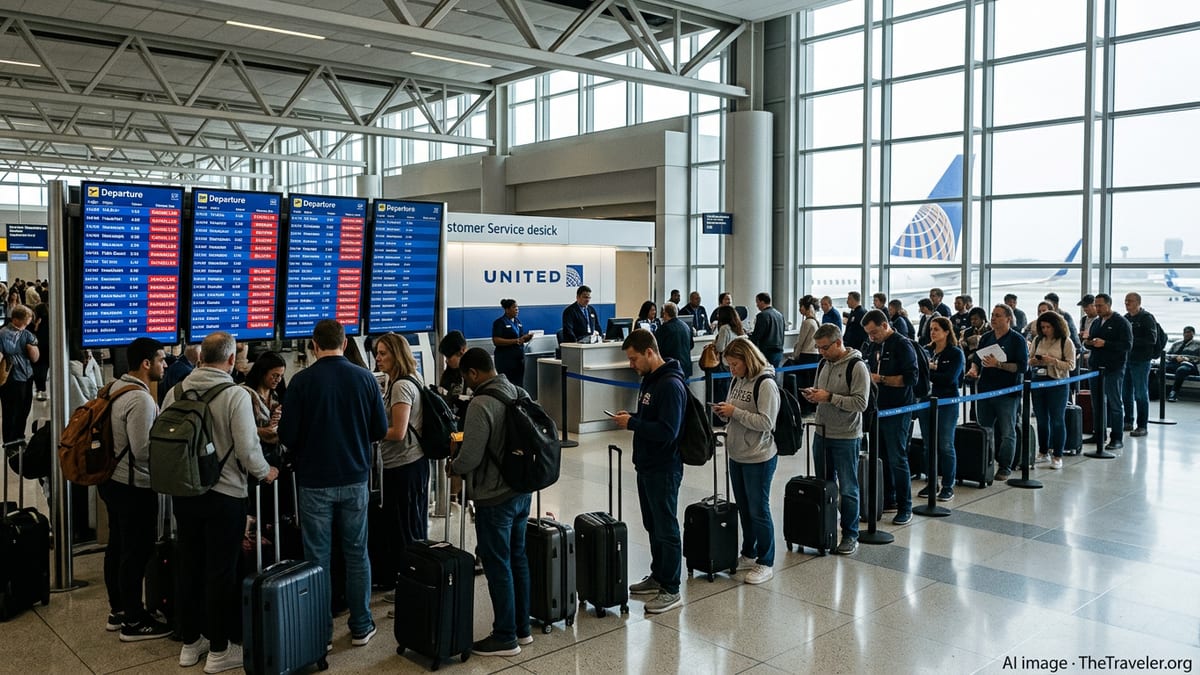
Travelers at Newark Liberty International Airport faced mounting frustration on March 9 as United Airlines, El Al and Spirit Airlines suspended 14 flights, disrupting key domestic and international routes and leaving hundreds of passengers scrambling to rebook or reroute their journeys.
Key Routes to Tel Aviv, Frankfurt and Marrakech Abruptly Halted
According to airport operators and airline schedule data, the largest impacts were felt on long-haul and leisure-oriented services from Newark to Tel Aviv, Frankfurt and Marrakech, with several departures and arrivals scrubbed from Monday’s timetable. The suspensions came amid ongoing volatility in Middle East airspace and knock-on operational issues across transatlantic and North African networks.
United Airlines, Newark’s dominant carrier, removed multiple frequencies to Europe and North Africa from its schedule for the day, including a Frankfurt rotation normally used by both business and connecting passengers. The change left some travelers facing overnight delays and forced connections via alternate hubs such as Washington Dulles and Chicago O’Hare.
Services to Tel Aviv were again a focal point of disruption. El Al and United have both adjusted their New York area operations repeatedly in recent weeks amid evolving security considerations and shifting demand patterns. On Monday, cancellations affecting Newark services to and from Tel Aviv added fresh uncertainty for passengers already navigating a complex web of waivers and schedule changes.
Newark’s growing role as a gateway to North Africa was also tested. Seasonal and leisure travelers booked on flights linking the New York region with Marrakech reported same-day cancellations or significant timing changes, forcing some to accept rerouting via European capitals or to postpone trips entirely.
Domestic Travelers to Palm Beach and Atlanta Face Sudden Disruptions
While international routes attracted much of the attention, domestic passengers were not spared. United and Spirit suspended multiple departures serving key Sun Belt and Southeast markets, including West Palm Beach and Atlanta, popular with both leisure travelers and commuters heading to connecting flights.
At Newark’s Terminal B and C, departure boards showed a cluster of cancellations and “see agent” status updates next to flights bound for Florida and Georgia. Travelers heading to Palm Beach reported receiving overnight emails advising of schedule changes, while others only learned of cancellations upon arriving at the airport check-in counters.
Spirit Airlines, which has been rebuilding its Newark presence with a focus on high-demand leisure routes, pulled several frequencies to Atlanta and other East Coast destinations from Monday’s schedule. Airline staff cited a combination of aircraft routing constraints and broader network adjustments as reasons for the suspensions, offering affected passengers the choice of travel credits, rebooking at a later date or routing through alternate cities.
Families beginning spring vacations and business travelers returning from weekend trips described long lines at customer service desks and waits of more than an hour to speak with agents. Some were able to secure same-day seats on competing carriers at LaGuardia or John F. Kennedy airports, but others faced at least a 24-hour delay to reach their destinations.
Operational Strain and Middle East Unrest Behind the Cancellations
Airline representatives and industry analysts pointed to a mix of operational and geopolitical factors behind the wave of cancellations. In recent weeks, carriers serving Tel Aviv and parts of the broader Middle East have repeatedly revised schedules and activated travel waivers as security conditions shifted and airspace restrictions evolved, creating ripple effects across their wider networks.
United has been operating under a series of flexibility policies tied to unrest in the region, offering customers the option to change itineraries touching Tel Aviv without standard penalties. Those measures, while easing the financial burden on passengers, have also made it harder for the airline to forecast loads and crew positioning on specific days, occasionally leading to concentrated schedule cuts at hubs such as Newark.
El Al, Israel’s flag carrier, has similarly fine-tuned its North American operations, balancing strong demand on core routes with the need to adjust flight times and routings in response to shifting risk assessments. Monday’s cancellations of select Newark services formed part of that wider recalibration, with the airline prioritizing flights expected to carry the highest number of time-sensitive travelers.
Spirit’s suspensions were more closely tied to aircraft and crew utilization within its domestic network, according to people familiar with the matter. With tight spare capacity and thin turnaround times, disruptions on one part of the network can quickly cascade into cancellations elsewhere, including at Newark, particularly on routes where alternative frequencies are limited.
Passengers Navigate Waivers, Rebookings and Alternative Airports
For affected travelers, Monday quickly became an exercise in contingency planning. Many turned to mobile apps and call centers in an effort to secure scarce seats on remaining flights, while others opted to reroute via New York’s two other major airports or even out-of-state hubs accessible by rail.
United, El Al and Spirit each activated or extended customer flexibility policies for passengers booked on the canceled flights, waiving change fees and, in many cases, fare differences for travel within a defined date range. For international itineraries touching Tel Aviv or Marrakech, some travelers were offered the choice to reroute via European hubs where partner airlines still maintained service.
At Newark, airport staff and airline volunteers circulated through check-in and gate areas, answering questions and directing passengers to customer service counters. Large numbers of travelers sat on the floor near power outlets, recharging phones and laptops while monitoring rebooking options and hotel availability for unexpected overnight stays.
Travel advisors urged passengers with upcoming departures on affected routes to monitor their reservations closely, use airline apps to confirm seat assignments, and consider allowing extra time to reach the airport in case of last-minute gate changes or security bottlenecks triggered by the disruption.
Outlook for Newark Operations in the Coming Days
As of Monday evening, carriers signaled that they expected most Newark services to operate as scheduled in the coming days, but acknowledged that further tactical cancellations remained possible while conditions in the Middle East and broader international markets continued to evolve. Airline operations teams were reviewing crew rosters and aircraft positioning overnight to determine whether additional adjustments would be necessary.
Travel planners cautioned that routes connecting Newark with Tel Aviv and North African destinations such as Marrakech were likely to remain more volatile than average in the short term. Even where flights remain on the schedule, last-minute time changes or equipment swaps are possible, and passengers were advised to keep contact details up to date with airlines to ensure they receive real-time alerts.
Domestic routes to Palm Beach, Atlanta and other leisure-focused destinations are expected to stabilize more quickly, though capacity could remain tight as carriers work to re-accommodate travelers displaced by Monday’s cancellations. With spring travel demand building, some flights in the coming week were already close to full even before the disruptions.
For Newark Liberty, the latest round of cancellations served as a reminder of the fragility of complex global networks centered on a single major hub. While airlines and airport officials emphasized that safety and regulatory compliance would continue to dictate operational decisions, they also acknowledged the need for clearer, faster communication with passengers whenever sudden schedule changes become unavoidable.