

More news on this day
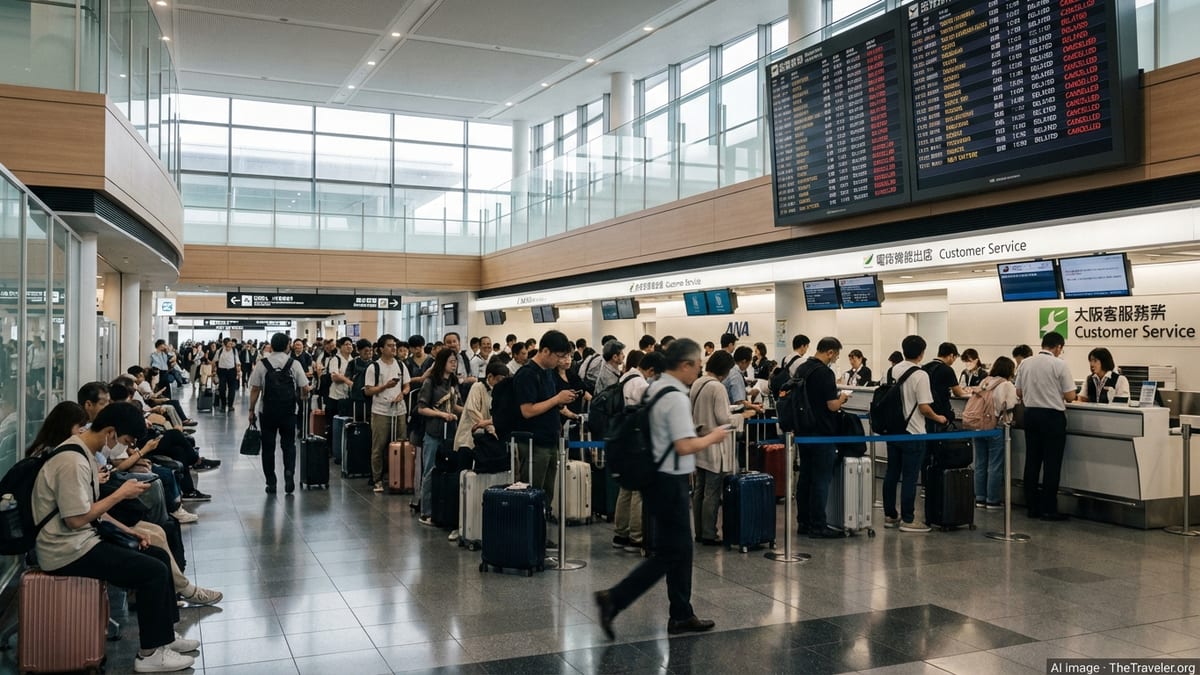
Hundreds of passengers across Japan faced hours of disruption on Saturday as Osaka International Airport reported 20 cancellations and 67 delays, snarling domestic links to cities including Tokyo, Nagasaki, Sendai, Niigata and Sapporo’s New Chitose Airport and affecting services operated by ANA Wings, All Nippon Airways, Japan Airlines and several regional carriers.
Ripple Effects Across Japan’s Domestic Network
The operational turmoil at Osaka International Airport on February 28 triggered a wider knock-on effect across Japan’s dense domestic aviation network. With 20 flights cancelled outright and 67 more delayed, key business and leisure routes connecting Osaka with major regional hubs experienced cascading timetable disruptions.
Services linking Osaka with Tokyo’s Haneda, Nagasaki, Sendai, Niigata and New Chitose near Sapporo were among those hit, compounding the impact for passengers using Osaka as a transfer point. Travellers arriving late into Osaka often missed onward connections, leading to a build up of stranded passengers in both departure halls and arrival areas.
All Nippon Airways and its regional subsidiary ANA Wings, alongside Japan Airlines and other domestic operators, were forced to adjust rotations and aircraft assignments as they worked to restore schedules. The disruption underlined how sensitive Japan’s tightly timed domestic network is to concentrated delays at one of its major city airports.
While the majority of affected flights were eventually able to depart later in the day, the wave of delays extended into evening services, affecting travellers on last departures to regional cities and heightening pressure on airport operations and customer service desks.
Passengers Face Long Queues, Missed Plans and Overnight Stays
For travellers, the statistics translated into long queues, missed connections and an abrupt reshaping of weekend plans. Families heading from Osaka to Nagasaki and Sendai reported waiting in check in areas as departure times were repeatedly revised, while some passengers bound for Niigata and New Chitose found their flights among the 20 cancellations and had to be rebooked on later services or routed through alternative airports.
With many disruptions clustering around peak daytime departures, customer service counters for All Nippon, Japan Airlines and other carriers saw heavy crowds as staff worked to reissue tickets, arrange hotel vouchers in cases of overnight delays and provide meal coupons where required under carrier policies. Travellers described scenes of tired children resting on luggage and business passengers trying to rearrange meetings over the phone as new estimated departure times were announced.
Language support desks at Osaka were brought into sharper focus as international visitors already in Japan but relying on domestic flights for multi city itineraries sought guidance in English and other languages. Some inbound tourists who had planned tight same day connections from Osaka to New Chitose for ski trips, or to Nagasaki for heritage tourism, were forced to shorten stays or cancel excursions altogether.
Despite the strain, reports from the terminal suggested that queues moved steadily as airlines added extra ground staff and used mobile agents in the concourse to triage straightforward rebookings and direct passengers to self service kiosks when possible.
Key Carriers and Routes Most Heavily Affected
Among the carriers operating at Osaka, All Nippon Airways and its regional arm ANA Wings, together with Japan Airlines, bore a significant share of the disruption simply due to the volume of domestic services they operate. High frequency links between Osaka and Tokyo Haneda, as well as key regional spokes such as Nagasaki, Sendai and Niigata, saw multiple rotations disrupted.
Flights connecting Osaka with Hokkaido’s New Chitose Airport, an important gateway for winter sports travellers and domestic tourism, were particularly sensitive. Delays on these routes risked pushing arrivals past ground transfer cutoffs for buses and trains serving ski resorts, raising concerns among tour operators already managing tight seasonal schedules.
Smaller regional and low cost carriers using Osaka as a node in their domestic networks experienced secondary effects as they adjusted aircraft and crews to avoid further knockbacks later in the day. In some cases, aircraft arriving late from Osaka led to schedule changes at other airports, including Tokyo, Nagasaki and Sendai, as operators sought to prevent the disruption from deepening into the following operational day.
Industry analysts noted that the event adds to a series of recent days of significant disruption at major Japanese airports, where combinations of operational constraints and congested schedules have resulted in clusters of delays and cancellations for the country’s largest carriers.
Operational Strain Highlights Fragility of Tight Schedules
Saturday’s disruption at Osaka highlighted how vulnerable highly optimised domestic airline schedules can be when irregular operations arise. Japan’s major carriers typically run short turnaround times on domestic legs, relying on precise coordination of ground handling, air traffic flow and crew rostering to keep aircraft utilisation high.
Once delays accumulated across 67 flights, the knock on effects became harder to absorb within existing buffers. Aircraft running late into Osaka could not be turned around in time to preserve subsequent departure slots, while crews approaching duty time limits forced schedulers to swap personnel or cancel select rotations entirely.
Airport operations teams at Osaka responded by resequencing departures to prioritise flights with large numbers of connecting passengers and services to airports with limited late evening options, such as some routes into regional cities. However, these tactical measures still left many passengers facing multi hour waits as congestion on taxiways and in terminal gate areas built up.
Aviation observers said the incident would likely prompt renewed scrutiny of how much slack is available in domestic schedules, and whether additional resilience measures, such as slightly longer turnarounds or more reserve aircraft and crew, are needed at peak times to minimise the risk of widespread disruption when irregular operations occur.
Tourism and Business Travel Feel the Impact
The timing of the disruption, hitting a Saturday when leisure and short break travellers are prominent on domestic routes, raised concerns among tourism stakeholders in destinations linked to Osaka. Cities such as Nagasaki, Sendai and Sapporo, served via New Chitose, rely heavily on weekend arrivals for hotel occupancy and local spending in restaurants, attractions and retail.
Tour operators reported scattered tour groups arriving several hours behind schedule or splitting parties onto different flights once rebooking options were confirmed. In some cases, groups travelling onward from Osaka to northern destinations scaled back planned sightseeing to compensate for late arrivals, concentrating spending in fewer locations.
Business travellers using Osaka as a hub between Tokyo and regional centres also felt the effects, with some meetings postponed or shifted online when participants could not arrive on time. For industries that depend on just in time coordination between headquarters in Tokyo, manufacturing sites in western Japan and partners in northern regions, the temporary breakdown in flight reliability was a reminder of the key role domestic air links play in Japan’s broader economy.
While airlines and airports were working by late evening to normalise schedules and reopen seats on restored services, travel agents and corporate travel managers were already assessing the longer term implications, including whether to build larger buffers into itineraries involving Osaka and other high traffic airports during busy periods.