

More news on this day
A new round of flight cancellations at Paris Charles de Gaulle and Orly is stranding passengers and disrupting air links to Dubai, Bahrain, Florence, Tel Aviv, Riyadh and other destinations, as airlines extend suspensions in response to the escalating security situation in the Middle East.
Get the latest news straight to your inbox!
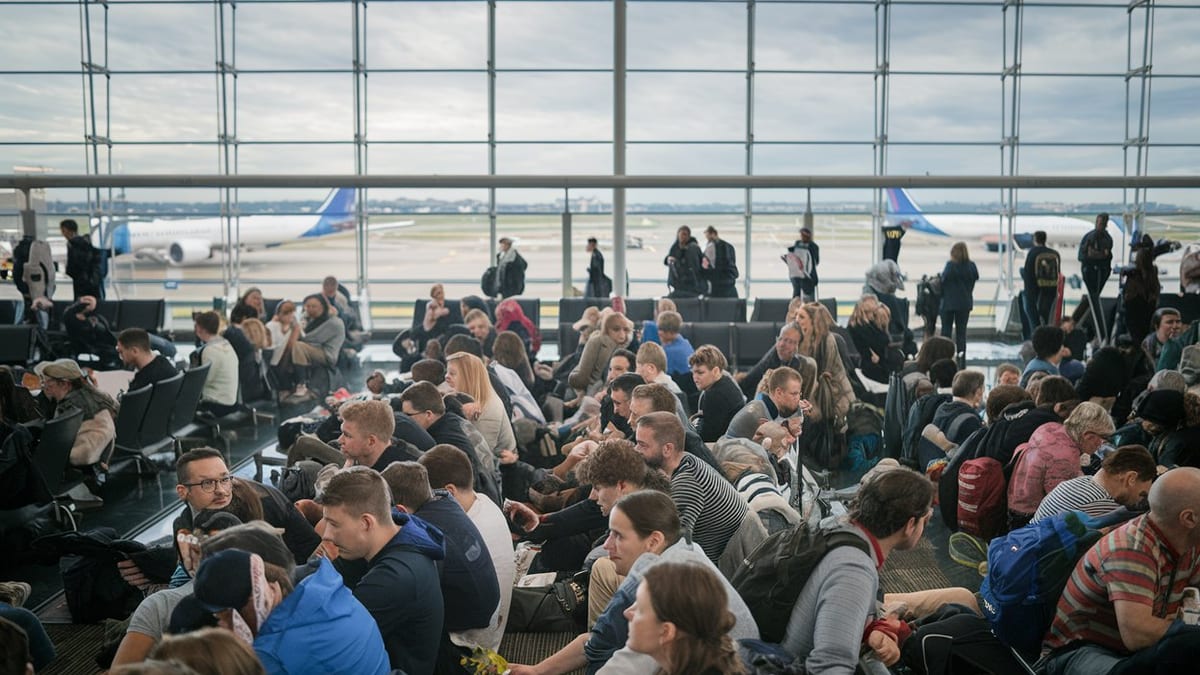
Image by Global Travel Alerts, Advisories, International Travel Alerts
Nearly a Dozen Flights Scrapped Across Key Routes
Published coverage from European and Gulf news outlets indicates that Air France, Gulf Air and several other international carriers have collectively cancelled nearly a dozen flights touching Paris in recent days. The latest changes affect services between the French capital and major hubs including Dubai, Riyadh, Tel Aviv and Beirut, with knock-on effects for connecting traffic from cities such as Florence and other secondary European markets.
At Paris Charles de Gaulle, Air France has extended suspensions on select long haul services after earlier halting regular flights to Dubai. Publicly available airline notices show that routes between Paris and Riyadh remain paused, while services to Tel Aviv and Beirut are suspended over an extended period as carriers reassess overflight exposure to conflict zones.
These cancellations come on top of broader regional disruption that began in late February, when large sections of Middle Eastern airspace were temporarily closed following strikes involving Iran, Israel and the United States. Flight tracking data and airline advisories at the time showed traffic over Iran, Iraq, Kuwait and Bahrain shrinking dramatically, forcing reroutings or outright cancellations for Europe to Gulf corridors that normally pass through those skies.
As schedules are updated, some Paris flights that briefly resumed have again been pulled, creating an uneven operating pattern that leaves many travelers uncertain until the last hours before departure.
Middle East Routes Hit Hardest
Routes connecting Paris with the Gulf and the wider Middle East are among the most severely affected. Air France has confirmed through public statements that flights to and from Dubai and Riyadh remain suspended through at least late March, while services to Tel Aviv and Beirut are on hold into early April. Other European carriers have taken similar steps, extending pauses on flights into Tel Aviv, Bahrain, Amman and additional regional gateways.
Gulf Air, which relies on Bahrain as a key connecting hub, has meanwhile been operating under a prolonged airspace closure around the kingdom. Passenger advisories circulating online describe full suspensions of regular Gulf Air operations as of early March, with travelers encouraged to seek refunds or rebooking options and with free cancellation windows extended for March departures.
The squeeze on capacity through Bahrain and neighboring hubs has made Paris-origin itineraries to Dubai, Bahrain and Riyadh particularly fragile. Even when Paris departures are scheduled, onward connections in the Gulf are not always available, leaving some passengers unable to complete their journeys or forced into lengthy detours via alternative hubs.
In parallel, Middle East focused travel waivers introduced by major airlines have allowed some flexibility for passengers booked on Paris to Dubai or Paris to Tel Aviv services. However, these waivers typically apply only within defined travel windows and require rebooking on the same carrier, limiting options at times of widespread disruption.
Knock-On Impacts for Florence, Tel Aviv and Regional Links
While the immediate headline impact is on Paris connections to Dubai and Riyadh, the cancellations are rippling across short haul and regional networks. Published timetables and traveler accounts suggest that services linking Paris with cities such as Florence are seeing disruption as aircraft and crews are repositioned to cover reshaped long haul schedules.
Tel Aviv continues to be one of the most constrained destinations. Multiple European groups, including members of the Air France-KLM family and partner carriers, have extended suspensions on Tel Aviv flights by several weeks at a time. For passengers attempting to travel between Paris and Tel Aviv, that has translated into a patchwork of ad hoc options, including occasional repatriation flights or limited services via third countries, rather than reliable daily schedules.
Other regional airports, from Amman to Bahrain, are facing similar uncertainty. As long as airspace restrictions persist and security assessments remain fluid, airlines are rebuilding their networks one short notice schedule update at a time. That leaves travelers connecting through Paris vulnerable to last minute cancellations on both onward and feeder legs, complicating travel planning even for intra-European journeys.
Reports from aviation data providers also highlight a sharp reduction in overall seat capacity into the Middle East since the start of March, meaning that even when flights operate, they are often heavily booked. Passengers who lose a Paris connection due to cancellation may struggle to find available seats within a reasonable timeframe, particularly on popular routes to Dubai and other Gulf hubs.
Passengers Stranded and Looking for Alternatives
For travelers at Paris Charles de Gaulle and Orly, the immediate reality has been delays, unexpected overnight stays and a scramble for alternatives. Social media posts and traveler forums are filled with accounts of passengers bound for Dubai, Riyadh and Tel Aviv who have found their flights repeatedly cancelled or rescheduled at short notice, with limited on-the-spot options to reroute.
According to publicly available guidance from multiple airlines, standard rebooking and refund rules remain in place, but implementation can be slow under the weight of call volumes. Some carriers are prioritizing stranded passengers who were already in transit when cancellations hit, while those yet to begin their trips are advised to monitor their booking status and only travel to the airport once a flight is clearly confirmed as operating.
In several cases, airlines serving Paris have organized or participated in special repatriation operations to move vulnerable or long stranded passengers from Dubai and other hubs back to Europe. These flights are typically limited to pre-cleared passenger lists and do not restore regular commercial service, but they have provided a safety valve for those who had been stuck overseas for days.
Travellers seeking to bypass suspended Bahrain or Tel Aviv routes are increasingly looking to alternative gateways, such as Jeddah or Dammam, when available. However, capacity through these airports is also constrained, and connections back to Paris are subject to the same security-driven recalculations that are affecting other corridors.
What Travelers Through Paris Should Expect Now
With the situation in the Middle East still evolving, industry observers suggest that disruptions at Paris airports are likely to continue in the short term. Airline updates in late March show that suspensions on some Paris to Dubai and Paris to Riyadh flights extend through the end of the month, while Tel Aviv and Beirut services are postponed even further.
Travelers planning to pass through Paris on their way to Dubai, Bahrain, Florence, Tel Aviv or Riyadh are being urged in public advisories to build in additional flexibility. That includes allowing extra connection time, being prepared for last minute schedule changes and reviewing ticket conditions so they understand refund and rebooking rights if flights are cancelled.
Airlines are also emphasizing the importance of checking flight status directly through official channels on the day of travel. During recent waves of cancellations, some Paris departures have operated on a reduced basis while others on the same route were scrapped, creating a situation in which assumptions based on historical schedules no longer apply.
For now, passengers moving through Charles de Gaulle and Orly face a travel landscape shaped not by seasonal demand but by security assessments, airspace availability and shifting airline risk calculations. Until those underlying factors stabilize, reports indicate that Paris will remain a focal point of disruption for journeys linking Europe with Dubai, Bahrain, Tel Aviv, Riyadh and beyond.