

More news on this day
Disruptions at Reykjavik Airport have led to the cancellation of key domestic services to Hornafjordur, with flights linked to FXI, Icelandair and the former Air Iceland Connect operation leaving hundreds of passengers facing long delays, missed connections and uncertain travel plans across Iceland.
Get the latest news straight to your inbox!
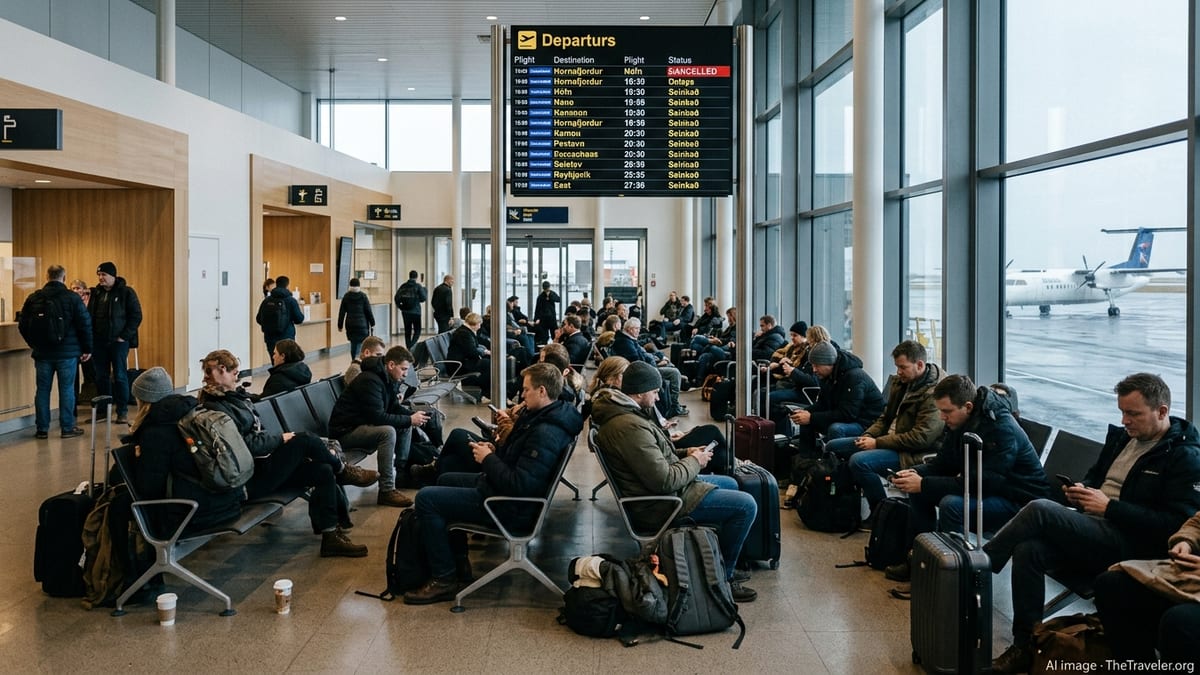
Key Domestic Links to Hornafjordur Severely Disrupted
Recent operational disruption at Reykjavik Airport has affected flights on the busy domestic corridor serving Hornafjordur, an important gateway to Iceland’s southeast coast. Reports indicate that services associated with Icelandair’s domestic operation, historically connected with Air Iceland Connect under the FXI code, have been cancelled or significantly delayed, stranding travelers at the capital’s city airport.
The cancellations have affected both residents relying on the route for essential travel and international visitors using Reykjavik as a hub to reach Hornafjordur’s coastal communities and nearby attractions. Many passengers have reported missed onward plans, including tours, car rentals and accommodation bookings in the region.
While the exact number of affected flights has not been publicly detailed, accounts from travelers describe multiple departures removed from schedules or retimed at short notice, creating bottlenecks at check-in desks and crowded waiting areas as travelers seek alternative arrangements.
Icelandair’s Regional Network and the Legacy of Air Iceland Connect
Icelandair’s domestic and regional services have undergone significant changes in recent years, with Air Iceland Connect, the group’s former regional brand operating under the FXI code, folded into the Icelandair identity. Publicly available information shows that aircraft and crews previously flying as Air Iceland Connect now operate under Icelandair branding, while continuing to serve many of the same internal routes.
The Hornafjordur link is one of several essential domestic services that connect the capital region with smaller communities around Iceland. When one of these flights is cancelled, the knock-on effect can be substantial because frequencies are limited compared with major international routes and alternative surface transport can involve long journeys by road in challenging weather.
Travel commentary and consumer discussions have highlighted that when domestic services are disrupted, rebooking options are often constrained by aircraft availability and tight regional schedules. This can result in overnight delays or forced itinerary changes, particularly for visitors with fixed tour dates or cruise departures.
Passenger Experiences: Long Waits and Limited Alternatives
Accounts circulating in travel forums and social media describe passengers waiting for extended periods at Reykjavik Airport as cancellations unfolded. Some travelers report receiving rebooking notices via airline apps or email, only to find that replacement flights departed the following day or did not align with their original plans to reach Hornafjordur on schedule.
Others describe confusion at departure gates, with departure boards updating repeatedly and messaging that sometimes lagged behind actual schedule changes. For travelers unfamiliar with Iceland’s domestic network, the limited number of daily services and the absence of immediate alternatives came as a surprise, particularly when compared with larger European hubs where multiple airlines compete on the same route.
Some visitors have indicated that they turned to last-minute car rentals or long-distance bus journeys in an effort to reach the southeast coast. These options can involve several hours of driving in variable weather, which may not be suitable for all travelers, especially during the darker months when road conditions are more demanding.
What Stranded Travelers Can Expect Under Current Policies
Publicly available customer service material from Icelandair outlines general provisions for passengers affected by cancellations, including options such as rebooking on the next available flight, refunds when travel is no longer possible, and limited assistance with meals or accommodation in some circumstances. The level of support may depend on the cause of disruption, such as weather, operational limitations or other external factors.
For routes touching Iceland and the wider European Economic Area, travelers may also look to established air passenger rights frameworks that set out minimum standards for care and reimbursement in certain situations. Travel advisors often note that these rules can entitle passengers to meals, hotel stays and transportation back to the airport when delays or cancellations meet defined thresholds, although eligibility varies by route, airline and reason for disruption.
Consumer advocates regularly encourage travelers to document their experience, keep receipts for essential expenses, and submit claims directly through the airline’s official channels. Published accounts suggest that response times and outcomes can vary, making it important for passengers to retain detailed records of communications, boarding passes and booking confirmations.
Planning Ahead for Domestic Flights Within Iceland
The events at Reykjavik Airport have renewed attention on how visitors plan domestic flight connections in Iceland, particularly when traveling onward to smaller airports such as Hornafjordur. Travel planning resources frequently recommend allowing generous buffers between international arrivals and domestic departures, especially during peak seasons or in periods of unsettled weather.
For travelers with time-sensitive commitments in Iceland’s remote regions, some itinerary planners suggest building at least one flexible day into schedules, or considering alternative routing options when possible. This can provide extra resilience if a key domestic sector is cancelled and the next available flight is not until the following day.
The recent wave of cancellations serves as a reminder that even in a highly connected destination like Iceland, domestic aviation remains sensitive to weather, operational constraints and fleet availability. Travelers heading to Hornafjordur and other regional airports may benefit from monitoring their bookings closely in the days before departure, confirming schedules through official airline channels, and having contingency plans ready should flights be disrupted again.