

More news on this day
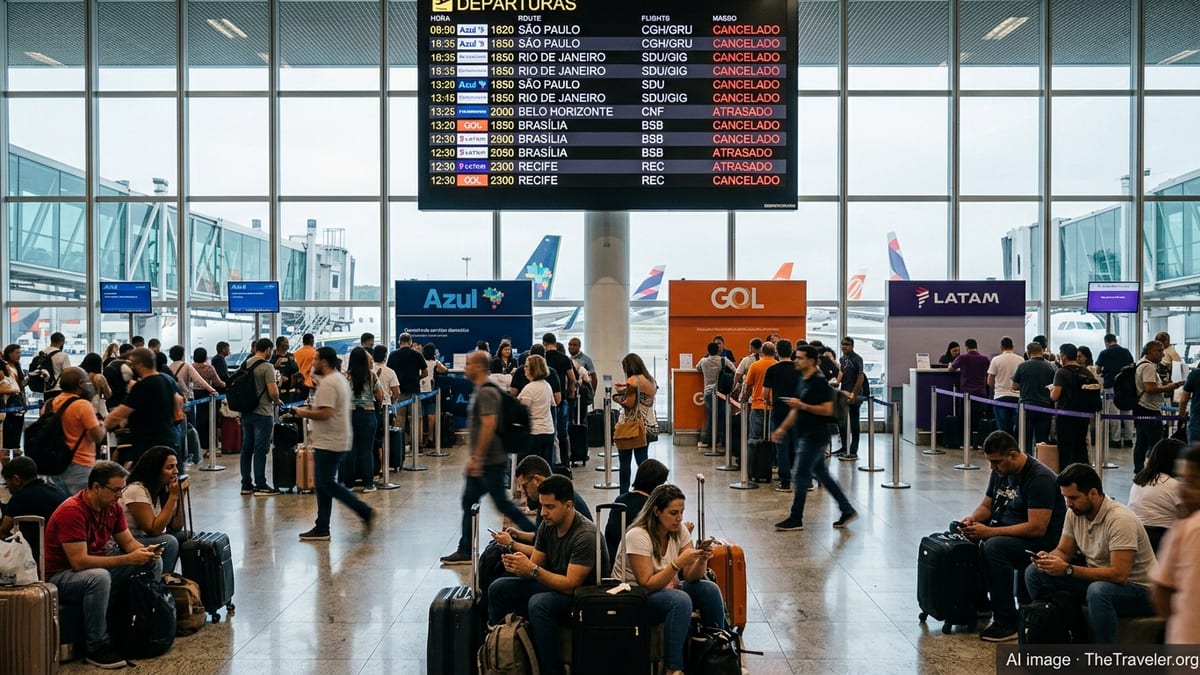
A new round of flight cancellations by Brazilian carriers Azul, Gol and Latam has disrupted air travel across the country, affecting major routes between São Paulo, Rio de Janeiro and key hubs such as Recife’s Guararapes Airport and Brasília, according to live monitoring data and local media reports.
Get the latest news straight to your inbox!
Dozens of Flights Scrapped Across Main Brazilian Hubs
Published coverage and real time tracking data on March 21 indicate that more than a dozen domestic flights operated by Azul, Gol and Latam were canceled across Brazil’s main airports, with the highest concentration at São Paulo and Rio de Janeiro terminals. The disruption has rippled along some of the country’s busiest corridors, including the shuttle-style air bridge linking São Paulo and Rio, and onward connections to northeastern and central-western cities.
São Paulo’s Guarulhos and Congonhas airports and Rio de Janeiro’s Santos Dumont and Galeão have all registered cancellations, with knock-on effects for connections to Recife’s Guararapes International Airport, Brasília and other capitals. Travelers reported last minute changes, extended waits in terminals and missed onward connections as airlines adjusted schedules and consolidated flights.
Publicly available information shows that the cancellations are spread across the three major carriers rather than concentrated at a single airline, amplifying the impact for passengers who might otherwise switch operators. With Azul, Gol and Latam together controlling the bulk of Brazil’s domestic capacity, schedule cuts on even a small percentage of flights can quickly jam popular routes.
Early indications suggest that most of the affected services are short haul domestic sectors rather than long haul international flights, but the domestic turbulence is still affecting connections for travelers heading abroad via São Paulo and Rio de Janeiro hubs.
Impact on Key Routes: São Paulo, Rio, Recife and Brasília
The cancellations are particularly visible on the heavily traveled air bridge between São Paulo and Rio de Janeiro, often described as one of Brazil’s busiest business corridors. This route, linking Congonhas and Guarulhos in São Paulo with Santos Dumont and Galeão in Rio, normally operates with frequent departures distributed among Azul, Gol and Latam. When multiple departures are cut within a short time window, seat availability tightens quickly.
Routes linking these southeastern hubs with Recife’s Guararapes Airport have also been affected, with some services removed from schedules or retimed. Passengers connecting in São Paulo or Rio to reach the northeast reported itinerary changes, including rebooking through alternative cities or being shifted to later departures the same day.
In Brasília, the country’s political capital and an important connecting hub, cancellations have been more scattered but still significant for travelers counting on tight connections. Some itineraries combining Brasília with São Paulo or Rio have been disrupted, with travelers re protected on later flights or rerouted through other hubs, depending on available capacity.
Because many domestic itineraries in Brazil require at least one connection through São Paulo, Rio, Recife or Brasília, cancellations on trunk routes such as São Paulo Rio, São Paulo Recife or Brasília Rio can cascade into missed flights to medium size cities, extending delays well beyond the original airports involved.
What Is Driving the Latest Round of Cancellations
Brazil’s domestic network has experienced intermittent schedule volatility in recent years, and the latest wave appears to follow that pattern. Industry observers point to a mix of operational constraints, weather related challenges and broader capacity management decisions as possible drivers, although specific reasons can vary flight by flight and are not always publicly detailed.
In the case of Rio de Janeiro, earlier regulatory restrictions on Santos Dumont operations and periodic congestion at Santos Dumont and Galeão have periodically forced airlines to adjust their schedules or move flights between airports. Operational reports have highlighted that the Rio São Paulo corridor is especially sensitive to any shift in capacity or airport limitations, which can quickly translate into cancellations or consolidations on Azul, Gol and Latam services.
More broadly, Brazilian carriers have been managing tighter fleets and seeking higher aircraft utilization, which leaves less room to absorb unexpected maintenance issues or staffing constraints without canceling or delaying flights. When several airlines experience such pressures simultaneously, peak travel days can see multiple cancellations at once across different brands.
Publicly available analyses also note that some airlines have been fine tuning their domestic networks in response to demand patterns that remain uneven across regions. Routes connecting São Paulo and Rio with northeastern and northern capitals are particularly exposed to short notice schedule changes when bookings fluctuate or operational buffers shrink.
How Travelers Are Being Reaccommodated
Reports from affected passengers indicate that reaccommodation policies have largely followed standard Brazilian domestic practice, with airlines offering placement on the next available flight on the same route, or in some cases rerouting through an alternative hub where seats exist. Availability on peak time departures between São Paulo and Rio has been limited, meaning some travelers have been shifted to off peak flights or different airports in the same metropolitan areas.
In instances where same day options are not available, travelers have reported being offered itineraries on the following day, particularly on routes involving Guararapes, Brasília or smaller regional airports that have fewer daily frequencies. This has heightened the impact on business travelers and connecting international passengers who face additional costs or need to modify hotel and ground transport arrangements.
Consumer advocacy guidance in Brazil generally advises passengers to keep all records of cancellations, boarding passes and any written communication from airlines, as these documents can be important when requesting refunds, vouchers or assistance for meals and lodging during extended disruptions. Travelers are also encouraged to check both airline channels and airport departure boards, since last minute changes may not always appear immediately in all systems.
Although some travelers have shared experiences of difficulty obtaining timely support at crowded service desks, others report successful same day rebooking once they reached airline agents through digital channels or at airports less affected than São Paulo and Rio’s busiest terminals.
Practical Tips for Upcoming Trips Through São Paulo and Rio
With Azul, Gol and Latam all involved in the current round of cancellations, travelers planning near term trips through São Paulo or Rio de Janeiro may want to build extra buffer time into their connections, particularly when routing via Guarulhos, Congonhas, Santos Dumont or Galeão. Longer layovers can provide additional margin to absorb schedule changes without missing onward flights.
Passengers connecting to or from Recife’s Guararapes Airport, Brasília or other major hubs are advised to monitor their bookings closely in the 24 to 48 hours before departure, as same day adjustments are more difficult to manage once already en route. Checking flight status through airline apps and airport information channels before leaving for the airport can help identify problems early.
Travelers with critical time sensitive plans, such as early morning meetings or same day international connections, may benefit from scheduling arrivals a flight or two earlier than strictly necessary, especially along the São Paulo Rio shuttle corridor. While this adds time on the ground, it can reduce the risk that a single cancellation will derail the entire itinerary.
Given that the current disruption involves Brazil’s three largest carriers simultaneously, alternative options on other domestic airlines can be limited on key routes. For this reason, flexible planning, close monitoring of flight status and maintaining realistic expectations about potential delays are likely to remain important for anyone flying through Brazil’s busiest hubs in the coming days.