

More news on this day
Hundreds of travelers faced unexpected cancellations and long delays in Brazil on Saturday after LATAM, Azul and regional carrier Air Center scrubbed at least eight flights, disrupting busy domestic corridors linking São Paulo, Brasília, Florianópolis, Porto Seguro and other key destinations at the start of a peak leisure travel weekend.
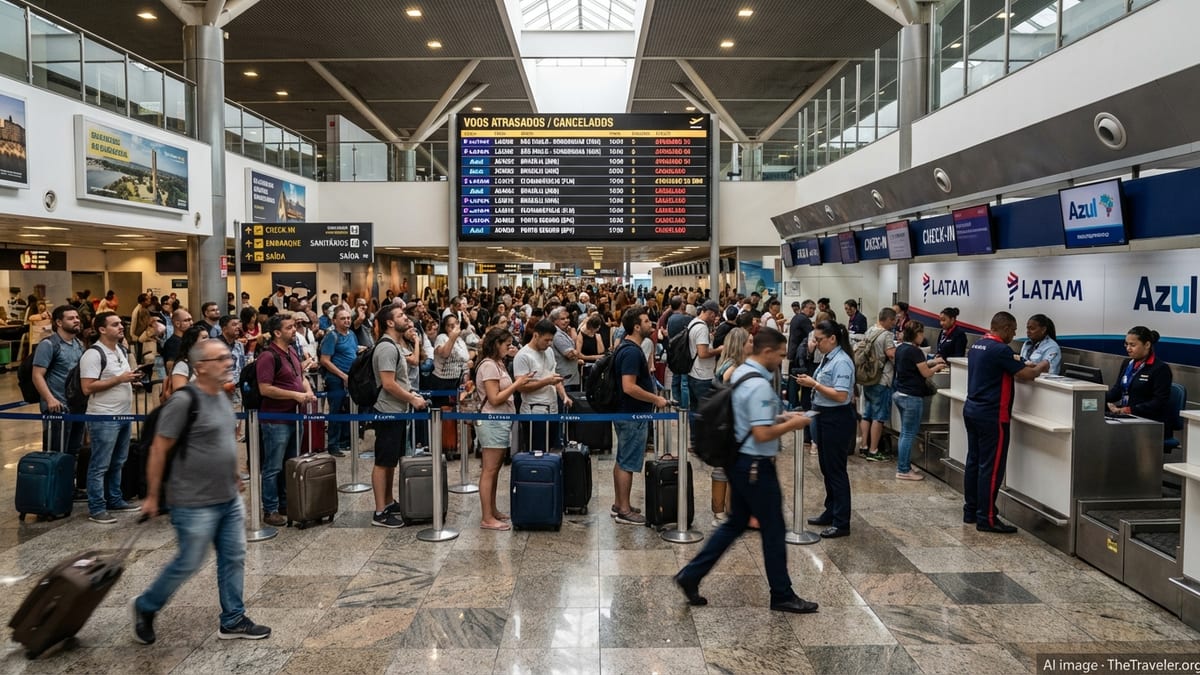
Key Airports Hit as Domestic Corridors Seize Up
Operational data from flight tracking and booking platforms on 21 February indicated a cluster of cancellations across multiple carriers serving Brazil’s main hubs, with São Paulo and Brasília at the center of the disruption. While Brazil’s big three airlines maintained most of their schedules, a string of targeted cancellations had an outsized effect on passengers relying on already tight connections between major cities and coastal resorts.
At São Paulo’s Guarulhos and Viracopos airports, services operated by LATAM and Azul were among those affected, while Brasília reported missed departures to and from secondary cities in the interior. The situation was compounded by the presence of Air Center on overlapping routes, where cancellations by a smaller carrier can quickly eliminate redundancy for travelers in mid-sized markets.
Although the number of cancelled flights was relatively small compared with the hundreds of daily departures from Brazil’s largest airports, the timing and concentration on popular leisure and business routes meant that a reduced schedule translated into overbooked later flights, queues at service desks and limited rebooking options for the remainder of the day.
Routes to São Paulo, Brasília, Florianópolis and Porto Seguro Affected
Among the routes hit hardest were links between São Paulo and a mix of political, business and holiday destinations. Flights to and from Brasília, the country’s administrative capital, saw cancellations that disrupted government travelers and corporate passengers whose itineraries rely heavily on punctual same-day returns.
Coastal destinations also felt the impact. Porto Seguro, a major beach getaway in Bahia state, and Florianópolis, the island capital of Santa Catarina popular with domestic and Argentine tourists, both reported cancelled or altered services involving LATAM and Azul. With weekend demand typically surging on these sectors, the loss of even a single rotation can leave passengers facing waits of many hours for the next available seat.
Smaller cities connected through São Paulo and Brasília similarly reported knock-on effects. Travelers originating in interior states and depending on a single daily flight to connect onward through the hubs were among the most exposed, as missed or canceled legs left some stranded overnight while they awaited accommodation and alternative transport solutions from the airlines.
LATAM Faces Scrutiny After Fresh Operational Turbulence
LATAM, the country’s largest carrier by market share, entered the weekend already under close observation from Brazilian regulators and aviation watchers after a series of operational incidents and schedule adjustments during the southern summer season. The cancellation of services linking São Paulo with tourist hot spots such as Porto Seguro and Florianópolis has reignited questions about how the carrier is balancing high load factors with the need for operational resilience.
One recent incident involving a LATAM widebody aircraft departing São Paulo highlighted the narrow margins airlines operate under when aircraft availability suddenly changes. Although that episode was classified as an incident with no injuries, the subsequent inspection and maintenance requirements underscored how a single jet being pulled from service can reverberate across an already tight fleet plan, particularly on busy weekends.
In Saturday’s disruptions, LATAM pointed to a combination of operational adjustments and safety-related decisions as factors in the cancellations, according to people familiar with the airline’s planning. The carrier has continued to emphasize that any decision to cancel is made to preserve safety and overall network reliability, even when that results in short-term discomfort for passengers.
Azul’s Cancellations Underscore Fragile Recovery
Azul, Brazil’s third-largest airline, has spent recent months stabilizing its finances and route network after completing a restructuring of its balance sheet under United States court supervision. The airline has stressed that it maintained operations throughout that process, carrying tens of millions of passengers while renegotiating debts and aircraft leases in an effort to lower long-term costs.
The cancellations involving Azul on Saturday therefore arrive at a sensitive moment for the company, which is eager to project a narrative of regained normalcy to investors and travelers alike. Though the number of affected Azul flights was limited, the optics of scrapped departures on strategic routes to São Paulo, Porto Seguro and Florianópolis risk undermining confidence at a time when the carrier is competing aggressively with Gol and LATAM for domestic market share.
Industry analysts note, however, that cancellations are not unusual during periods of network reconfiguration or when carriers are integrating new fleet and crewing patterns. For Azul, the challenge will be to show that Saturday’s disruptions were isolated rather than indicative of deeper capacity constraints or lingering post-restructuring turbulence.
Regional Player Air Center Adds to the Strain
While LATAM and Azul drew most of the public attention, regional carrier Air Center also played a key role in Saturday’s difficulties. Operating on thinner routes that often feed into major hubs, the airline’s cancellations removed vital connective tissue for travelers who depend on a single daily flight to reach São Paulo or Brasília from smaller cities.
Unlike larger airlines, which can sometimes reroute passengers through alternative hubs or on partner carriers, regional airlines have fewer options when a flight is pulled from the schedule at short notice. That reality left some Air Center passengers facing long delays and, in certain cases, the prospect of overland journeys to meet their onward connections in time.
Aviation specialists say disruptions at regional carriers can amplify the impact of cancellations at the majors. When a feeder flight is removed, travelers booked on onward LATAM or Azul services may misconnect, pushing additional demand onto later flights and raising the risk of overbooking and further delays throughout the day.
Operational Pressures Behind the Cancellations
The exact mix of causes behind Saturday’s eight cancellations varied by carrier and route, but several common pressures have been weighing on Brazil’s domestic aviation market. High aircraft utilization during the southern hemisphere summer, combined with tight spare capacity and ongoing maintenance requirements, has left airlines with limited room to maneuver when technical or weather-related issues emerge.
Crew scheduling also remains a sensitive point. Carriers must balance legal limits on working hours with the need to cover dense weekend schedules, particularly on routes to leisure destinations where demand spikes sharply on Fridays and Saturdays. When a crew runs up against duty-time limits due to an earlier delay, airlines can be forced to cancel or consolidate later flights if reserve teams are not immediately available.
Infrastructure challenges at some Brazilian airports add another layer of complexity. Congestion during peak hours, temporary runway closures for maintenance and localized weather phenomena can all cascade into delays that make it difficult for airlines to turn aircraft around quickly enough to maintain punctuality, especially on tightly timed shuttle services between major cities.
Passengers Confront Long Queues, Limited Alternatives
For affected passengers, Saturday’s cancellations translated into familiar scenes: crowded check-in halls, lines at customer service counters and anxious travelers comparing rebooking options on airline apps and third-party platforms. In São Paulo and Brasília, travelers reported waiting extended periods for information, as ground staff contended with a sudden influx of disrupted itineraries.
Those flying to leisure destinations such as Porto Seguro and Florianópolis faced particular frustration. Many had booked short weekend breaks with fixed hotel check-in times and prearranged activities, leaving little room in their schedules for multi-hour delays or overnight stays. With alternative flights already heavily booked, some families weighed postponing trips altogether or switching to other destinations reachable by car or bus.
Consumer advocates in Brazil reiterated that passengers are entitled to assistance in the event of cancellations attributable to the airline, including meals, communication, and where necessary, accommodation and rebooking on the next available flight. They urged travelers to keep detailed records of expenses and communications in order to facilitate later claims for reimbursement or compensation under Brazilian aviation rules.
Regulatory Eyes on Reliability as Peak Season Continues
The cluster of cancellations has caught the attention of Brazil’s civil aviation authorities, who have stepped up oversight of airline reliability following a volatile period marked by bankruptcies, restructurings and the grounding of some smaller players. Regulators have indicated that they will continue to monitor cancellation and delay rates, particularly on high-density routes and during holiday periods when travelers are most vulnerable to disruptions.
Officials have previously warned carriers that they expect realistic scheduling and adequate reserve capacity to prevent systemic problems from spreading through the network. While eight cancellations in a single day do not in themselves signal a systemic breakdown, the fact they were concentrated among multiple carriers and on key routes has prompted questions about whether the industry has enough slack to absorb unexpected shocks.
For travelers, the events of Saturday serve as a reminder to build extra time into itineraries involving connections through São Paulo and Brasília, especially when traveling to or from popular coastal destinations. As Brazil’s airlines continue to reshape their networks and finances, passengers may see further isolated disruptions, even as overall traffic recovers and competition intensifies on core domestic routes.