

More news on this day
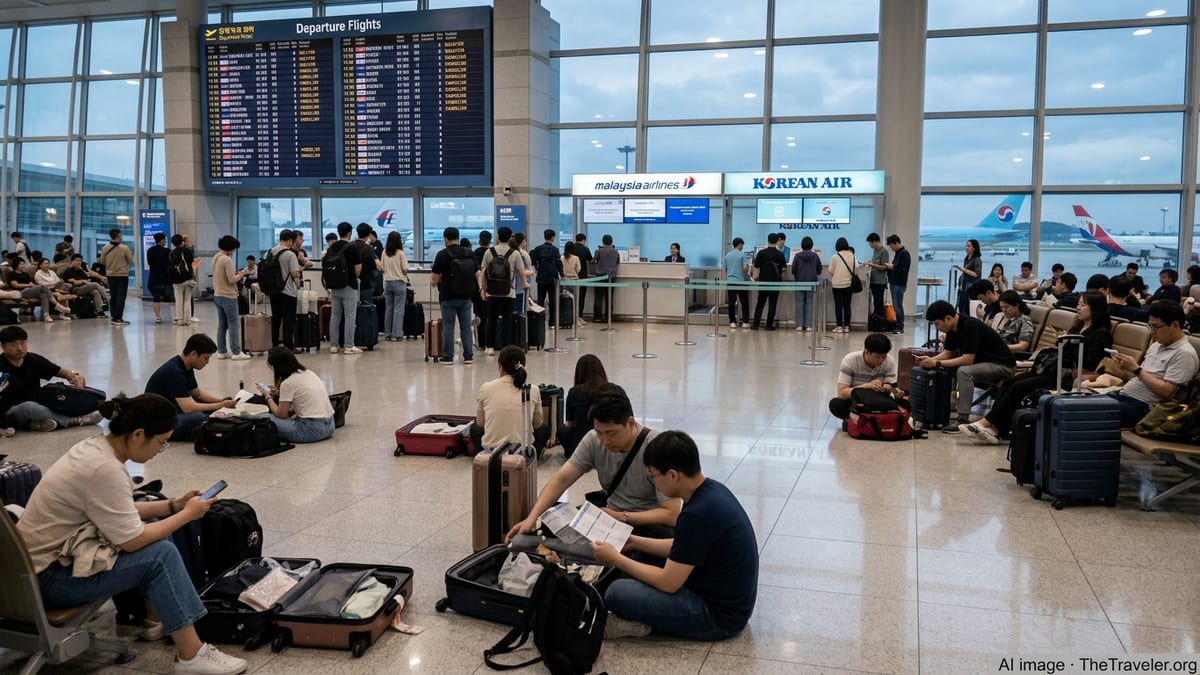
Travelers in South Korea faced fresh disruption as separate flight cancellations by Malaysia Airlines and Korean Air stranded passengers at Incheon and Jeju airports, affecting key routes to Kuala Lumpur and Yeosu and underscoring ongoing fragility in regional air connectivity.
Get the latest news straight to your inbox!
Cancellations Disrupt Routes Linking South Korea and Malaysia
Reports from aviation tracking services and local media indicate that a Malaysia Airlines service between Seoul Incheon and Kuala Lumpur was canceled over the weekend, leaving outbound and connecting travelers searching for last-minute alternatives. The affected flight, which typically operates as part of the carrier’s core Northeast Asia network into its Kuala Lumpur hub, was withdrawn from the board after an operational disruption, causing extended waits at Incheon International Airport.
The route between Kuala Lumpur and Incheon has been through several schedule adjustments in recent seasons as airlines recalibrate capacity across Asia. Industry data compiled in late 2024 already showed reductions in flights on the corridor, reflecting a more cautious approach to long-haul deployment. The latest cancellation adds immediate pressure on remaining seats, especially for travelers relying on Kuala Lumpur for onward connections to Southeast Asia, Australia, and Europe.
Publicly available information shows that passengers on the canceled Malaysia Airlines service faced a mixture of rebooking, refund requests, and self-arranged alternatives on other carriers serving the same city pair. With multiple full or nearly full departures from Incheon to Kuala Lumpur and neighboring hubs, many travelers reported difficulty securing same-day onward options.
The disruption comes at a time when Malaysia’s flag carrier has otherwise been focused on stabilizing and growing its long-haul program. Recent operational updates on other long-distance routes have emphasized schedule reliability and connectivity through Kuala Lumpur, making the Incheon cancellation an unwelcome setback for travelers expecting seamless transit.
Jeju to Yeosu Link Hit as Korean Air Cancels Key Domestic Flight
On South Korea’s southern coast, a separate cancellation involving Korean Air on a Jeju to Yeosu routing added to the day’s travel turmoil. The domestic sector, typically a short hop connecting the tourist island of Jeju with the port city of Yeosu on the mainland, plays an important role in linking regional tourism hubs and facilitating business travel across the south of the country.
According to domestic aviation coverage, the Korean Air flight was removed from the departure schedule at Jeju International Airport after the airline cited operational reasons, leaving passengers at the gate without a direct same-day replacement. While the Jeju to Seoul corridor tends to offer multiple alternatives on several carriers, nonstop services linking Jeju and Yeosu are more limited, so a single cancellation can have an outsized impact on local travelers.
Jeju Airport has already been under intermittent pressure from weather-related disruptions during the winter and early spring period, including snow and wind that have periodically grounded large numbers of flights. In this case, reports suggest that the Korean Air cancellation was handled as an isolated operational issue, but it still contributed to a sense of unpredictability for those depending on short domestic hops to connect to train or ferry services onward from Yeosu.
Published coverage of recent airport operations shows that Jeju authorities and regional governments have been working to strengthen contingency plans, including stockpiles of blankets and basic supplies for stranded passengers during major weather events. While the latest Korean Air cancellation did not reach that scale, it again highlighted how quickly conditions can change for travelers moving between the country’s key coastal gateways.
Passengers Stranded at Incheon and Jeju Face Long Waits and Limited Options
At both Incheon and Jeju, the immediate effect of the Malaysia Airlines and Korean Air cancellations was a familiar scenario for frequent travelers: crowded customer service counters, long rebooking queues, and uncertainty over when replacement flights would be available. Publicly available accounts from affected passengers described extended waits for information as airlines worked through reallocation of seats on later departures and on partner carriers.
Incheon International Airport, one of Asia’s largest hubs, typically offers multiple daily flights to a range of Southeast Asian destinations. However, once a long-haul or key regional service is removed from the schedule at short notice, remaining flights can quickly fill, especially during busy travel periods. Travelers bound for Kuala Lumpur reported weighing options such as rerouting via other Asian hubs or delaying travel by a day or more.
At Jeju, options were even more constrained. The cancellation of a single Korean Air flight to Yeosu removed a critical direct link for passengers who had timed their itineraries to connect with buses, trains, or coastal tourism activities on the mainland. While some travelers were able to reroute via larger airports such as Gimpo or Busan, doing so involved additional time, costs, and re-coordination of ground arrangements.
Airport operators in South Korea have expanded their ability to provide temporary support during disruptive events, including resting areas and basic amenities for stranded travelers. Nonetheless, cancellations like those involving Malaysia Airlines and Korean Air continue to reveal gaps between infrastructure readiness and the expectations of passengers who assume that alternative flights will always be readily available.
Knock-On Effects for Regional Tourism and Connectivity
The cancellations also carry broader implications for tourism flows between South Korea and its regional partners. The Incheon to Kuala Lumpur route is important not only for business and leisure travel between the two countries but also for connecting itineraries into Southeast Asia’s resort destinations and pilgrimage, education, and family-visit traffic routed through Malaysia’s capital.
Travel analysts note that even isolated cancellations can erode traveler confidence if they appear against a backdrop of earlier schedule cuts or weather-related disruptions. In the case of Malaysia Airlines, earlier capacity adjustments on the Korea route have already required some passengers to build in more buffer time or to combine flights from different carriers to reach their final destinations.
On the domestic side, the Jeju to Yeosu link represents a key connective thread between two of South Korea’s most recognizable coastal tourism areas. When a flight on this route is canceled, visitors can find it harder to combine Jeju’s beaches and trails with Yeosu’s coastal scenery and maritime attractions in a single itinerary, potentially dampening local tourism revenue during sensitive shoulder seasons.
Publicly available tourism forecasts for 2026 anticipate continued growth in arrivals to both Jeju and major Malaysian destinations from South Korea and neighboring markets. However, the latest disruptions underline how airlines and airports must coordinate closely on contingency planning if they are to protect that growth from being undermined by even short-lived schedule shocks.
Travelers Urged to Monitor Schedules and Build in Flexibility
In the wake of the cancellations, travel advisories and industry commentary emphasize the importance of monitoring flight status more closely, particularly for routes that have recently seen timetable revisions. For long-haul and regional connections like Incheon to Kuala Lumpur, same-day interline options may exist, but only for passengers who act quickly or who are supported by proactive rebooking policies.
For domestic routes such as Jeju to Yeosu, rail and road alternatives remain available, but switching modes can involve significant time and planning. Travelers with fixed event dates, cruises, or tour departures in Yeosu are being encouraged by local travel agents to allow additional time when transiting through Jeju, especially during seasons prone to heavy weather or during peak holiday periods.
Travel planners point out that while airlines aim to minimize disruptions, operational realities ranging from aircraft maintenance to crew availability and weather can still force last-minute changes. The recent Malaysia Airlines and Korean Air cancellations demonstrate that even in a generally improving aviation environment, individual flights remain vulnerable, and passengers benefit from flexible tickets, comprehensive travel insurance, and backup plans where possible.
As schedules continue to evolve through 2026, the experiences at Incheon and Jeju serve as a reminder that regional air travel in and out of South Korea is still in a period of adjustment. For now, travelers heading toward Kuala Lumpur, Yeosu, and other key destinations are advised to keep a close eye on their itineraries and to be prepared for occasional, if unwelcome, last-minute changes.