

More news on this day
Air travel to and from Argentina is facing fresh disruption as at least 10 flights operated by Aerolineas Argentinas, Iberia, American Airlines and other carriers have been cancelled or significantly altered, impacting routes that connect Buenos Aires, Cordoba, Miami, Madrid and several other key destinations.
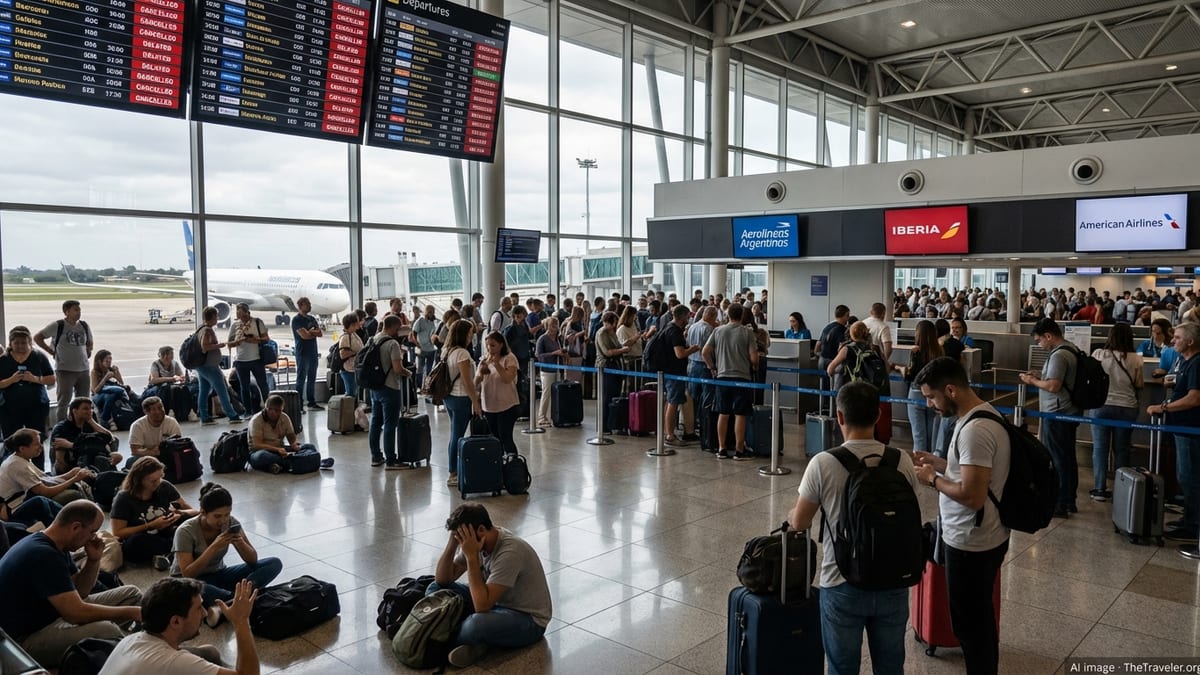
Wave of Cancellations Hits Major Argentine Gateways
The latest round of schedule changes comes amid a broader period of instability in Argentina’s aviation sector, with carriers adjusting operations in response to labor unrest, operational bottlenecks and shifting travel demand. In recent days, cancellations and major reschedulings have been reported at Buenos Aires’ two main airports, Jorge Newbery and Ministro Pistarini, as well as at Cordoba and several popular domestic hubs.
According to operational data compiled from airport monitors and flight-tracking services, at least 10 flights involving Aerolineas Argentinas, Iberia and American Airlines have been cancelled or severely disrupted across domestic and international networks. These include services linking Buenos Aires with Cordoba and Bariloche, and long-haul connections from Argentina to Miami and Madrid.
While Argentina’s flag carrier Aerolineas Argentinas has borne the brunt of domestic cancellations, international operators such as Iberia and American Airlines have also adjusted some services as knock-on effects from staffing actions and congestion filter through the system. Passenger volumes remain high at the tail end of the Southern Hemisphere summer, amplifying the impact of every lost or delayed departure.
The most recent disruptions build on an already difficult week for travelers. Local news outlets have reported dozens of cancellations nationwide, with more than 80 departures scrubbed on a single day at major airports, forcing thousands of passengers to rebook or delay trips.
Domestic Routes Between Buenos Aires and Interior Cities Affected
Domestic travelers have been particularly hard hit, as Aerolineas Argentinas and other local carriers rely heavily on hub-and-spoke operations centered in Buenos Aires. Cancellations have disrupted routes linking the capital with key provincial destinations including Cordoba, Bariloche, Iguazu, Salta and Neuquen.
At Aeroparque Jorge Newbery in Buenos Aires, several Aerolineas Argentinas services to Cordoba and other interior cities have been removed from departure boards or shifted outside normal peak windows. Similar patterns have been seen at Ministro Pistarini International Airport, where flights scheduled to connect Buenos Aires with Cordoba and other cities have been delayed, consolidated or cancelled.
For passengers, the domestic disruption creates a cascade of missed connections. Many travelers use Buenos Aires as a bridge between regional flights and long-haul services to North America and Europe. When a short, one-hour hop to Cordoba is cancelled, it can instantly break a multi-leg itinerary originally designed to connect seamlessly onto an overnight flight abroad.
In some cases, flights that previously operated daily are now appearing with lower frequency or temporarily removed from online schedules, suggesting that airlines are proactively trimming capacity to navigate constrained resources and avoid last-minute day-of-operation cancellations.
Madrid and Miami Links Face Knock-On Disruptions
International routes have not been spared. Iberia’s busy corridor between Buenos Aires and Madrid, one of the main links between Argentina and Europe, has experienced schedule adjustments and isolated cancellations as carriers respond to staffing pressures and air traffic control slowdowns. While most flights continue to operate, any cancellation immediately reduces options for passengers needing same-day or next-day departures.
On the North American side, American Airlines services between Argentina and Miami have seen scattered disruptions as well, particularly during windows affected by industrial action and airspace constraints. Miami is a crucial gateway for Argentines traveling onward to the United States and the Caribbean, meaning a single cancelled departure can ripple across numerous connecting itineraries.
Travel agents in Buenos Aires report that rebooking options on transatlantic and transcontinental routes are tightening quickly when cancellations occur, especially for travelers seeking to remain in the same cabin class or preserve existing connection times. With aircraft running near capacity at the end of the summer holiday period, spare seats on alternative flights are often limited.
For passengers starting their journey outside Buenos Aires, a cancelled domestic feed flight can also mean losing access to a long-haul seat altogether, as airlines prioritize travelers already present at the long-haul departure point when reaccommodating disrupted customers.
Labor Disputes and Operational Pressures Behind the Disruption
The current wave of cancellations and delays is unfolding against the backdrop of heightened labor tensions across Argentina’s aviation sector. Air traffic controllers and aviation workers have announced staggered work stoppages and strike actions in protest over wages, working conditions and broader economic reforms, prompting airlines to preemptively reduce schedules on days expected to see the greatest impact.
In recent weeks, Aerolineas Argentinas has already cancelled hundreds of flights during nationwide labor actions, at times grounding a significant share of its domestic network in a single day. Other carriers, including low-cost operators and regional airlines, have adjusted their own schedules as they rely on many of the same airport and air navigation services.
Beyond organized labor measures, everyday operational pressures are contributing to instability. Airlines are working with tight staffing margins, and any absence among flight crews, maintenance personnel or ground handlers can quickly translate into cascading delays. Congestion at key time slots in Buenos Aires, compounded by weather-related restrictions earlier in the season, has left little room in the system to absorb additional shocks.
The result is a fragile operating environment in which even a relatively small number of targeted cancellations or schedule changes can have outsize consequences for travelers, especially on busy trunk routes and heavily booked long-haul services.
What Affected Passengers Should Do Now
Travel experts advise passengers booked on Aerolineas Argentinas, Iberia, American Airlines and other carriers operating in Argentina over the coming days to monitor their flight status closely and prepare fallback options. With strike windows and operational adjustments evolving quickly, day-of-departure changes remain a real possibility.
Customers are being urged to check airline apps and booking management tools several times in the 24 hours before departure, rather than waiting to receive email notifications at the last minute. Those with essential connections in hubs like Madrid or Miami may wish to seek earlier departures where available, giving themselves a wider time buffer if disruption strikes.
Where flights are cancelled or significantly delayed, airlines are typically offering rebooking on the next available service, and in some cases allowing voluntary changes without penalty. Passengers whose itineraries involve separate tickets or connections between Buenos Aires’ two airports should pay particular attention, as missed onward flights may not always be covered by a single carrier’s disruption policy.
With uncertainty likely to persist in the near term, industry observers recommend that travelers build in extra time, carry essentials in hand luggage, and consider flexible fares or travel insurance that covers strike-related disruption when planning new trips involving Argentina.