

More news on this day
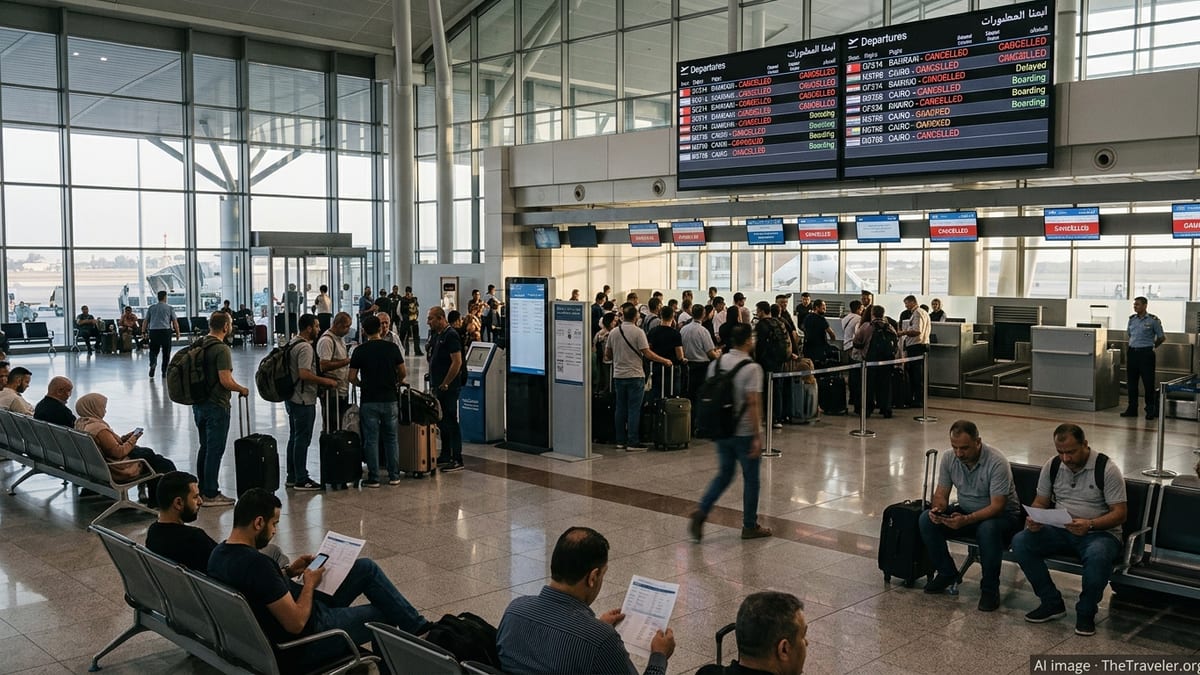
Travelers using Baghdad International Airport faced fresh disruption this week as three flights operated by Gulf Air and Iraqi Airways were cancelled, curbing already fragile connectivity on major routes linking the Iraqi capital with Bahrain and Cairo.
Get the latest news straight to your inbox!
Regional Tensions Feed New Disruptions at Baghdad
Publicly available flight-tracking data and regional aviation updates indicate that recent instability across the Gulf and wider Middle East continues to reverberate through Baghdad International Airport. The cancellation of three key services involving Gulf Air and Iraqi Airways has added a new layer of uncertainty for passengers relying on Baghdad as a hub for regional and long-haul travel.
The affected services include connections between Baghdad and Bahrain, as well as Baghdad and Cairo, two routes that typically provide Iraqi travelers with onward access to Europe, North America and Asia. With alternative routings already strained by wider airspace restrictions, even a small cluster of cancellations can produce outsized ripple effects across the network.
Baghdad International Airport has already been operating under heightened caution, as airlines weigh evolving security assessments, shifting air corridors and insurance considerations. The latest cancellations underscore how quickly schedules can change, leaving passengers scrambling for rebooking options or refunds, often with limited advance notice.
Impact on Bahrain Link as Gulf Air Capacity Tightens
Gulf Air’s link between Baghdad and its Bahrain hub plays an important role for travelers connecting onward to destinations in Europe and Asia via Manama. With Bahrain’s airspace and airport operations constrained in recent weeks due to regional security concerns, the cancellation of a Baghdad rotation intensifies the pressure on an already reduced schedule.
Information from travel advisories and passenger-rights summaries shows that Gulf Air has been operating with limited or irregular services while Bahrain’s airspace undergoes periodic restrictions. In this context, a single cancelled Baghdad sector can strand passengers who had counted on Bahrain as their main transit point, forcing them to seek scarce seats via alternative hubs such as Istanbul, Amman or Cairo.
Travel industry commentary also highlights a secondary impact on cargo and belly-hold freight moving between Iraq and the Gulf. With fewer passenger flights available, freight forwarders face tighter capacity and may need to reroute shipments through more circuitous paths, adding transit time and cost to supply chains that depend on predictable access to Iraqi markets.
Cairo Connections Weaken as Iraqi Airways Adjusts
The Baghdad to Cairo corridor, already under pressure from regionwide flight cuts, has been hit by another setback as Iraqi Airways removed at least one scheduled flight from operation. According to publicly available schedules and airport departure boards, this cancellation came amid broader reductions affecting Cairo’s links to high-risk destinations.
Egyptian aviation notices in early March highlighted a pattern of suspensions from Cairo to several regional cities, including points in the Gulf and Iraq. In this environment, Iraqi Airways’ cancelled rotation to Cairo further narrows options for travelers using the Egyptian capital as a gateway to Africa, Europe or the Americas.
For passengers originating in Baghdad, the loss of a Cairo option can be particularly disruptive. Many rely on through-tickets that combine an Iraqi Airways segment with a second carrier from Cairo. When one leg is cancelled, itineraries can unravel, with travelers facing missed connections, unexpected overnights or the need to purchase entirely new tickets at short notice.
Travelers Face Uncertainty, Longer Journeys and Higher Costs
Reports from travelers and regional aviation briefings suggest that the cumulative effect of isolated cancellations is a general climate of uncertainty for those planning trips to and from Iraq. With three Baghdad-linked flights scrubbed in quick succession, confidence in schedule reliability has taken another hit, especially for time-sensitive travel such as business trips, medical journeys and family visits.
Passengers whose flights are cancelled typically must choose between rebooking on a later date, rerouting through an alternative hub or requesting a refund if eligible under the carrier’s policy. In markets with limited competition, rerouting can involve longer itineraries, multiple connections and higher fares, particularly when demand is being squeezed into a reduced number of operating flights.
Travel advisories circulating among corporate travel managers encourage Iraq-bound passengers to allow greater flexibility in itineraries, avoid tight connection windows and closely monitor booking conditions. Some organizations are also temporarily shifting staff travel from affected hubs such as Bahrain to more stable alternatives, even when that adds hours to the journey.
What Passengers Using Baghdad Should Do Now
For travelers with upcoming plans involving Baghdad, Bahrain or Cairo, the latest cancellations serve as a reminder that conditions across the region remain fluid. Publicly available information from airlines and airports shows that schedules can change with little warning as carriers respond to evolving risk assessments and airspace notices.
Passengers are being advised by travel agents and corporate travel departments to check their flight status repeatedly in the 24 hours before departure, use official airline apps where possible, and ensure that contact details in their bookings are up to date so that schedule changes can be communicated quickly. Flexible tickets or options that allow free date changes may offer added reassurance in the current environment, even when they come at a higher initial cost.
For those already en route, airport displays and staffed transfer desks remain important resources for same-day rebooking when irregular operations occur. While the cancellation of just three flights may seem modest in scale, the highly interconnected nature of air travel in and out of Baghdad means that even small disruptions can cascade, reshaping travel plans far beyond the region.