

More news on this day
Travelers flying to and from Japan face a fresh wave of disruption after a cluster of cancellations by Jetstar Japan, Peach Aviation, Air Do, Japan Airlines, and Delta affected at least eight key services linking cities such as Kumamoto, Kagoshima, Hong Kong, Taipei, and Atlanta, according to airline notices and local media reports.
Get the latest news straight to your inbox!
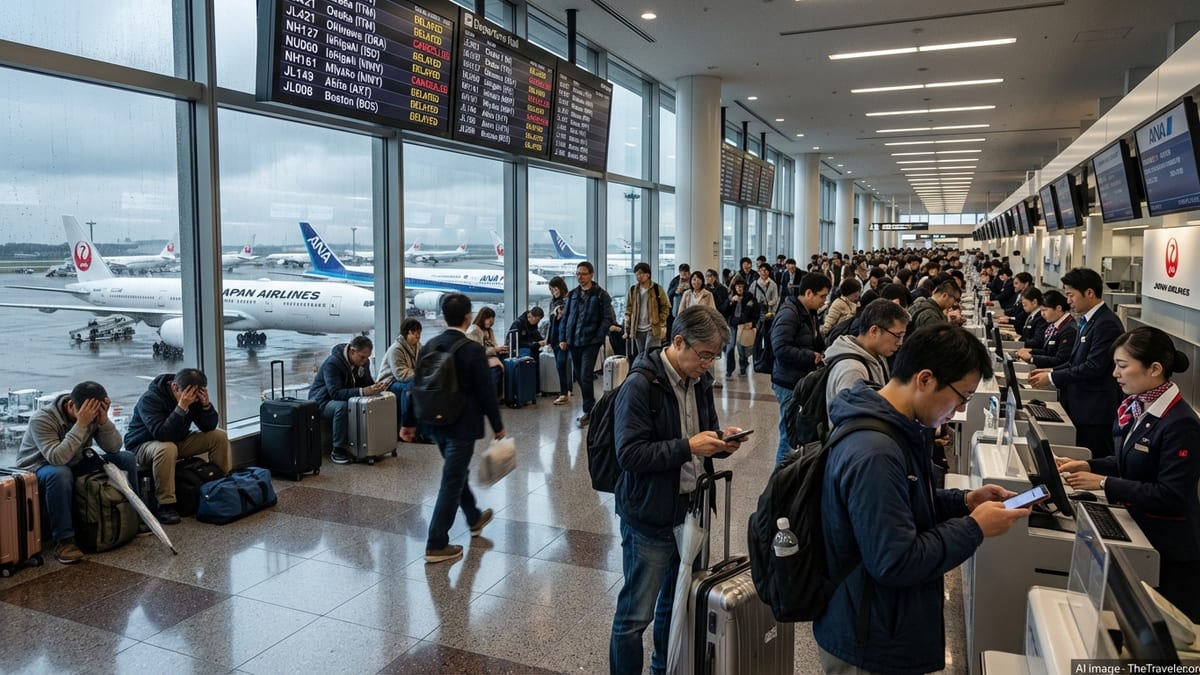
Domestic Links to Kyushu Hit by Targeted Cancellations
Domestic air links to Japan’s southern Kyushu region have been among the first to feel the impact, with services touching Kumamoto and Kagoshima curtailed on short notice. Publicly available schedules and local coverage indicate that a combination of demand adjustments and short-term operational constraints has led to the removal of selected flights, rather than a wholesale suspension of routes.
Jetstar Japan and Peach Aviation, two of the country’s leading low-cost carriers, have been central to these changes. Both airlines are significant operators into secondary regional airports, and even a small number of cancellations can quickly ripple through local travel plans, particularly for passengers relying on tight connections to and from Tokyo or Osaka.
Air Do, which focuses largely on linking Hokkaido and other regional points with Japan’s main population centers, has also withdrawn at least one rotation that fed into broader domestic itineraries. While its core network remains intact, the lost frequency reduces flexibility for travelers seeking same-day connections across Japan.
For leisure travelers heading to Kyushu, the timing is sensitive. The late March and early April period, which coincides with school holidays and the start of cherry blossom season in many areas, typically brings stronger demand to destinations such as Kumamoto and Kagoshima, amplifying the disruption caused by even a handful of cancelled departures.
International Routes to Hong Kong and Taipei Affected
International connections from Japan to Hong Kong and Taipei have also seen targeted cancellations, affecting passengers on both business and leisure trips across Northeast Asia. Published coverage of airline timetables shows adjustments on routes that are usually among the busiest in the region, reflecting a delicate balance between demand recovery and operational capacity.
Japan Airlines, which operates multiple daily services from Tokyo to both Hong Kong and Taipei, has removed specific flights from its schedule, narrowing options for same-day travel and onward connections. While the overall network remains robust, the loss of selected frequencies can complicate itineraries that rely on precise timings to connect with long-haul services.
Low-cost operators, including Peach Aviation and Jetstar Japan affiliates, have similarly trimmed certain Japan–Greater China flights. These carriers typically attract price-sensitive travelers, many of whom have built itineraries around limited daily departures. When a single flight is cancelled on a lightly served route, alternative options may require lengthy detours or overnight stays.
The disruptions are particularly visible on corridors linking Japanese regional gateways with Hong Kong and Taipei, where flights often operate just a few times per week. In such cases, the cancellation of one rotation can effectively erase that route for several days, stranding passengers and forcing rebookings through larger hubs such as Tokyo Haneda, Narita, or Kansai International.
Knock-on Effects for Transpacific Travel via Delta
The cancellations have not been confined to intra-Asian routes. Delta’s adjustments to selected Japan-linked services have introduced uncertainty for travelers using Tokyo as a transit point between North America and Asia. Reports of altered or withdrawn flights touching Atlanta and other major U.S. gateways highlight how quickly schedule changes in Japan can cascade across the Pacific.
Many itineraries between regional Japanese cities and the United States rely on carefully timed connections between domestic legs and Delta’s long-haul departures. When a Japan–U.S. segment or its feeder service is cancelled, rebooking can involve rerouting through entirely different hubs, adding travel time and increasing the risk of missed onward connections.
Travel forums and customer reports suggest that some passengers have been shifted to alternative partners or given itineraries involving multiple carriers on a single journey. While this can preserve the overall trip, it often introduces additional complexity at check-in and during transfers, especially for those unfamiliar with Japan’s airports or immigration procedures.
The timing of these adjustments, coming as transpacific demand steadily recovers, underscores the continuing fragility of long-haul networks. Even as capacity grows, airlines remain quick to pull individual flights when load factors or resource availability fall short of expectations, leaving travelers to navigate last-minute changes.
Travelers Face Rebookings, Longer Journeys, and Limited Options
For affected passengers, the immediate impact has been a mix of same-day cancellations, schedule changes announced weeks in advance, and reductions in weekly frequencies on specific routes. In practical terms, this has translated into longer journey times, overnight layovers, and in some cases the need to reroute via entirely different cities within Japan or overseas.
Travelers holding tickets on low-cost carriers such as Jetstar Japan and Peach Aviation have reported particular challenges when trying to secure alternative flights on short notice, as these airlines often operate thin schedules on regional routes. When an evening departure to a city like Kumamoto or Kagoshima is cancelled, the next available option may be the following day, putting pressure on accommodation plans and connecting ground transport.
On the international side, cancellations between Japan and Hong Kong or Taipei have forced some travelers to shift to larger full-service airlines or accept itineraries with additional stops. For those with fixed hotel bookings or event dates, even a minor change in arrival time can result in added costs and logistical complications, especially where nonrefundable reservations are involved.
According to publicly available information from airline customer service channels, rebooking policies generally allow passengers to move to alternate flights without extra fare when cancellations are initiated by the carrier. However, options may be constrained on busy days, and some travelers have reported difficulty obtaining suitable alternatives that match their original travel dates and times.
Advice for Passengers Planning Near-Term Trips to Japan
The latest wave of cancellations highlights the importance of closely monitoring flight status for any upcoming trips to or through Japan, especially on routes involving regional airports or low-cost carriers. Travelers are advised to check their bookings directly with the operating airline in the days leading up to departure and again on the morning of travel, as schedules can continue to shift at short notice.
Flexible itineraries are likely to prove more resilient. Using fully changeable or refundable tickets where possible, building in longer connection times, and avoiding last flights of the day on critical segments can all help reduce the impact of a sudden cancellation. For itineraries involving multiple airlines, keeping all segments on a single booking reference may also make it easier for carriers to provide rerouting assistance when things go wrong.
Travel insurance that specifically covers schedule disruptions and missed connections can provide an additional layer of protection, particularly for journeys that combine domestic Japanese legs with long-haul flights to destinations such as Atlanta, Hong Kong, or Taipei. Policy details vary, so travelers should review coverage conditions carefully before departure.
As airlines continue to fine-tune their networks for the coming seasons, passengers flying in and out of Japan may face further short-term adjustments. Keeping plans as flexible as possible, monitoring developments, and allowing extra time for connections will remain key strategies for minimizing the risk of significant disruption.