

More news on this day
More than ten flights operated by Aerolíneas Argentinas, American Airlines, and low cost carrier Flybondi were canceled in Argentina, disrupting travel on routes linking Buenos Aires with New York, Bariloche, Jujuy, and several other domestic destinations as airlines adjusted schedules amid operational pressures.
Get the latest news straight to your inbox!
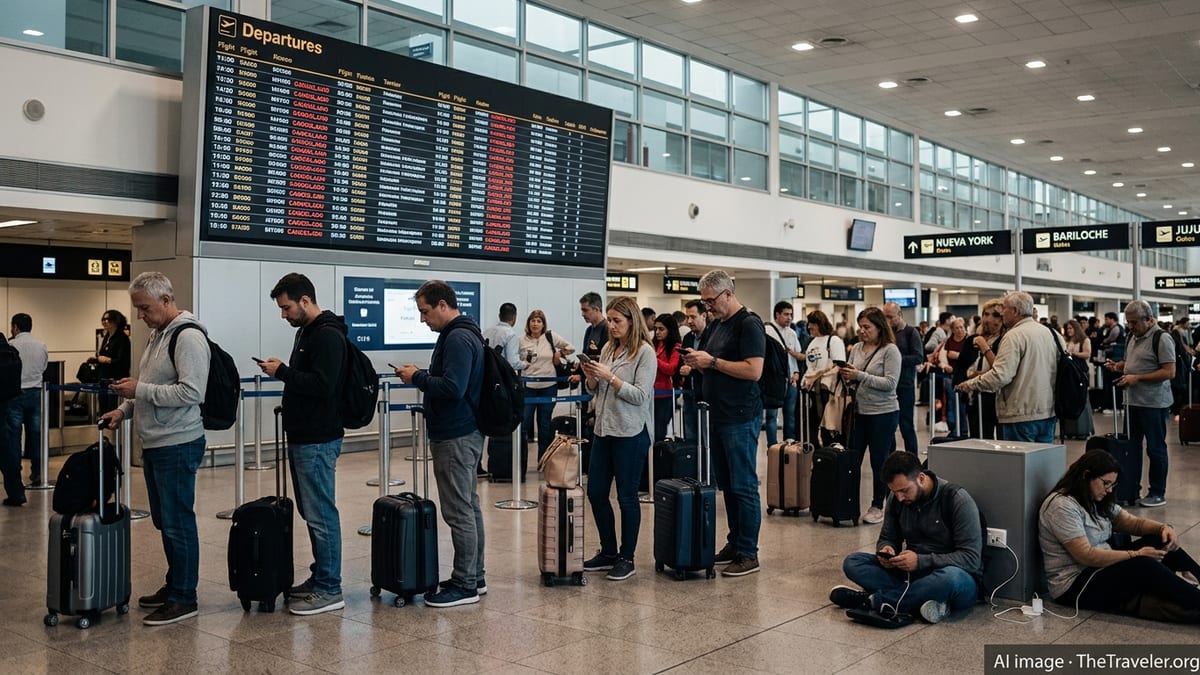
New York and Long Haul Travelers Face Sudden Schedule Changes
International passengers were among the first to feel the impact as services between Buenos Aires and New York were adjusted, affecting American Airlines and Aerolíneas Argentinas customers who rely on these long haul links for connections across North and South America. Publicly available schedules showed multiple cancellations and reschedulings concentrated on peak travel periods, forcing some travelers to seek last minute alternatives or overnight stays in the capital.
Flight tracking data and airline timetable updates indicated that at least one American Airlines service between New York and Buenos Aires was withdrawn from operation on short notice, while Aerolíneas Argentinas also removed a New York bound departure from its board. The disruption added strain at Ezeiza International Airport, where travelers already contend with seasonal crowding and extended check in and security lines.
Airline advisories urged passengers to monitor their bookings frequently and arrive early at the airport in case of reassignments to different departures. Travel forums and social media posts described long queues at customer service desks as travelers sought rebooking options, with many choosing to shift itineraries to later dates or alternate gateways in the United States.
Domestic Tourism Hubs Bariloche and Jujuy Hit by Cancellations
Within Argentina, some of the sharpest effects were felt on heavily traveled leisure routes to Bariloche and Jujuy, two of the country’s most important tourism gateways. Bariloche, a key destination for nature and winter sports, saw flights from Buenos Aires withdrawn by both Aerolíneas Argentinas and Flybondi, reducing capacity just as advance bookings pointed to strong demand.
Travelers reported that services to and from Jujuy, a popular base for visiting the Quebrada de Humahuaca and other Andean attractions, were also affected. Reduced frequencies meant fewer same day options for visitors trying to connect through Aeroparque or Ezeiza, with some travelers choosing to reroute via nearby Salta or to travel by overnight bus rather than risk further disruptions.
Tour operators monitoring the situation noted that cancellations have a cascading impact on regional economies that depend on reliable air links. Hotel check ins, guided excursions, and rental car bookings all require schedule certainty, and even a short series of flight cancellations can trigger a wave of rescheduling across the tourism chain.
Flybondi’s Operational Strain Amplifies Disruption
The latest cancellations added fresh attention to the operational performance of Flybondi, which has faced recurring scrutiny over delays and interruptions on its domestic network. Publicly available statistics and earlier regulatory actions show that the low cost carrier has experienced periods of high cancellation rates, prompting calls from consumer advocates for tighter oversight and clearer passenger communication.
Travelers posting recent accounts described a pattern of same day flight withdrawals, particularly on routes linking Buenos Aires with Patagonian and northwest destinations such as Bariloche and Jujuy. Some travelers reported being rebooked on later flights or routed via different airports, while others said they received notifications only shortly before departure, complicating onward plans.
The current round of cancellations, involving more than ten services across several airlines, underscored how strain on a single carrier can ripple through an interconnected domestic network. When Flybondi removes flights from the schedule, remaining seats on Aerolíneas Argentinas and other competitors fill quickly, leaving fewer options for same day rebooking and pushing some passengers to shift travel dates altogether.
Aerolíneas Argentinas Balances Network Demands and Capacity Limits
As Argentina’s flag carrier and largest domestic operator, Aerolíneas Argentinas plays a central role in maintaining connectivity between the capital and regional cities. The airline has been adjusting its fleet and route network in recent seasons, and industry observers note that even modest schedule changes can have outsized effects in markets with limited competition.
Reports indicate that Aerolíneas Argentinas cancellations in the latest disruption were concentrated on domestic links from Buenos Aires, including services to Bariloche and Jujuy, along with at least one long haul connection. These adjustments came on top of a network already operating close to capacity during busy travel periods, leaving little room to absorb irregular operations caused by weather, technical checks, or staffing constraints.
Travel planning experts highlight that when a carrier with a dominant share of domestic routes cancels or consolidates even a handful of flights, passengers on multi segment itineraries can see entire trips reshuffled. In Argentina, where many long distance journeys depend on a single daily or near daily service, this can mean losing valuable days on tightly scheduled holidays or business trips.
What Travelers Can Do When Flights Are Canceled in Argentina
With multiple airlines canceling more than ten flights across domestic and international routes, travelers in Argentina are being reminded to build extra flexibility into their plans. Travel advisors commonly recommend avoiding tight same day connections between domestic flights and long haul departures from Buenos Aires, particularly when traveling through winter or during periods of high demand.
Consumer guidance published by aviation regulators and passenger rights organizations in the region notes that travelers whose flights are canceled are generally entitled to options such as rebooking on the next available service or requesting refunds, depending on the fare type and applicable regulations. Passengers are encouraged to review the conditions of carriage of each airline, keep all receipts related to unexpected expenses, and use official airline channels or authorized travel agencies for changes.
For visitors heading to destinations like Bariloche, Jujuy, or other remote regions, itinerary planners suggest considering an extra buffer day at the beginning or end of key segments, and where possible choosing morning departures that provide more same day rebooking options. In an environment where Aerolíneas Argentinas, American Airlines, and Flybondi can all adjust schedules at short notice, a margin of flexibility can significantly reduce the risk of missed tours, nonrefundable hotel nights, or onward international flights.