

More news on this day
Travelers in Japan faced fresh disruption on March 23 as a cluster of cancellations by Jetstar Japan, Peach Aviation, Air Do, Japan Airlines and Delta affected at least eight key flights, disrupting domestic links to Kumamoto and Kagoshima and international routes touching Atlanta, Hong Kong, Taipei and other major hubs.
Get the latest news straight to your inbox!
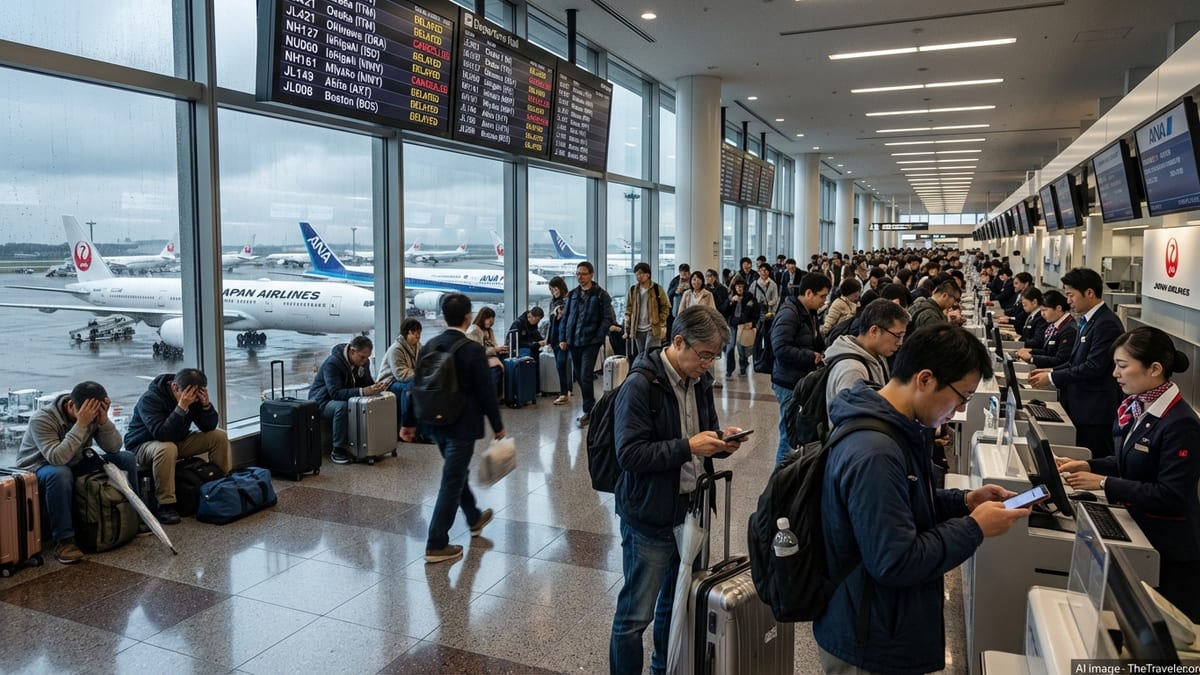
Weather, Operational Strain and Tight Timetables Trigger Cancellations
Publicly available flight-status data and local media reports on March 23 indicate that a combination of poor weather, aircraft rotation issues and tightly timed schedules contributed to the latest wave of cancellations across several carriers serving Japan. The disruptions hit both domestic and international services, underscoring how quickly pressure in one part of an airline’s network can cascade through multiple routes.
Jetstar Japan, Peach Aviation and Air Do, three important players in Japan’s low-cost and regional market, were among the first to adjust their operations. Their decisions to pull services on short notice were followed by cancellations involving Japan Airlines and Delta, magnifying the impact for travelers relying on connections between regional Japanese cities and long-haul international flights.
The pattern echoes broader regional volatility this winter, with snow, high winds and operational constraints already forcing irregular operations at several Japanese airports. Airlines have been publishing weather-related advisories and rebooking notices regularly, and the latest cancellations appear to follow that emerging pattern of pre-emptive cuts rather than last-minute airborne diversions.
While the total number of affected passengers has not yet been detailed in official statistics, seat maps and previous seasonal load factors suggest that thousands of travelers may have had to adjust their plans, particularly those heading into or out of Japan ahead of the late-March timetable change.
Jetstar Japan and Peach Aviation Cut Links to Kumamoto, Kagoshima and Hong Kong
Jetstar Japan, which operates a dense domestic network from Tokyo Narita, Osaka Kansai and Nagoya, canceled at least two services connecting to Kyushu, including flights serving Kumamoto and Kagoshima. These routes are key for budget-conscious travelers and residents linking Kyushu with Japan’s main metropolitan centers, and their cancellation limited same-day options for onward rail or air connections.
In addition to domestic disruption, the knock-on effect was felt on international routes where Jetstar Japan and its partners typically provide feed into larger networks. Travelers planning to connect from regional cities via Narita or Kansai to long-haul flights reported needing to be rebooked or routed via alternative airports, increasing travel times and, in some cases, forcing unexpected overnight stays near Tokyo or Osaka.
Peach Aviation, a major low-cost carrier based at Kansai International Airport, also adjusted its schedule, including cancellations affecting flights on its busy Osaka to Hong Kong and Japan to Taipei sectors. These links are critical for leisure and small-business travel between Japan and greater China, and the lost frequencies came during a period of sustained demand recovery following earlier diplomatic and public-health headwinds in the region.
With Hong Kong and Taipei acting as connection points to wider Asia-Pacific networks, any gap in low-cost options can quickly push travelers onto more expensive full-service alternatives. Early pricing snapshots on March 23 showed remaining seats on competing services rising in cost as passengers tried to secure last-minute alternatives.
Air Do, Japan Airlines and Delta Disrupt Domestic Feed and Long-Haul Links
Regional carrier Air Do, which is closely associated with traffic to and from Hokkaido, joined the list of affected airlines with at least one key cancellation. Earlier in the winter season, travelers on Air Do and other carriers had reported weather-related delays and cancellations at New Chitose Airport near Sapporo, and the latest interruption fits within that broader context of fragile northern operations.
Japan Airlines, one of the country’s two largest full-service airlines, also canceled services that ordinarily support domestic and regional connectivity. Adjustments in its schedule, even when limited to a small number of flights, can have outsized consequences because many travelers rely on short-haul JAL sectors to reach international departures at Tokyo Haneda, Tokyo Narita or Osaka Kansai.
Delta’s involvement in the disruption was particularly significant for passengers traveling between Japan and the United States. Public flight-tracking data showed at least one key long-haul service involving Atlanta affected on March 23. Because such flights often operate near capacity and with limited daily frequency, a single cancellation can strand passengers far from their final destinations or force rerouting through other US hubs such as Seattle, Detroit or Minneapolis.
Long-haul cancellations also ripple backwards into domestic Japanese networks. Travelers originating in regional cities often depend on a carefully timed sequence of domestic and international flights, and the loss of any leg can unravel the entire itinerary, prompting airlines to search for alternative routings that respect minimum connection times and current capacity constraints.
Impacts on Travelers: Missed Connections, Extra Nights and Rising Costs
For travelers on the ground, the immediate consequences included missed connections, unplanned overnight stays and shifting travel budgets. Passengers whose flights to or from Kumamoto and Kagoshima were canceled faced a choice between waiting for the next available seat on the same carrier, transferring to another airline at potentially higher cost, or turning to Japan’s long-distance rail network to bridge part of the journey.
Those impacted by the cancellations touching Hong Kong and Taipei were especially vulnerable if they were connecting onward to Southeast Asia or North America. Many itineraries using these hubs are stitched together across multiple carriers, and disruptions on one leg can invalidate carefully sequenced connections, particularly when minimum connection times are tight or immigration and baggage recheck are required.
Accommodation needs also quickly emerged. When flights were canceled late in the day, some travelers needed hotel rooms near Narita, Kansai or other major airports. In busy periods such as late March, room availability can shrink rapidly around major transport hubs, pushing travelers further away from the airport and adding ground-transport costs to already stretched budgets.
Insurance coverage and airline-specific policies played a major role in how individual travelers fared. Flexible tickets and comprehensive travel insurance offered more options for rebooking or reimbursement, while those on deeply discounted fares often faced more limited choices, particularly when the cancellations were attributed to weather or airspace constraints rather than technical faults within the airlines’ direct control.
What Passengers Should Do Next
Consumer advocates and travel specialists generally recommend that passengers affected by cancellations in Japan first verify their booking status directly through the airline’s official website or mobile app, as these platforms are usually updated more quickly than third-party travel sites. Travelers are also encouraged to monitor airport departure boards and local transport advisories, given that severe weather can simultaneously disrupt rail and bus services to and from airports.
Rebooking strategies depend heavily on each airline’s policy and the cause of the disruption. When cancellations are announced in advance as part of a weather-related waiver, passengers may be able to change dates or routes without additional fees, subject to seat availability. In instances where the airline reduces services for operational reasons but offers alternative options, travelers may need to act quickly to secure seats on remaining flights with favorable timings.
For those with complex itineraries touching Atlanta, Hong Kong or Taipei, contacting the ticketing carrier responsible for the overall booking is often the most efficient way to coordinate changes across multiple airlines. Keeping digital copies of itineraries, boarding passes and receipts can help if later claims need to be filed with insurers or credit-card providers.
With the peak spring travel period approaching and a major seasonal timetable change set for late March, the latest cancellations serve as a reminder for anyone flying within or to Japan to build extra time into their plans, stay alert to schedule updates and consider flexible booking options where possible.