

More news on this day
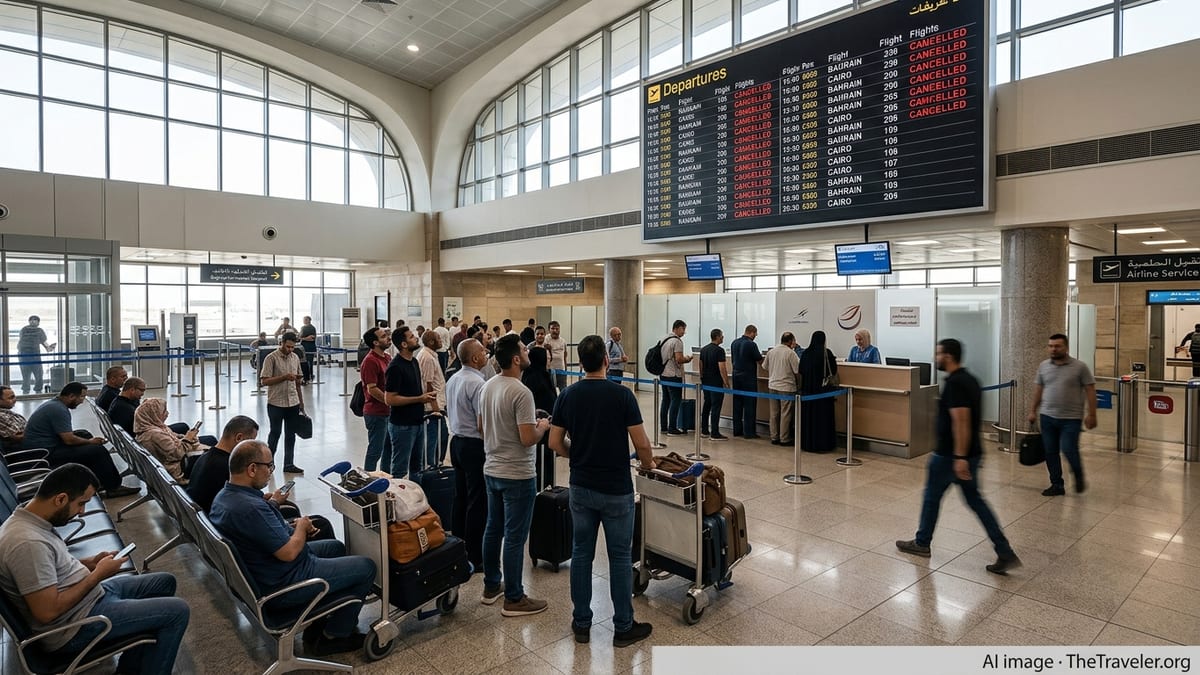
Travelers using Baghdad International Airport are facing fresh disruption after three flights operated by Gulf Air and Iraqi Airways were canceled on major regional routes connecting Iraq with Bahrain and Cairo, adding to wider aviation instability across the Middle East.
Get the latest news straight to your inbox!
New Disruptions at a Regionally Critical Hub
The latest cancellations at Baghdad International Airport affect services on two of the airport’s most heavily used regional corridors, linking the Iraqi capital with Bahrain and Egypt’s capital, Cairo. Publicly available flight-tracking data and regional media summaries indicate that one Gulf Air service between Baghdad and Bahrain and two Iraqi Airways services on routes involving Cairo did not operate as scheduled, leaving passengers scrambling for alternatives at short notice.
The cancellations come amid an already fragile operating environment for carriers in the region. Recent conflict-related incidents in and around Iraq have periodically disrupted airspace and prompted precautionary route changes, including near Baghdad International Airport. Reports on the broader security picture show that airports in Iraq, including Baghdad and Erbil, have experienced temporary suspensions and schedule adjustments as airlines assess evolving risk levels.
While the overall scale of the latest disruption is limited to three flights, the impact has been magnified by the strategic role these routes play. Bahrain serves as a major connection point for Gulf Air’s wider network, while Cairo is one of the principal gateways between Iraq and North Africa, as well as a key transit point for Europe and beyond.
Information posted by aviation observers suggests that some passengers affected by the cancellations have been offered rebooking options on later departures or on alternative routings via other regional hubs, although capacity on nearby routes remains tight due to broader regional constraints.
Gulf Air’s Operations Strained by Wider Regional Turbulence
The canceled Gulf Air service between Baghdad and Bahrain highlights how the Bahraini flag carrier continues to navigate a difficult operating environment. Coverage of the ongoing regional conflict notes that Bahrain’s airspace and aviation infrastructure have come under pressure, prompting significant schedule changes for Gulf-based airlines and triggering waves of cancellations and reroutings.
Travel advisories and passenger accounts circulating online describe Gulf Air schedules that remain fluid, with some flights suspended or relocated to alternative airports in neighboring countries. Passengers booked on services involving Bahrain have reported last-minute changes and extended layovers as carriers work around constrained airspace and security-related restrictions.
Industry commentary indicates that Gulf Air has been using a combination of temporary suspensions, selective route resumptions, and flexible booking policies to manage the disruption. In some cases, travelers have been encouraged to seek refunds or no-fee changes where flights are canceled or where onward connections through Bahrain are no longer viable.
The Baghdad to Bahrain route is particularly important as it feeds traffic into Gulf Air’s regional and long-haul network. Any interruption on this corridor therefore affects not only point-to-point travelers but also passengers connecting onward to destinations in the Gulf, South Asia, and Europe.
Iraqi Airways and Cairo Links Under Pressure
The two Iraqi Airways cancellations tied to Cairo routes underscore the vulnerability of Iraq’s international connectivity to regional tensions and shifting operational constraints. According to publicly available flight schedules and aviation monitoring platforms, Iraqi Airways has periodically adjusted its services to major regional gateways, including Cairo, as carriers recalibrate routings and frequencies.
Cairo is a longstanding anchor destination for Iraqi travelers, offering both direct access to Egypt and a broad range of onward connections through Egyptian and international airlines. When Iraqi Airways cancels flights on this corridor, travelers often face limited immediate alternatives, especially at short notice, since capacity on comparable routes can already be stretched by earlier disruptions elsewhere in the Middle East.
Travel forums and passenger reports suggest that affected Iraqi Airways customers have encountered a mix of same-day rebooking, hotel assistance where required, and rerouting via other hubs when feasible. However, in an environment where multiple regional carriers are also trimming schedules or facing their own airspace challenges, securing timely alternatives can be difficult, especially for travelers with fixed onward commitments.
For Iraqi Airways, maintaining reliable links to Cairo is not only a commercial priority but also a matter of connectivity for students, medical travelers, business passengers, and diaspora communities who rely heavily on scheduled links between Iraq and Egypt.
Regional Conflict and Airspace Constraints Shape Travel Plans
The disruptions at Baghdad International Airport are part of a broader pattern of aviation instability linked to conflict across the region. Published coverage on the 2026 Iran-related hostilities describes waves of missile and drone attacks and subsequent airspace closures or restrictions affecting several Gulf and neighboring states. These events have led airlines to cancel or reroute flights, sometimes with little advance notice for travelers.
Reports on airspace management show that countries including Iraq, Bahrain, and Qatar have all seen periods of tightened restrictions or temporary closures affecting civilian aviation. In practice, this has meant longer flight times along alternative corridors, technical stops in third countries, and a patchwork of route suspensions as carriers seek to avoid conflict zones and comply with regulatory guidance.
For passengers, the impact is most visible in sudden cancellations such as those seen in Baghdad. Even when airports remain formally open, carriers may decide that specific routes or flight times carry elevated risk or are operationally impractical, leading to schedule cuts that cascade through regional networks. As a result, travelers are increasingly advised by airlines and travel intermediaries to monitor bookings closely, allow extra time for connections, and be prepared for last-minute changes.
The three canceled flights involving Gulf Air and Iraqi Airways therefore illustrate a wider trend: individual route disruptions that, taken together, reshape how and when passengers can move between key Middle Eastern capitals.
Passengers Weigh Options Amid Continued Uncertainty
For those caught up in the latest cancellations at Baghdad International Airport, the immediate challenge is finding a workable alternative itinerary. Some passengers are opting to reroute via other hubs such as Istanbul, Amman, or Gulf cities with more resilient schedules, accepting longer travel times and additional connections in exchange for greater certainty of departure.
Travel commentary from the region indicates that flexibility is becoming an essential part of planning journeys that involve Baghdad, Bahrain, or Cairo. Many travel advisers now recommend booking with carriers that have multiple daily frequencies on key routes or broader alliance networks, giving passengers more options if an individual flight is canceled.
At the same time, consumer advocates urge travelers to review fare rules and airline policies on cancellations and schedule changes, particularly in light of evolving conflict-related disruptions. Transparent rebooking and refund options can significantly reduce the stress of last-minute changes such as those experienced on the Baghdad to Bahrain and Baghdad to Cairo routes.
With regional tensions still unresolved, there is little indication that volatility in Middle Eastern air travel will subside immediately. The three flight cancellations affecting Gulf Air and Iraqi Airways at Baghdad International Airport highlight how quickly conditions can shift for travelers, even on long-established routes linking some of the region’s most important cities.