

More news on this day
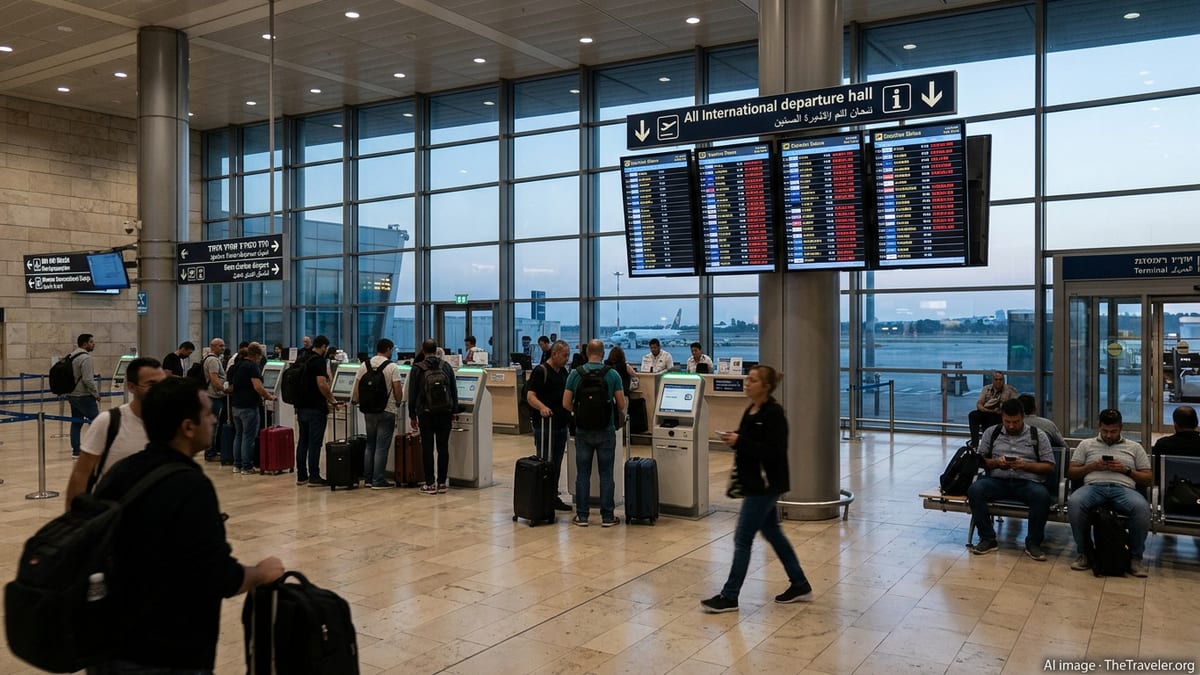
Ben Gurion International Airport is facing a fresh wave of disruption as four flights operated by Air France and El Al have been suspended and several others delayed, disrupting major routes linking Paris, Tel Aviv, Newark, London, Miami and other international hubs at a time of already heightened pressure on Israel’s air connectivity.
Get the latest news straight to your inbox!
Targeted Suspensions Hit Transatlantic and European Links
Publicly available flight board data and airline scheduling information indicate that the latest disruptions center on a cluster of high-demand services connecting Tel Aviv to Paris, Newark, London and Miami. Air France, which operates between Paris Charles de Gaulle and Tel Aviv and lists additional long haul destinations such as Newark, London and Miami in current and upcoming schedules, has suspended at least one rotation on the Paris–Tel Aviv route amid wider adjustments to its Middle East operations. El Al, Israel’s flag carrier with established routes to Newark, London and Miami from Ben Gurion, has also taken at least three flights out of service while re-timing others, creating knock-on delays across its long haul network.
Reports from recent coverage of regional air travel show that international airlines have already been operating Tel Aviv flights with reduced frequencies and tighter capacity limits in recent weeks. Those constraints have made individual cancellations far more disruptive than under normal conditions, since many services are already near full and alternative seats are limited. The latest suspensions by Air France and El Al therefore remove critical capacity on some of Ben Gurion’s busiest intercontinental corridors, stranding passengers or forcing them into lengthy rebookings.
While schedules continue to show that Ben Gurion remains open and connected to key global gateways, the pattern of targeted suspensions and rolling delays underscores how fragile Israel’s international air links remain. The decision to pull a small number of flights on a single day ripples quickly through several days of operations as aircraft and crews fall out of their planned rotations.
Operational Pressures at Ben Gurion After Recent Security Shocks
The flight suspensions come against a backdrop of sustained operational pressure at Ben Gurion following recent regional security incidents that have repeatedly affected airline confidence and airport throughput. Published coverage on the state of Israel’s aviation sector describes how missile and drone attacks in the wider region have triggered temporary reductions in passenger caps on outbound flights, particularly to North America and Europe, as authorities and airlines reassess safety margins and aircraft routing options.
Although Israel has kept its main gateway open, reductions in allowed passenger loads and precautionary schedule cuts have left airlines with less flexibility to absorb disruption when a particular flight has to be withdrawn. Carriers that continue to serve Tel Aviv, including El Al and a reduced group of foreign airlines such as Air France, have in many cases been operating with constrained schedules that leave little room for last minute swaps or additional sections.
The immediate effect at the terminal level is visible in longer queues, more frequent gate changes and a build-up of delayed departures when even a single aircraft arrives late or needs additional checks. When combined with the four suspended flights, these factors turn a localized schedule adjustment into a broader operational challenge for Ben Gurion’s ground handling systems and air traffic flow management.
Impact on Passengers Traveling Between Europe, Israel and the United States
For travelers, the practical consequences of the suspensions and associated delays are most pronounced on itineraries that link Europe and Israel with major United States gateways. Routes connecting Tel Aviv with Newark and Miami, typically operated by El Al, function as important nonstop links for both business and leisure passengers as well as for those connecting onward across North America. Any reduction in these frequencies forces some travelers onto multi leg routings via Europe, where capacity is also constrained.
Similarly, passengers booked between Paris and Tel Aviv on Air France or onward between Paris and North American cities such as Newark and Miami face a heightened risk of missed connections. With four flights removed from the schedule and others subject to rolling delays, minimum connection times that once offered a comfortable buffer can quickly become insufficient. Travelers relying on same day connections through Paris or London may find themselves rebooked onto next day departures or routed through alternative hubs.
Reports shared by affected passengers on public forums describe difficulties in finding rebooking options on comparable nonstop services, especially in premium cabins, as many remaining flights in and out of Tel Aviv are already close to capacity. In some cases, travelers have been offered itineraries involving additional stops or overnight layovers in secondary European airports, significantly extending total journey times between Israel and the United States.
Airline Responses, Rebooking Options and Ongoing Uncertainty
According to publicly available airline advisories and recent news coverage, carriers serving Israel have leaned heavily on schedule changes, waivers and special flights to manage ongoing disruption. El Al has periodically announced additional services on core routes such as Tel Aviv to New York to accommodate passengers whose flights on other airlines were cancelled, while also dealing with its own backlog on routes to Europe, North America and Asia. Air France and several other European airlines have adjusted timetables to and from Tel Aviv in response to evolving risk assessments and demand patterns.
In the context of the latest suspensions at Ben Gurion, passengers holding tickets on the affected Air France or El Al departures are generally being offered rebooking on later dates or alternative routings, subject to seat availability. Travel waiver policies published in recent weeks for the wider Middle East region typically allow customers to change dates without additional change fees, although fare differences may still apply and exact conditions vary by airline and ticket type.
Despite these measures, uncertainty remains a defining feature of travel to and from Israel. Airlines continue to review schedules on a rolling basis, and publicly accessible flight boards at Ben Gurion are showing frequent status changes, from minor delays to outright cancellations, often within hours of departure. Industry analysts and aviation watchers note in their coverage that further adjustments are possible as carriers balance safety considerations, operational constraints and persistent demand from travelers needing to reach or leave Israel.
For now, the suspension of four flights by Air France and El Al, combined with multiple delays across key routes linking Paris, Tel Aviv, Newark, London and Miami, serves as another reminder that passengers planning journeys through Ben Gurion should monitor flight status closely, build additional buffer time into connections and stay alert to airline advisories that may affect even confirmed bookings.