

More news on this day
Passengers traveling to and from Argentina are facing fresh disruption after at least 10 flights operated by Aerolineas Argentinas, Iberia, American Airlines and other carriers were canceled on key domestic and long-haul routes linking Buenos Aires, Cordoba, Miami, Madrid and additional regional destinations.
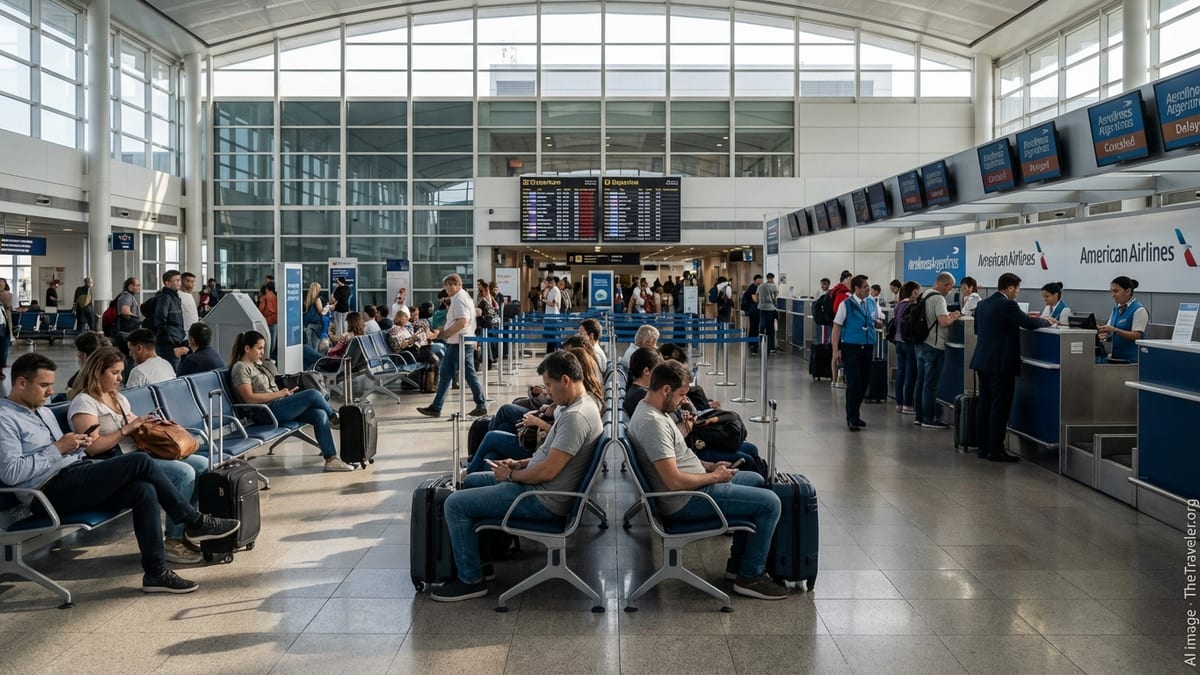
New Wave of Disruptions Hits Argentina’s Skies
The latest round of cancellations, reported between Friday and Saturday local time, comes on top of a week already marked by strikes, rolling delays and schedule reshuffles across Argentina’s aviation network. While disruption has been concentrated at Buenos Aires’ two main airports, Ezeiza and Jorge Newbery, ripple effects are being felt on services to Cordoba, Bariloche, Miami, Madrid and several regional hubs.
Aerolineas Argentinas has borne the brunt of domestic cancellations, scrubbing multiple departures that were due to connect Buenos Aires with major cities such as Cordoba and Bariloche. Internationally, American Airlines and Iberia have adjusted or canceled departures linking Argentina with the United States and Spain, including services on the busy Buenos Aires–Miami and Buenos Aires–Madrid corridors.
According to operational data compiled by industry trackers and flight-information services, the tally of affected services on Friday and Saturday alone has climbed into double digits, with some flights removed from schedules and others marked canceled at short notice. Additional delays and aircraft swaps have compounded the uncertainty for travelers attempting to rebook.
The cancellations follow a broader pattern of instability in recent days, as airlines revise their operations in response to staffing constraints, union actions and changing demand at the tail end of the Southern Hemisphere summer season.
Domestic Routes: Buenos Aires and Cordoba Among the Hardest Hit
Domestic passengers have been especially impacted on trunk routes crucial for business and leisure travel inside Argentina. Flights between Buenos Aires and Cordoba, one of the country’s key intercity corridors, have seen cancellations by Aerolineas Argentinas and disruptions involving other regional carriers. Several scheduled services between Ezeiza or Jorge Newbery and Cordoba were removed from departure boards or flagged as canceled over the past 24 hours, reducing frequency on what is typically one of the most competitive markets in the country.
Travelers heading to popular destinations such as Bariloche, Iguazu and Salta have also found themselves affected, as airlines trim or reshuffle rotations to accommodate crew availability and aircraft positioning. In some cases, passengers have been rebooked on later same-day flights; in others, they have been pushed to travel on subsequent days, particularly where capacity is already tight due to the late-summer holiday period.
Argentina’s dense domestic network relies heavily on through-connections via Buenos Aires, amplifying the impact whenever flights on the core Buenos Aires–interior routes are canceled. Missed connections have been reported not only for travelers starting or ending their journeys in the capital, but also for those using Buenos Aires as a transfer point to reach smaller provincial cities.
Ground operations have come under additional pressure as airlines work to reaccommodate passengers, manage baggage for disrupted itineraries and reposition aircraft to keep remaining services on schedule.
International Links to Miami and Madrid Also Affected
On the international front, long-haul services linking Argentina with North America and Europe have not been spared. American Airlines, which operates multiple weekly flights between Buenos Aires and Miami, has canceled or rescheduled select departures, citing operational reasons. The changes have affected passengers connecting in Miami onward to U.S. and Caribbean destinations, forcing many to adjust their travel plans or accept overnight layovers.
Iberia has similarly adjusted its Buenos Aires–Madrid schedule, with at least one rotation canceled and others modified in recent days. The Spain-bound route is a vital transatlantic link for Argentine travelers heading to Europe, as well as for European visitors concluding peak-season trips to South America. Cancellations on this corridor can quickly cascade into missed onward connections across Iberia’s Madrid hub, affecting itineraries to cities across Spain and the wider Schengen area.
Industry data indicates that a number of additional long-haul flights have operated with significant delays, even when not formally canceled, as carriers contend with aircraft arriving late from disrupted domestic sectors. This has created a patchwork of on-time and heavily delayed operations that can be difficult for passengers to navigate, especially those with complex multi-leg itineraries.
Some travelers have reported opting to route via alternative hubs in São Paulo, Santiago or Panama City when seats are available, although last-minute options remain limited and often come at higher fares.
Strikes, Labor Tensions and Operational Strain Underpin Cancellations
The immediate backdrop to the wave of cancellations is a period of heightened labor tension within Argentina’s aviation sector. In the past week, unions representing air traffic controllers, pilots, cabin crew and ground staff have staged or threatened rolling work stoppages to protest labor reforms and staffing decisions by both airlines and state-run navigation authorities.
Recent strike actions have already forced Aerolineas Argentinas to cancel hundreds of flights in a single day, creating a backlog of displaced passengers and disrupted aircraft rotations that carriers are still working to clear. Although not all of the latest cancellations are directly tied to strike hours, the residual impact of earlier stoppages has left schedules more fragile than usual.
Operational planners are also grappling with seasonal pressures. The late February period coincides with heavy domestic leisure travel, while international services are busy with both returning tourists and outbound Argentine travelers taking advantage of the final weeks of summer. This elevated demand reduces the flexibility airlines have to re-accommodate customers when flights are pulled from the schedule.
Analysts note that Argentina’s air transport infrastructure, from air traffic control staffing to airport ground services, has limited slack to absorb prolonged industrial action or sudden spikes in demand. That makes the system particularly vulnerable to chain reactions when even a handful of key flights are canceled or significantly delayed.
What Affected Travelers Should Do Now
Passengers whose flights have been canceled are being urged by airlines and airport authorities to avoid going to the airport without a confirmed rebooking. With call centers and digital channels under heavy load, travelers are advised to use airline apps and booking management tools where possible to request changes, vouchers or refunds, and to monitor real-time flight status before leaving for the airport.
For those with imminent departures from Buenos Aires, Cordoba or other affected airports, checking departure and arrival status multiple times on the day of travel remains essential, as schedules continue to evolve. Where itineraries involve connections in Miami, Madrid or other international hubs, travelers are being encouraged to build in extra time between flights or, where feasible, to shift to services less exposed to ongoing disruptions.
Consumer groups in Argentina are reminding passengers that, depending on the circumstances of the cancellation and applicable regulations, they may be entitled to care such as meals and accommodation, as well as refunds or rebooking options. However, the exact remedies can vary significantly between purely domestic itineraries and international tickets issued under foreign jurisdictions.
With airlines still assessing the operational outlook for the coming days, further adjustments to schedules cannot be ruled out. Travelers planning to fly into or out of Argentina in the short term are being encouraged to remain flexible, stay in close contact with their carriers or travel agents and prepare for the possibility of last-minute changes to their plans.