

More news on this day
Travelers moving through Peru on Friday, February 27, and Saturday, February 28, have faced a fresh wave of disruption as cancellations and rolling delays hit key domestic and international routes operated by LATAM, Sky Airline, United and other major carriers, snarling connections across Lima, Cusco, Iquitos, Arequipa and onward links to the United States.
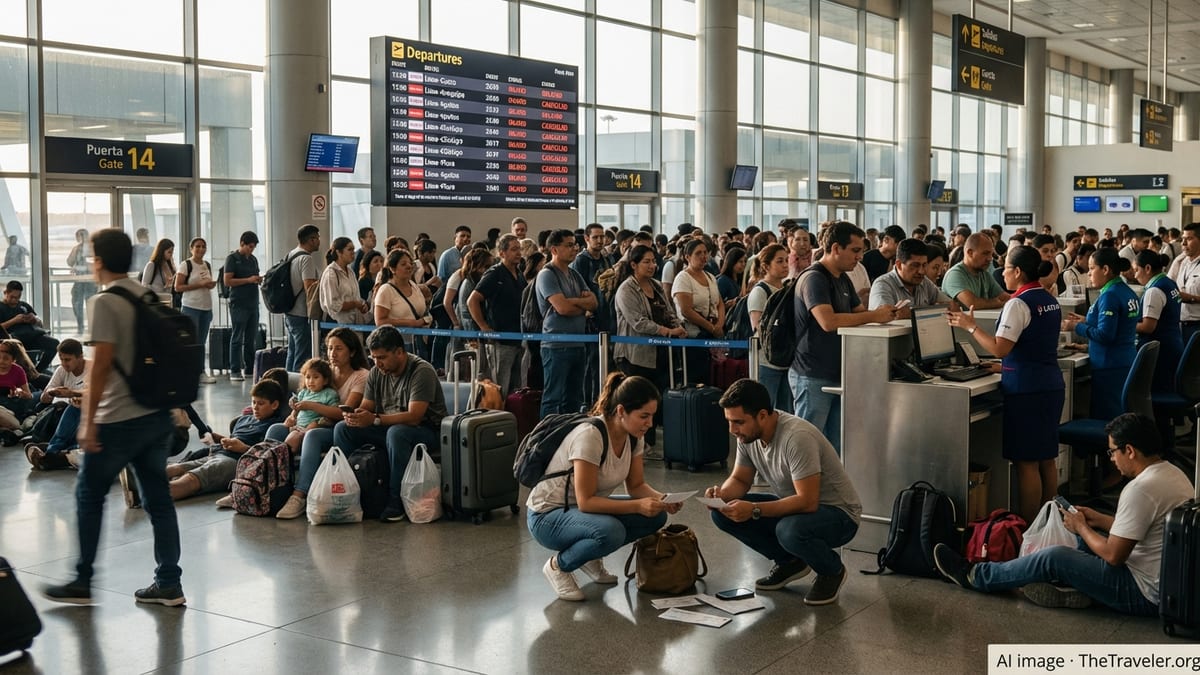
Key Peru Routes Hit by Fresh Wave of Cancellations
Flight status data and passenger reports show that nearly a dozen flights touching Peru’s busiest airports have been cancelled or severely delayed over the past 24 hours, creating knock-on problems for both domestic and international travelers. The impact has been felt most sharply on high-demand corridors such as Lima to Cusco, Lima to Arequipa and Lima to Iquitos, along with onward connections linking Lima and Houston.
Among the most affected are core services between Lima and Cusco, the gateway to Machu Picchu, where at least one LATAM-operated service, flight LA2267 from Cusco to Lima, was cancelled for February 28 after operating earlier in the week. Flight history for nearby dates shows a pattern of operational strain, with cancellations and long delays appearing alongside normal arrivals on several LATAM services.
Flight tracking data for other LATAM routes, including popular Cusco to Lima and Iquitos to Lima legs, points to a mix of on-time arrivals, lengthy delays and, in some cases, outright cancellations across the last several days. While some flights such as LA2066 between Iquitos and Lima have maintained relatively strong punctuality, others, including Cusco departures, have seen disrupted schedules that complicate connections and tour itineraries.
United Airlines passengers connecting via Lima to and from Houston have reported missed onward segments and involuntary overnight stays as domestic legs within Peru failed to operate as planned. Although long-haul flights themselves have largely remained on schedule, the instability on internal routes has turned what are usually smooth hub connections into high-risk transfers for international visitors.
LATAM and Sky Airline Under Scrutiny as Disruptions Mount
LATAM, Peru’s dominant carrier on domestic routes, is facing particular pressure as travelers encounter a patchwork of delays and cancellations concentrated on the country’s most heavily traveled tourist and business corridors. Recent tracking data shows flights such as LA2062 from Cusco to Lima experiencing hours-long delays and at least one cancellation in the past week, a pattern that has added to passenger anxiety at a time of peak demand for Andean and rainforest destinations.
The airline’s services between Lima and Arequipa, including flights like LA2330, have generally operated but with schedule changes and occasional significant delays, further compressing already tight connection windows in Lima. For passengers booked on separate tickets, a missed domestic segment can mean forfeited international itineraries, unexpected rebooking costs and lost hotel nights.
Sky Airline, a key low-cost competitor on several domestic Peru routes, has also come under renewed scrutiny. While the latest disruptions center primarily on recent LATAM and United-affiliated connections, Sky’s track record in Peru includes high-profile cancellations in Cusco and Ayacucho, with previous incidents prompting investigations by Peru’s consumer protection authority into whether passengers received the compensation and care to which they are legally entitled.
Those earlier actions have shaped current expectations among travelers who now find themselves stranded or delayed, with many citing uncertainty about what support they are owed when flights are cancelled at short notice. Social media posts from affected passengers on both full-service and low-cost carriers highlight long lines at counters, limited information and confusion over meal, hotel and rebooking options.
Lima Hub Strains Under Cascading Delays
Lima’s Jorge Chávez International Airport, the central hub for domestic and international traffic in Peru, has borne the brunt of the cascading disruptions. With multiple flights arriving late from Cusco, Arequipa and Iquitos, aircraft rotations and crew schedules have tightened, leaving little margin for recovery when subsequent departures face operational issues or congestion.
On Friday, passengers arriving late from Cusco reported sprinting through the terminal in an attempt to make connections to evening flights bound for Houston and other North American gateways, only to find boarding for onward segments already closed. Some were rebooked on next-day departures, while others said they were advised to contact their original booking channels for assistance, prolonging already stressful journeys.
The situation has been especially difficult for travelers relying on self-connecting itineraries, where separate tickets link a domestic Peru leg on LATAM or Sky Airline with a long-haul flight on United or another international carrier. In such cases, missed connections typically are not protected, meaning passengers may have to purchase entirely new tickets if they fail to make the onward flight because of an earlier cancellation or delay.
Airlines operating in and out of Lima have urged customers to arrive early at airports and to monitor flight status closely via their mobile apps and airport information screens. Some have quietly adjusted schedules and aircraft assignments in an effort to restore reliability, but travelers continue to face the risk of last-minute changes as carriers work through the backlog of disrupted rotations.
Tourism Hotspots Cusco, Arequipa and Iquitos Feel the Impact
The disruptions are rippling across Peru’s tourism economy, with Cusco, Arequipa and Iquitos among the most affected destinations. These cities serve as vital gateways to Machu Picchu, the Colca Canyon and the Amazon basin respectively, and rely heavily on tight domestic flight schedules to move visitors to and from Lima.
In Cusco, where weather and high-altitude operating conditions already make air travel more complex, the recent mix of cancellations and rolling delays has left many travelers scrambling to rearrange tours, train tickets and entrance times to the citadel of Machu Picchu. Even when flights operate, late departures from Cusco can mean arriving in Lima too late for same-day international connections, forcing unplanned overnight stays in the capital.
Arequipa and Iquitos have seen similar challenges, with some flights operating close to schedule while others depart late enough to erode confidence in onward connections. In Iquitos, where river cruises and jungle lodges run on fixed departure patterns, delayed arrivals from Lima can translate directly into missed embarkations and costly last-minute changes.
Local tourism operators say they are fielding a surge in calls from anxious visitors seeking to confirm pick-up times and backup plans. Many are now advising clients to build in additional buffer days at the start or end of their itineraries in Lima, rather than relying on same-day domestic to international connections that leave little room for disruption.
What Stranded Passengers in Peru Can Do Now
For travelers already affected by cancellations and long delays, airline counter staff remain the first point of contact for immediate assistance, including rebooking on later services, meal vouchers and, in some cases, hotel accommodation. Passengers who believe they have not received adequate support are increasingly turning to Peru’s consumer protection mechanisms, which spell out airline obligations when flights are cancelled or severely delayed.
Travel advisors recommend that passengers keep all documentation related to their disrupted journey, including boarding passes, booking confirmations, receipts for meals and accommodation, and any written communication from the airline. These records can be critical later for securing refunds, travel insurance claims or compensation where applicable under local regulations and carrier policies.
Looking ahead, industry observers say travelers planning trips to Peru in the coming weeks should monitor their reservations closely and consider adjusting itineraries to minimize tight connections at Lima’s hub. Booking domestic and international segments on the same ticket where possible, allowing generous layover times and planning at least one buffer day before time-sensitive activities in Cusco, Arequipa or the Amazon can all help reduce the risk of major disruption.
With airlines still working to stabilize their operations, the latest round of cancellations and delays serves as a reminder that even on well-traveled routes, flexibility and contingency planning are increasingly essential for those navigating Peru’s skies.