

More news on this day
Travellers moving between Thailand and the Middle East are facing fresh disruption as Gulf Air, Qatar Airways and other carriers cancel and consolidate flights on key routes linking Bangkok, Phuket, Doha, Tel Aviv and additional regional hubs, according to airline advisories and recent operational data.
Get the latest news straight to your inbox!
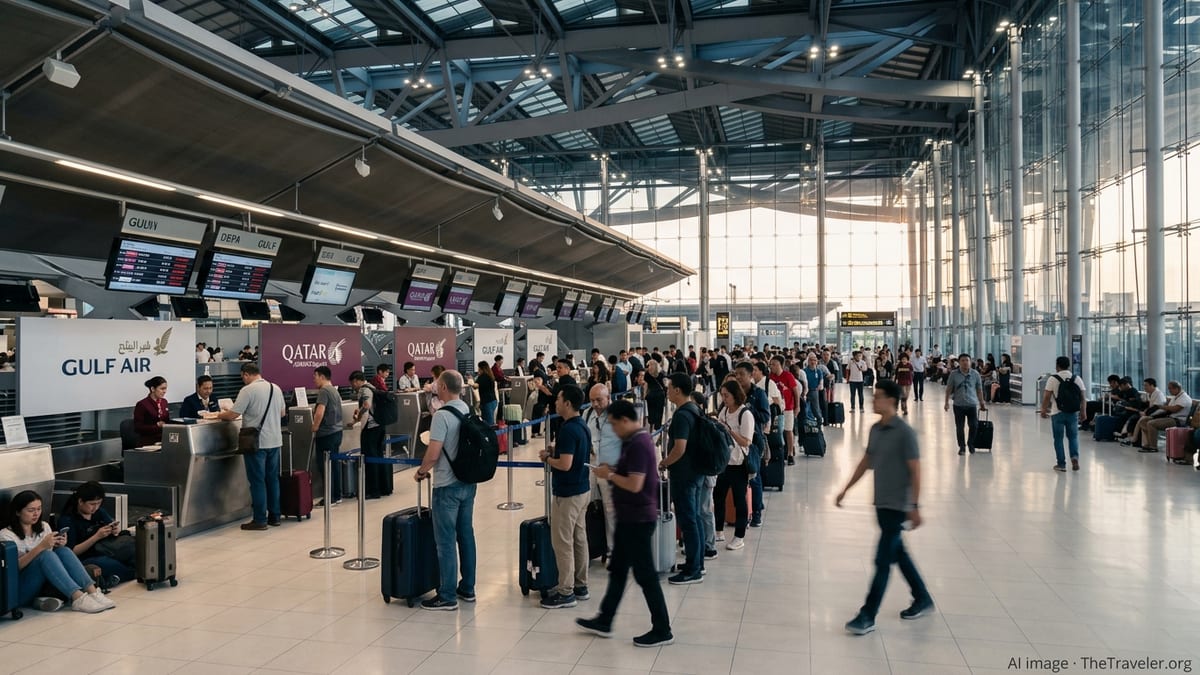
Regional Tensions Ripple Across Gulf and Middle East Skies
Recent instability in the Gulf region and surrounding airspaces continues to reverberate across commercial aviation, with flight schedules repeatedly redrawn in response to security assessments. Publicly available information shows that Qatari airspace has experienced intermittent closures and capacity restrictions since late February 2026, prompting airlines to reassess operations through Doha, one of the world’s busiest connecting hubs.
Published coverage on the evolving situation indicates that missile and drone activity targeting infrastructure in and around the Gulf has led to temporary airspace shutdowns and heightened caution among carriers. As a result, airlines are weighing safety margins, rerouting patterns and insurance considerations when deciding whether to maintain, reroute or suspend individual services.
This backdrop has created a highly fluid operating environment for flights linking Southeast Asia to the Middle East and onward to Europe. Thailand, with its heavy reliance on long-haul connectivity via Gulf hubs, has been particularly exposed as carriers adjust capacity on routes to and from Bangkok and popular resort gateways.
Gulf Air and Qatar Airways Trim Schedules to and from Thailand
Gulf Air and Qatar Airways, two key operators linking Thailand with the Gulf, have enacted rolling schedule changes that include outright cancellations, aircraft downgrades and consolidations of multiple departures into single services. Based on airline notices and recent flight-tracking patterns, more than a dozen flights involving Bangkok and other Thai airports have been affected within a short period, reducing nonstop connectivity to Doha and beyond.
For Qatar Airways, which normally maintains a dense schedule between Doha and Bangkok and also serves Phuket seasonally or year-round, this has meant a mix of suspended rotations and limited-capacity services. Reports from passengers and travel agents describe last-minute cancellations within 24 to 48 hours of departure, as well as rebookings onto alternative carriers where seats are available.
Gulf Air, operating primarily through its Bahrain hub but feeding traffic into Doha and other Gulf points, has similarly pared back frequencies touching Thailand amid the broader regional uncertainty. The carrier’s cuts have added to pressure on remaining seats across alternative routings, especially for travellers needing to connect onwards to Europe or the Levant.
Tel Aviv, Doha and Bangkok Among Most Affected City Pairs
Routes linking Bangkok and Thai resort areas to Tel Aviv and Doha appear to be bearing a significant share of the current disruption. Flight data and published aviation analysis highlight a sharp drop in operations to Israel from multiple airlines following security incidents affecting Ben Gurion Airport and surrounding airspace, with carriers adjusting capacity on routes that often connect via Gulf hubs.
For many travellers from Thailand heading to Tel Aviv, routings commonly involve a connection in Doha, Bahrain or another Gulf hub. As schedules are cut back, some itineraries that were once single-stop journeys now require two or more connections, including detours through Istanbul, European gateways or alternative Asian hubs such as Singapore and Kuala Lumpur.
Bangkok itself, one of Asia’s busiest international airports, continues to see high overall traffic, but published flight-monitoring snapshots show a noticeable thinning of departures to the Gulf compared with typical March levels. Phuket and other Thai leisure gateways, which rely heavily on seasonal Middle Eastern demand, are also experiencing knock-on delays, reroutings and diversions as airlines work around constrained Gulf corridors.
Knock-on Effects for Stranded Passengers and Travel Plans
The uneven pattern of cancellations has led to pockets of stranded passengers in Thailand, particularly those whose return journeys rely on now-suspended transits through Doha or nearby hubs. Online travel forums and social media posts from the past two weeks describe travellers in Bangkok and Phuket facing multi-day waits for rebooking, or choosing to purchase new one-way tickets via alternative airlines at significantly higher last-minute fares.
Some travellers report being shifted from Qatar Airways or Gulf Air services onto other carriers, including major Middle Eastern and Asian airlines, as part of re-accommodation efforts. In other cases, passengers describe being advised to seek refunds and make independent arrangements, especially where onward connections to Europe or North America have been disrupted by earlier cancellations.
Travel insurance coverage has become a key concern, as not all policies explicitly address disruption linked to regional conflict or airspace closure. Publicly available consumer guidance suggests that passengers should review policy wording carefully, retain documentation of cancellations and additional expenses, and be prepared for varying interpretations by insurers depending on the cause of disruption.
What Travellers to and from Thailand Should Watch Now
With flight operations still in flux, travellers planning journeys between Thailand and destinations such as Doha, Tel Aviv, Dubai and European cities via Gulf hubs are being urged by airlines and industry observers to stay alert to rapid changes. Airline advisories indicate that schedules are being updated frequently, and that services which appear confirmed several days out may still be subject to review as security assessments evolve.
Passengers with near-term departures are advised to monitor their booking status through official airline channels and booking platforms, checking for schedule changes multiple times in the 48 hours before travel. At airports in Thailand and the Gulf, check-in staff are often relying on late-breaking operational instructions that may differ from earlier timetables.
Industry commentary also highlights the importance of flexible itineraries. Where possible, travellers are increasingly opting for tickets with free date changes or low-cost cancellation options, and some are booking backup routings via alternative hubs such as Singapore, Seoul or major European gateways. Given the concentration of cancellations on particular days and routes, flexibility in dates and even departure airports within Thailand can significantly improve the chances of finding a workable alternative.
While there are indications that limited services via Doha and other Gulf points are operating on select days, the overall picture for March 2026 remains one of constrained capacity and heightened uncertainty. Travellers heading to or from Thailand over the coming weeks may need to build extra time and contingency plans into their journeys as airlines continue to adapt to shifting conditions across the region.