

More news on this day
Domestic and regional air travel across Argentina faced fresh disruption on March 13, 2026, as more than ten key flights from Buenos Aires and Patagonia were cancelled, affecting popular routes to Lima, Tucuman, Bariloche, Mendoza, Posadas, Puerto Madryn and other high-demand destinations at the height of the late-summer travel season.
Get the latest news straight to your inbox!
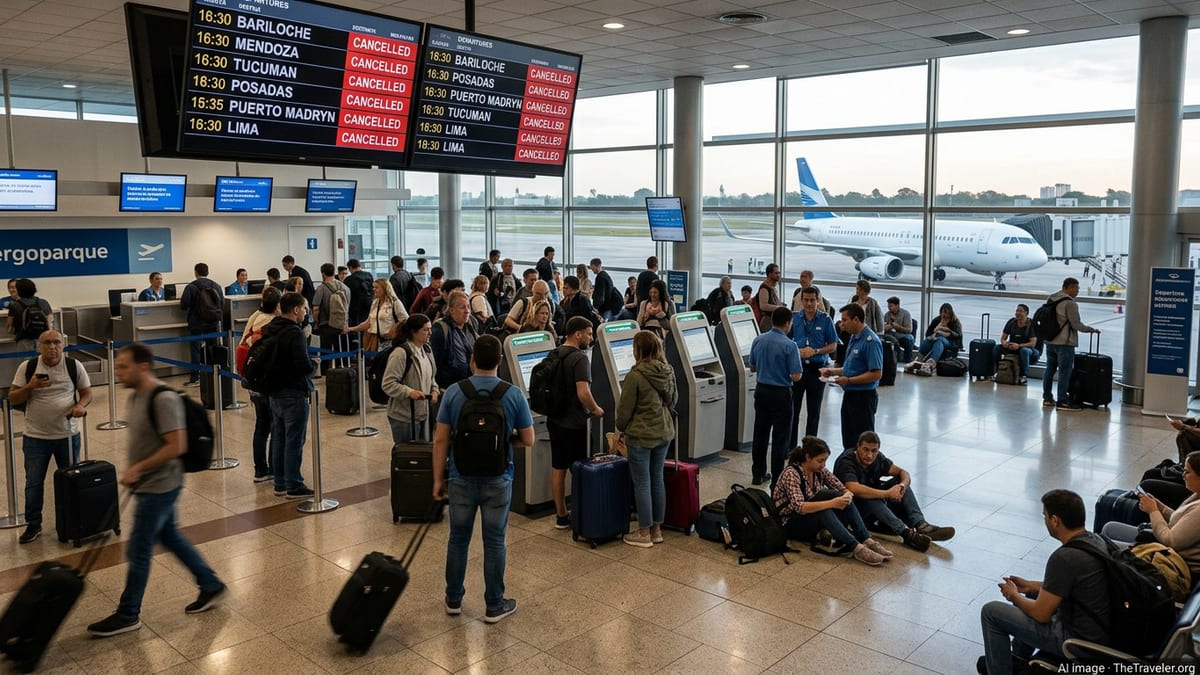
Widespread Disruptions Hit Busy Late-Summer Travel Window
The latest round of cancellations struck as Argentina’s airports remained under heavy seasonal pressure, with domestic travelers and international visitors converging on Buenos Aires and Patagonia in March for peak holiday and shoulder-season trips. Flights linking the capital with major interior hubs and resort towns, as well as at least one regional route to Lima, were among those affected.
Passengers reported late-night notifications and day-of-travel alerts advising that services between Buenos Aires and cities including San Miguel de Tucuman, Mendoza, Posadas, San Carlos de Bariloche and Puerto Madryn would not operate as scheduled. Several departures between Patagonia and the capital were also removed from boards, compounding earlier disruptions this season that have raised concerns among tour operators and travel planners who rely on tight domestic connections.
The cancellations come against the backdrop of ongoing volatility in Argentina’s aviation sector, where carriers operating from Aeroparque Jorge Newbery in Buenos Aires serve a dense network of national destinations from Mendoza’s wine country to the lakes region around Bariloche and the Atlantic coast near Puerto Madryn. With March itineraries often built around limited flight availability, even a single scrubbed rotation can cascade into missed tours, lost hotel nights and rerouted journeys.
While authorities and airlines had not released a comprehensive breakdown of the affected services by Friday afternoon, initial tallies from airport displays and travel agents pointed to more than ten cancellations concentrated on trunk routes popular with both Argentine travelers and foreign visitors using Buenos Aires as a gateway.
Key Routes Impacted From Buenos Aires to Interior Hubs
Among the hardest-hit links were flights from Buenos Aires to Lima and to several key provincial capitals. The Buenos Aires–Lima corridor is a critical bridge between Argentina and Peru for both business and leisure travelers, frequently used to connect Patagonia and the northwest with Andean trekking destinations and onward international services. Disruptions on this route left some passengers scrambling to secure scarce seats via Santiago or Sao Paulo at significantly higher last-minute fares.
Within Argentina, cancellations on services between Buenos Aires and San Miguel de Tucuman in the northwest, Mendoza in the Cuyo wine region, and Posadas in the northeast added to congestion on remaining flights. These routes not only move tourists but also serve as lifelines for domestic commerce, government travel and family visits, making sudden suspensions particularly disruptive.
Travel consultants reported that some passengers were offered same-day or next-day rebooking on alternative departures from either Aeroparque or Ezeiza, while others were advised to accept refunds and arrange their own overland or multi-stop air alternatives. For travelers on complex, multi-city itineraries, especially those combining Buenos Aires, Patagonia and the northwest, reworking connections sometimes meant dropping one or more destinations to stay within holiday dates.
Buenos Aires’ role as the primary hub for domestic services magnified the impact. Many interior-to-interior journeys, such as Bariloche to Tucuman or Puerto Madryn to Mendoza, already require a connection through the capital; when those hub flights are cancelled, entire itineraries can unravel, leaving travelers facing long-distance bus journeys of 12 hours or more as the only viable fallback.
Patagonia Travelers Face New Setbacks in Bariloche and Puerto Madryn
The disruption was especially painful for visitors bound for or departing from Patagonia, where distances are vast and alternatives limited. Flights serving San Carlos de Bariloche, one of Argentina’s premier lake and mountain destinations, were again affected, echoing past seasons in which cancellations forced emergency operations and special services to clear backlogs of stranded passengers.
In Puerto Madryn on the Atlantic coast, a launch point for marine wildlife excursions and coastal road trips, cancellations on links to Buenos Aires added to the stress for travelers aiming to connect onward to Mendoza’s vineyards or Lima’s international hub. With the local airport handling far fewer daily flights than major cities, even one cancelled service can translate into a lost day or more of vacation time.
Travel agents in Patagonia reported a spike in last-minute inquiries from visitors seeking to reroute via alternative airports such as Trelew or Comodoro Rivadavia, or to switch to overnight long-distance buses that shadow popular air routes. While these options can keep itineraries technically intact, they often require travelers to sacrifice paid hotel nights, pre-booked excursions or nonrefundable tour segments.
The pattern reinforces long-standing advice from Argentina specialists to build buffer days into Patagonia-heavy itineraries, especially for those planning high-value experiences such as guided trekking, glacier excursions or wildlife cruises that cannot easily be rescheduled.
Airlines Cite Operational Pressures as Passengers Seek Clarity
Airlines operating on the affected routes have in recent seasons cited a combination of operational pressures, including crew scheduling constraints, aircraft rotation challenges and weather-related limitations at mountain and coastal airports, as key drivers behind cancellations. In a country where many domestic services funnel through just a few hubs, even minor disruptions can ripple widely.
Frequent travelers in Argentina note that last-minute schedule changes have become more common, particularly on secondary routes and at shoulder-season dates when demand forecasts can shift rapidly. Some carriers have been under regulatory and public pressure to improve reliability after earlier episodes involving dozens of scrubbed flights over a single weekend left thousands stranded and forced authorities to demand corrective plans.
For now, passengers affected by the latest wave of cancellations are relying on airline customer service channels and airport ticket counters to seek rebooking, vouchers or refunds. Consumer advocates continue to urge travelers to document all communications, keep receipts for additional expenses such as emergency hotels or ground transport, and check their eligibility for compensation or assistance where national regulations or airline policies apply.
The uneven flow of information has added to frustration in terminals, with social media reports of departure boards updating only minutes before scheduled boarding times and some travelers learning of cancellations via push notifications after they had already arrived at the airport.
Advice for Travelers With Upcoming Flights in Argentina
With demand for domestic and regional travel in Argentina remaining robust through March, experts advise passengers with upcoming flights to and from Buenos Aires, Patagonia and the country’s provincial capitals to take extra precautions. Checking flight status directly with airlines the day before and morning of departure, enabling app alerts and confirming airport terminals can provide an early warning of potential issues.
Travel planners recommend allowing generous connection times when linking domestic services with long-haul departures, particularly when routing through Aeroparque and Ezeiza on the same day. Leaving an overnight gap between Patagonia flights and intercontinental departures is increasingly being treated as a form of insurance against sudden cancellations or rolling delays.
For itineraries that hinge on limited domestic flights, such as those to Puerto Madryn or smaller Patagonian gateways, travelers may wish to book flexible hotel rates where possible and avoid nonrefundable excursions on arrival days. In the event of a cancellation, having a backup list of alternative routes, including bus options and flights via secondary airports, can shorten decision times at the airport counter.
As Argentina works to stabilize its aviation network amid economic and operational pressures, industry observers expect episodes of concentrated disruption to remain a risk. For visitors drawn by the country’s wine regions, Andean landscapes, Atlantic coastline and Patagonian wilderness, careful planning and a margin of flexibility are likely to remain essential elements of successful trips.