

More news on this day
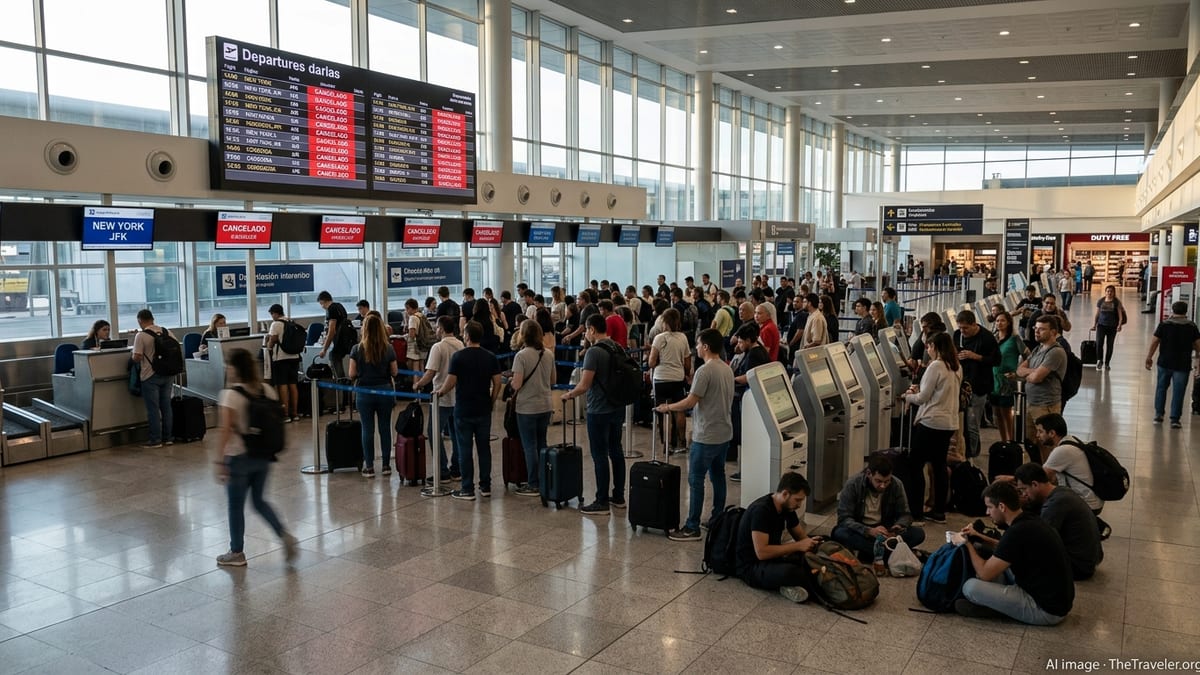
Air travelers to and from Argentina faced fresh disruption this week as more than a dozen flights operated by American Airlines, Flybondi and Aerolineas Argentinas were canceled, affecting key routes linking New York, Buenos Aires, Cordoba and several domestic destinations during an already volatile travel period.
Get the latest news straight to your inbox!
Multiple Airlines Cancel Services on Key Argentina Routes
According to recent operational data and local media coverage, a cluster of cancellations has hit flights connecting Argentina with major international and domestic destinations. The impact has been most visible on services linking Buenos Aires with New York, as well as on busy domestic corridors serving Cordoba and popular tourist gateways in Patagonia and the northwest.
American Airlines has been managing ongoing schedule disruptions tied to winter weather and wider operational constraints at its North American hubs, which have periodically affected services between New York and Buenos Aires. Publicly available information shows that mass disruption events at New York airports in late February and March led to waves of cancellations and delays, contributing to knock-on changes across the carrier’s long-haul network.
In Argentina’s domestic market, low-cost carrier Flybondi and state-controlled Aerolineas Argentinas have also canceled a series of flights, stranding some passengers and forcing last-minute rebookings. Reports from travelers and local aviation observers describe a pattern of short-notice schedule changes, particularly on routes linking Buenos Aires with cities such as Cordoba, Mendoza and El Calafate.
Recent social media and forum posts from affected passengers in March indicate that some travelers were informed of cancellations only a day or two before departure, while others reported same-day disruptions. In several cases, travelers described having to purchase replacement tickets with alternative airlines at significantly higher prices in order to keep their itineraries on track.
Flybondi Under Scrutiny After Repeated Cancellations
Flybondi, Argentina’s largest low-cost airline, has been under heightened scrutiny since late 2024, when published coverage highlighted an unusually high number of cancellations and the intervention of the National Civil Aviation Administration. Background information on the carrier shows that regulators previously demanded a plan to reduce cancellations after dozens of flights were scrapped over a single weekend, leaving thousands of passengers stranded.
Recent accounts from travelers suggest that operational volatility has continued into the 2025–2026 season. Passengers posting about trips in March describe flights between Buenos Aires and destinations including Cordoba, Mendoza and El Calafate being canceled at short notice. Several travelers reported difficulties accessing Flybondi’s customer-service channels and managing rebookings online.
Forum discussions and traveler reports characterize a pattern in which Flybondi flights operate reliably when conditions are normal but become highly unpredictable when weather, labor actions or staffing issues introduce strain into the system. Some passengers reported re-routing themselves onto Aerolineas Argentinas or other competitors, accepting higher fares in exchange for greater perceived reliability and schedule certainty.
Despite criticism, Flybondi continues to occupy an important role in Argentina’s aviation market, particularly for price-sensitive travelers. The airline maintains bases in Buenos Aires and Cordoba and serves a dense network of domestic routes, meaning that its cancellations ripple quickly through the broader travel ecosystem when they occur.
Aerolineas Argentinas Faces Operational Strain in Domestic Network
Aerolineas Argentinas, the country’s flag carrier, has also been contending with operational pressures that have resulted in cancellations and schedule adjustments. Publicly available timetable data and traveler reports highlight repeated changes on domestic routes such as Buenos Aires to El Calafate, Ushuaia and other key tourist destinations, especially during peak holiday and shoulder seasons.
Travelers posting about recent trips describe receiving multiple schedule changes for the same booking, with some early-morning departures pushed into late-night departures or shifted to different days. In several cases, passengers cited cancelled flights between El Calafate and Buenos Aires that forced unplanned extra nights in Patagonia or complex overland transfers to alternative airports.
Some accounts also describe last-minute airport changes within the Buenos Aires area, with flights that were initially booked from the centrally located Aeroparque Jorge Newbery later moved to Ezeiza International Airport or vice versa. Such adjustments can require additional ground transfers across the metropolitan area, increasing both cost and travel time for visitors with tight onward connections.
Despite these challenges, Aerolineas Argentinas remains a primary option for reaching many secondary cities in Argentina where low-cost competitors have a limited presence. As a result, travelers often weigh the risk of potential schedule changes against the lack of alternative carriers on specific routes, especially in Patagonia and the far north of the country.
Weather, Labor Actions and Infrastructure Add to the Disruption
The latest cancellations in Argentina are unfolding against a backdrop of broader pressures on the aviation system. In North America, severe winter storms in early 2026 disrupted operations at major hubs serving American Airlines, with travel alerts referencing ground stops, de-icing backlogs and poor visibility at airports in New York and other northeastern cities. These events contributed to rolling cancellations that reached long-haul routes, including services to South America.
Within Argentina, periodic labor actions and infrastructure constraints have repeatedly tested airline schedules. Recent discussions among travelers planning March trips referenced anticipated airport or aviation-sector strikes that led some passengers to proactively move flights to different days in order to avoid disruption. Others reported arriving at airports to find that services on certain airlines had been suspended for the duration of a strike period, while limited operations continued on others.
Infrastructure and capacity at smaller regional airports can further amplify the impact of each cancellation. When flights to or from destinations such as El Calafate or Bariloche are scrapped, alternative same-day options are often scarce or nonexistent, especially outside peak frequencies. Travelers may find themselves waiting one or more days for the next available seat or facing costly re-routing through Buenos Aires or Cordoba.
Combined, these factors mean that a single day of adverse weather or labor unrest can trigger rolling effects across Argentina’s tightly interconnected domestic and international schedules, with long-haul services and short regional hops alike subject to sudden changes.
What Travelers to and within Argentina Should Expect Now
Travelers currently planning routes to or through Argentina, particularly those connecting New York, Buenos Aires and Cordoba, are likely to encounter a more fragile operating environment than in previous years. While most flights continue to operate as scheduled, the recent cluster of cancellations underscores how quickly conditions can change when weather systems, labor issues or airline-specific operational problems arise.
Publicly available guidance from airlines and consumer advocates emphasizes the importance of monitoring bookings closely in the days and hours before departure. Same-day notifications via airline apps and email have become a primary channel for alerting passengers to cancellations and rebookings, meaning that travelers who are offline for extended periods may miss critical updates.
Travel planning resources also suggest that visitors build greater flexibility into itineraries, allowing extra time between domestic and international connections and avoiding nonrefundable ground arrangements immediately adjacent to flight times. For domestic legs operated by carriers with a recent pattern of cancellations, many experienced travelers recommend scheduling key segments at least a day ahead of fixed events such as international departures or tour start dates.
As Argentina remains a high-demand destination for both international visitors and local travelers, disruptions on routes to New York, Buenos Aires, Cordoba and other cities are unlikely to deter travel altogether. However, the recent wave of cancellations by American Airlines, Flybondi and Aerolineas Argentinas serves as a reminder that passengers may need to prepare for a more dynamic and occasionally unpredictable journey than timetables alone might suggest.