

More news on this day
Travellers across Colombia are facing significant disruption as more than 30 flights have been cancelled on key domestic and international routes, affecting connections between Bogota, Medellin, Cali and hubs such as Orlando in the United States, according to emerging operational data and local media reports.
Get the latest news straight to your inbox!
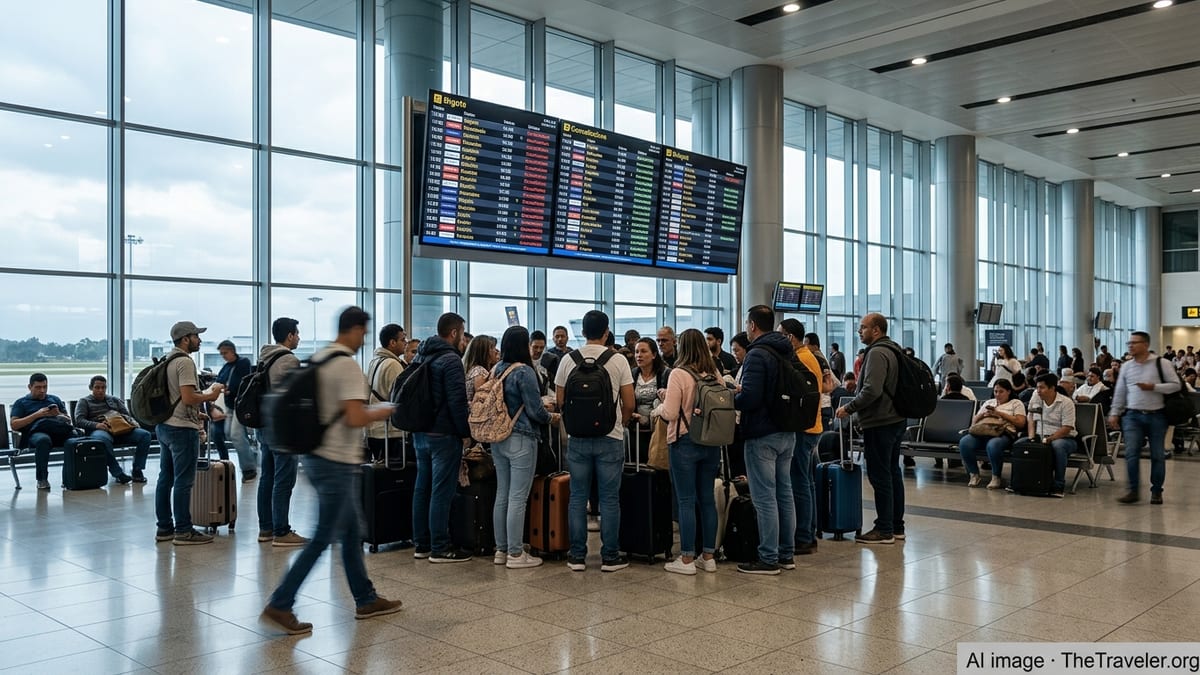
Wave of Cancellations Hits Major Colombian Hubs
The latest disruption began to build over the past 24 hours, with cancellation tallies climbing at Colombia’s primary airports, including Bogota’s El Dorado, Medellin’s Jose Maria Cordova and Cali’s Alfonso Bonilla Aragon. Tracking data and airport operations boards indicate that more than 30 flights have been removed from schedules, with additional delays affecting many departures that remain listed as operating.
The impact is being felt most sharply on high-traffic routes linking regional cities with the capital, as well as on northbound services to the United States. Flights between Bogota and Medellin, Bogota and Cali, and connections from these cities to Orlando and other U.S. gateways have seen a mix of outright cancellations and rolling delays, disrupting onward itineraries for both leisure and business travellers.
Published coverage notes that several carriers serving the Colombian market have been running tighter fleets in recent seasons, following the exit of low-cost operators and ongoing aircraft maintenance programs. This has left limited spare capacity to absorb sudden operational stress, increasing the likelihood that localised problems can quickly cascade into broader schedule disruption.
While exact carrier-by-carrier breakdowns are still being updated, publicly available information suggests that the cancellations are spread across multiple airlines, including both full-service and low-cost operators. Passengers holding separate tickets on different carriers appear to be particularly exposed to missed connections and extra costs.
Operational Strains and Aircraft Availability Under Scrutiny
Industry data over recent months has highlighted how Colombian and regional airlines have been operating with leaner fleets and intensified utilisation of aircraft. Analysts point to earlier structural shocks in the market, such as the collapse of ultra-low-cost competitors and subsequent redistribution of capacity, as factors that have left schedules more vulnerable during peak demand or irregular operations.
Reports from aviation outlets indicate that fleet maintenance and reliability planning remain central challenges, especially for carriers relying heavily on single-aisle aircraft serving dense domestic and regional routes. When one aircraft is removed from service unexpectedly, the domino effect across short-haul rotations can be immediate, forcing last-minute cancellations on routes that otherwise appear robustly booked.
Recent international developments, including manufacturer advisories affecting certain Airbus models, have also contributed to a more constrained operating environment for multiple airlines in Latin America. Where hardware inspections or component replacements are required, carriers may be compelled to pull aircraft temporarily from schedules, further thinning available capacity to cover daily operations in Colombia.
For airports such as Bogota and Medellin, which act as key connection points between secondary Colombian cities and destinations like Orlando, Miami and New York, this environment magnifies the effect of each disruption. A single grounded aircraft can translate into lost frequencies on both domestic feeders and outbound international services.
Travellers Face Missed Connections and Overnight Disruptions
Passengers caught in the latest wave of cancellations are contending with missed connections, extended airport waits and unexpected overnight stays. Social media posts and online travel forums describe travellers circulating between check-in counters and customer service desks in search of alternative options, often in crowded terminals and with limited clear information about rebooking timelines.
Reports indicate that some travellers on itineraries linking smaller Colombian cities through Bogota or Medellin to Orlando and other U.S. destinations are being re-accommodated on later flights, sometimes with lengthy layovers. Others are opting to purchase new tickets on competing carriers when same-day options from their original airline are unavailable, raising out-of-pocket costs that may or may not be recoverable later.
Families travelling at the tail end of Colombia’s high season, as well as international tourists returning from popular destinations such as Cartagena and the coffee region, appear among the most affected. In several accounts, travellers describe scrambling to adjust hotel bookings, ground transportation and tour arrangements as flight plans unravel.
Consumer advocates note that complex itineraries involving separate tickets or multiple airlines can be especially fragile during broad operational disruptions. In these cases, even a short delay or a single cancelled leg can have outsized consequences, since onward carriers are not always obliged to assist with missed connections booked on separate records.
Guidance for Affected Passengers in Colombia and Abroad
Travel specialists recommend that passengers scheduled to fly into or out of Colombia in the coming days closely monitor their bookings through airline apps and airport information screens, rather than relying solely on earlier confirmation emails. When a flight is cancelled or substantially delayed, rebooking options tend to be more plentiful for those who act quickly, particularly on busy city pairs such as Bogota Medellin and Bogota Orlando.
According to widely shared guidance from consumer organisations, travellers whose flights are disrupted should retain all receipts related to meals, ground transport and overnight accommodation, since these may support later reimbursement claims under airline policies or applicable consumer protection rules. Documentation of any communication with carriers, including screenshots of schedule changes, can also be helpful.
Passengers with onward international connections are being advised to build in additional buffer time where possible or to consolidate itineraries on a single carrier to reduce the risk of missed links. For those already in transit, airport information desks and official airline counters remain the primary points for confirmed rebooking options, even when call centres and chat channels are busy.
Travel insurance with disruption coverage may offer another layer of protection, though benefits and exclusions vary widely. Policy documents typically specify whether compensation is available for cancellations due to operational issues, maintenance requirements or wider airspace constraints, making it important for travellers to review their coverage before filing claims.
Broader Questions Over Capacity and Resilience in Colombian Air Travel
The latest cancellations come against a backdrop of wider debate over the resilience of Colombia’s air transport system. Industry observers note that the country has experienced strong post-pandemic demand for both domestic and international travel, even as the carrier landscape has shifted and infrastructure at key hubs faces strain.
Previous collapses of budget airlines created gaps on routes to and from cities such as Medellin and Cali, and remaining operators have been gradually backfilling this lost capacity. However, analysts suggest that demand growth has at times outpaced fleet expansion and airport upgrades, leaving limited margin for error when operational issues arise.
For destinations like Orlando, which depend on steady flows of visitors from Colombia, even short-lived disruptions can ripple through tourism and business travel plans. Hoteliers, tour operators and retail businesses in both countries are sensitive to sudden drops in arrivals, particularly during traditionally busy travel windows.
Aviation commentators argue that improving resilience will likely require a mix of infrastructure enhancements, more flexible slot and scheduling policies, and continued investment in fleet reliability. Until such measures are fully in place, travellers using Colombia’s main air corridors may continue to encounter occasional periods of disruption similar to the current episode, underscoring the importance of contingency planning when arranging trips.