

More news on this day
Dozens of passengers traveling to and within Japan faced disrupted plans this weekend as more than a dozen flights operated by Philippine Airlines, ANA, Japan Airlines, Skymark, Japan Air Commuter and Japan Jet were cancelled, affecting routes to Manila, Taiwan and multiple domestic destinations including Memanbetsu, Yakushima, Izumo, Osaka, Kagoshima and Fukuoka.
Get the latest news straight to your inbox!
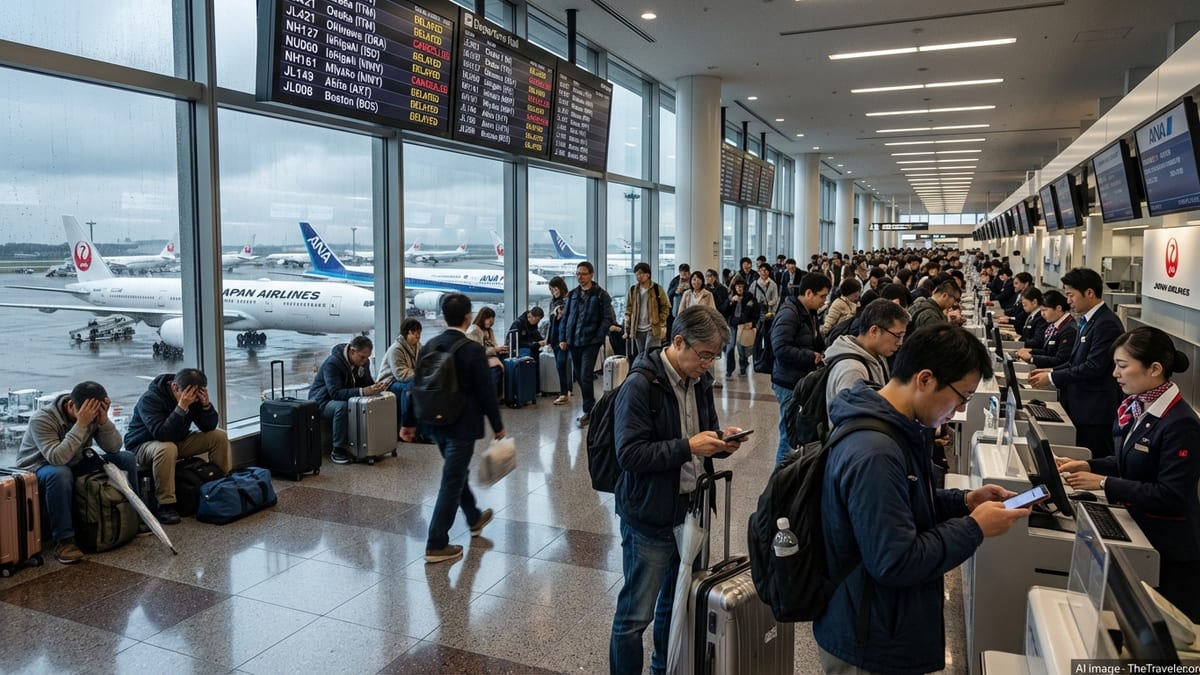
Wide Network Impact From Japan to Manila and Taiwan
According to published airline schedules and operational updates, the latest wave of cancellations touches both international and domestic routes, creating knock-on effects for travelers moving through major Japanese gateways. Flights linking Japan with Manila and Taiwan are among those affected, disrupting popular leisure and business corridors at a time of steadily rising demand.
Philippine Airlines services between Manila and Japanese cities have been operating on seasonally adjusted timetables, with previous winter schedules already noting selective non-operating days on Japan routes. Publicly available timetable information shows that similar targeted cancellations are now being applied again, leaving some Manila bound travelers from Japan needing to seek alternative departure dates or connecting options.
Regional links to Taiwan are also feeling the strain. Carriers serving Japan Taiwan routes have been adjusting capacity in recent months, and current disruption adds further uncertainty for travelers planning multi country itineraries that combine Japan with other East Asian destinations.
Major Japanese Carriers Trim and Cancel Selected Flights
All Nippon Airways and Japan Airlines, the two largest full service carriers in Japan, have already been operating with seasonal reductions on a number of routes as part of broader network reshaping. Recent schedule documents and airport notices indicate additional cancellations layered on top of these previously announced cuts, particularly on routes connecting major hubs with secondary regional airports.
Japan Airlines related information shows reduced frequencies or suspended services on several domestic sectors into early 2026, including routes touching Osaka, Fukuoka and Kagoshima. While these changes were initially presented as seasonal reductions, reports indicate that day by day cancellations have intensified short term disruption for passengers who had booked under earlier timetable assumptions.
ANA flight information distributed via Japanese airports also points to individual services being dropped from the daily program, including flights linking Osaka Kansai with destinations such as Memanbetsu in Hokkaido and select services into Kyushu. Travelers arriving at airports have reported same day notifications and the need to be re accommodated on later flights or rerouted via Tokyo or other hubs.
Smaller Carriers and Regional Links Hard Hit
Beyond the large network airlines, smaller and regional carriers are playing a significant role in the disruption picture. Skymark, Japan Air Commuter and Japan Jet are key operators on point to point domestic routes that connect outlying islands and regional cities with major airports like Osaka, Kagoshima and Fukuoka.
Airport schedule summaries and local media coverage indicate that cancellations on these carriers are disproportionately affecting routes where there are limited alternative options, such as flights to Yakushima, Izumo and other smaller destinations. In some cases, affected passengers face either long overland journeys or the need to rely on ferries where available, extending travel times substantially.
Japan Air Commuter and Japan Jet, which often operate smaller regional aircraft under or alongside the Japan Airlines banner, are central to connectivity in parts of Kyushu and remote island chains. When cancellations occur on these thinner routes, seat availability on remaining services can tighten quickly, creating additional challenges for travelers trying to change plans at short notice.
Operational, Weather and Scheduling Factors Behind Disruption
Publicly available information from airline networks, airport notices and recent schedule updates points to a mix of causes behind the current wave of cancellations. Seasonal schedule transitions, crew and aircraft rotations, and localized weather conditions in certain parts of Japan are all contributing factors.
Japan’s domestic network remains highly sensitive to weather related disruption, particularly in regions such as Hokkaido and the southern islands where strong winds, heavy rain or low visibility can force last minute changes. Recent commentary from travelers highlights cases where services to or from smaller airports were cancelled while nearby larger hubs continued operating, reflecting differing local conditions and runway capabilities.
At the same time, carriers are fine tuning post pandemic capacity as demand patterns stabilize. Schedule documents for Japan’s major airlines show continuing adjustments into 2026, with some routes gaining additional flights while others move from daily to less frequent service or are temporarily suspended. The current cluster of cancellations sits within this broader pattern of network reshaping.
What Affected Travelers Should Do Now
For passengers booked on services operated by Philippine Airlines, ANA, Japan Airlines, Skymark, Japan Air Commuter or Japan Jet on routes touching Manila, Taiwan, Osaka, Kagoshima, Fukuoka and the listed regional airports, the key step is to verify the real time status of their flight before traveling to the airport. Airline booking tools and airport departure boards are being updated throughout the day as additional schedule changes are processed.
Travel industry guidance commonly recommends that affected travelers check both the original operating airline and any codeshare partners, as some Japan bound and Japan domestic sectors may be rebooked onto different flight numbers or carriers. In cases where no same day alternative exists, passengers may need to consider route changes, such as transiting through Tokyo rather than Osaka, or combining air and rail segments.
Those with tight onward connections to or from Manila and Taiwan should review minimum connection times carefully in light of the disruption, since even short delays on remaining services can cause missed links. Travel insurers and card issuers often provide guidance on what documentation is required to support claims for additional accommodation or transport costs when flights are cancelled, and travelers are being encouraged to retain boarding passes, booking confirmations and any written notices of schedule change.